

We need to give credit where it is due and criticism where it is warranted.
After the tempestuous storm that left hundreds of emaSwati without shelter and other valuables in the Manzini and northern Hhohho regions, the Eswatini Electricity Company (EEC) was one of the entities that adopted the ‘nkwe’ philosophy.
The utility provider joined others who dispatched working teams to the affected areas.
A few hours after the storm, which was a vortex of hail, gale-force winds and heavy rain, the EEC released a public statement, detailing the number of specific areas affected.
This gave much-needed hope that something was being done.
Over 4 000 faults had been reported, which meant that affected emaSwati were now without power, which was not only an added security challenge, but a hindrance to the smooth flow of their daily routines.
A day later, the number of reported electricity faults had gone down by almost half, to about 2 200, as EEC teams were still on the ground, working to restore power.
However, this determination and dedication of the entity’s foot soldiers did nothing to diminish one’s interest in earlier reports revealing the financial position of the EEC.
The reader will recall that last Monday, the power provider issued its Integrated Annual Report for 2025. This report left a sour taste in the mouth.
It was a plus that it was an integrated report, as opposed to a traditional or normal annual report. Finance fundis say an integrated report is a concise summary combining an organisation’s financial and non-financial performance.
It serves to show how the entity creates value over time.
An integrated annual report goes beyond traditional reports by including governance, social, environmental and economic factors to give stakeholders a full picture of the company’s performance.
This report is also supposed to outline a company’s long-term plans and projections.
On the other hand, a traditional report merely gives answers to the question of how an organisation has performed financially over a specific period, usually a financial year.
The most prominent aspect of the Integrated Financial Report was that the EEC had incurred an operational loss of E247.2 million during the reporting period.
This was recorded as a 25.2 per cent increase from the previous year.
The year before, operational loss stood at E69.5 million.
The report noted that going back to 2022, there was an emerging trend of sharply deteriorating operational performance, despite consistent growth in top-line revenue.
This is the financial jargon we need to sift through to understand what exactly is going on at Eluvatsini House, Mhlambanyatsi Road.
Various websites describe operational loss as losses incurred by an organisation due to failures in internal processes, people and systems. It can also be incurred from external factors.
According to www.diversification.com, operational losses can arise from a wide range of incidents, including human error, system breakdowns or instances of fraud.
Now, here is the kicker: Effective management of these losses requires robust internal controls and continuous oversight.
Breaking it down further, internal controls are defined as the processes implemented by an organisation to safeguard assets, ensure the accuracy and reliability of financial reporting, and promote operational efficiency.
Such controls also include encouraging adherence to policies, laws and regulations.
These controls help entities achieve their objectives by mitigating risks related to operations, reporting and compliance.
Now, if operational losses are incurred due to the failure of internal processes, by giving us the E247.2 million figure, is the EEC admitting that its internal processes are not up to scratch?
That would be a disturbing revelation from such an important State-owned company, whose mandate is not to make profit, but to provide a very essential service.
The plot thickens when the Integrated Financial Report states that operational performance is sharply declining ‘despite consistent growth in topline revenue’.
This, in simple terms, means that the EEC’s revenue has been growing `consistently’ over the years. The public enterprise is making money.
The only challenge is how to optimise operations in such a way that its internal processes, people and systems do not interfere with the bottom line.
Come to think of it, it is not surprising that the EEC’s revenue has been on an upward trajectory, and consistently so. The price of electricity in the kingdom is quite steep and has been consistently going up at a stressful rate for the consumer.
Whenever a customer purchases electricity units, 2.5 per cent of that amount is deducted and handed over to government, as part of the electricity levy introduced in 2020.
So, if you are buying E100 worth of units, you will get E97.50 worth of electricity. It is from this amount that you then have to divide by the E2.43 per unit, to get your 40 units.
For many families, that number of units cannot keep the lights on for long.
When one purchases E1 000 worth of electricity units, E25 goes to the electricity levy, which is purportedly for the Rural Electrification Fund. The customer then gets E975 worth of units.
Mind you, these are just tariffs for domestic customers.
Tariffs are higher for businesses, leading micro, small and medium enterprises buckling under the weight of the expense.So how exactly are businesses supposed to survive, let alone thrive?
For the EEC, this contributes to what they refer to as `topline revenue.’
The Integrated Financial Report placed revenue at over E3 billion, an improvement of 10.7 per cent from the previous year. This was due to a tariff increase and a widening customer base.
At the same time, the parastatal is known for paying its employees very high salaries and purchasing top-of-the- range vehicles even for mundane tasks where standard utility vehicles would do just fine.
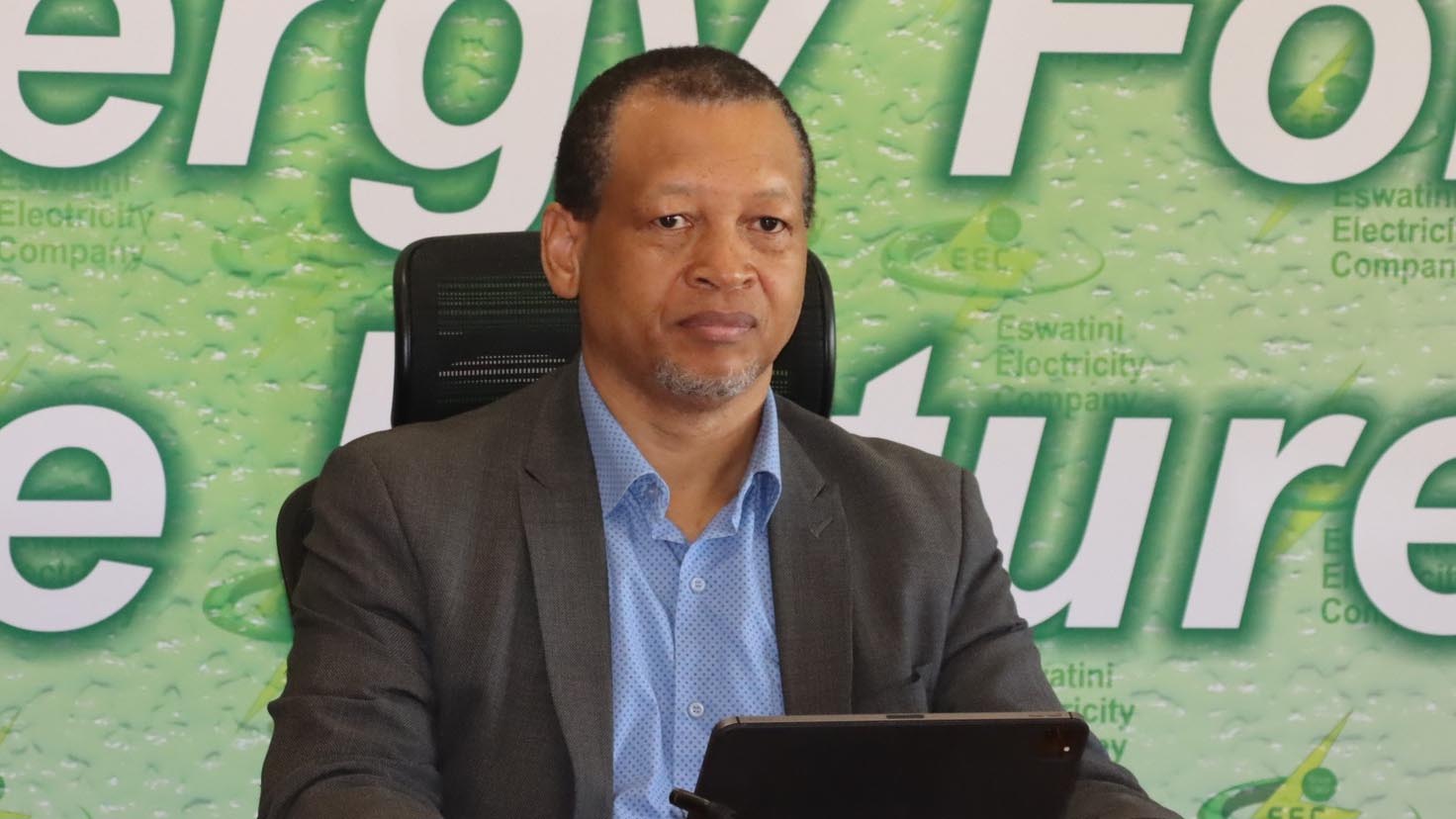
After this Integrated Financial Report, Managing Director (MD) Ernest Mkhonta owes the nation an explanation.
He needs to take emaSwati into his confidence regarding the measures he has taken, since taking up the position, to ensure that the EEC strikes a healthy balance between revenue and value addition for the customer.
The operational losses should never be used as an excuse to keep raising electricity tariffs because they are man-made.
Government and the Board of Directors should also see to it that there is effective management at the EEC by monitoring robust internal controls to push the parastatal out of the doldrums.
This is where Parliament should also play a pivotal role, ensuring that there is continuous oversight at this public enterprise.














Leave a comment