

MBABANE – The Ministry of Education and Training has introduced four new CBE measures to make sure no Grade VII learner is left out of the education system.
The intervention follows serious challenges experienced in 2024, when more than 2 000 learners who failed Grade VII could not be absorbed into schools the following academic year, raising concerns about learner exclusion, idle time at home and the long-term social risks associated with early school dropout.
CBE is the Competency-Based Education. The measures come as the country prepares for the full implementation of the CBE curriculum from January 2026 and are intended to strengthen learning outcomes, regulate learner progression more fairly and provide structured academic support for learners who require additional time to master foundational competencies.
According to a document seen by this publication, at the centre of the new approach is a significant shift in how learner performance is assessed and interpreted. Under CBE, Grade VII results will no longer be issued using the traditional first, second and third class system that has been in place for decades.
Instead, learners will be assessed using competency descriptors ranging from Excellent and Very Good to Sufficient and Insufficient. According to the ministry, this change is intended to give parents, teachers and learners a clearer understanding of actual learning attainment by focusing on what learners can demonstrate, rather than ranking them against one another.
The document further explains that the revised assessment approach aligns with the principles of CBE, which emphasise mastery of skills and competencies, rather than examination performance alone.
The document states that the ministry’s response to the 2024 Grade VII absorption crisis is anchored on four key solutions.
Firstly, learners who attain an insufficient descriptor at Grade VII will be required to repeat the grade. The ministry has stressed that this is not a punitive measure, but an academic intervention aimed at ensuring that learners do not progress to Grade 8 without adequate mastery of literacy, numeracy, problem-solving and critical thinking skills that form the foundation of secondary education.
It is further explained that allowing learners to progress without these competencies often leads to poor performance at secondary level, eventual disengagement and increased dropout rates.
Secondly, repetition under the new framework will be accompanied by targeted remediation and enrichment programmes. Schools will be expected to provide structured academic support that directly addresses the learning gaps identified during assessment. This marks a departure from previous practice, where repetition often occurred without additional support, resulting in learners repeating the same content without improved outcomes. Under CBE, remediation is expected to be diagnostic, learner-centred and responsive to individual needs.
*…
Retention should start with 2024 pupils – parents
MBABANE – Cedric Chirwa, President of the Eswatini Schools Committee and Parents Association (ESCAPA), welcomed the retention of Grade VII learners, saying it had previously been unclear where learners who failed ended up.
The ESCAPA president called for the backdating of the retention, stating that it should start with the 2024 Grade VII pupils.
“It has always been questionable where these children go when they are not absorbed back into the system,” said Chirwa. However, he expressed concern over what he described as insufficient consultation by the Ministry of Education and Training when major curriculum changes were introduced.
“Decisions taken in isolation often become problematic in the long term. They can negatively affect learning and infringe on the right to education, as it appears there is no clear direction,” he said.
*…
New core subjects introduced in 2026
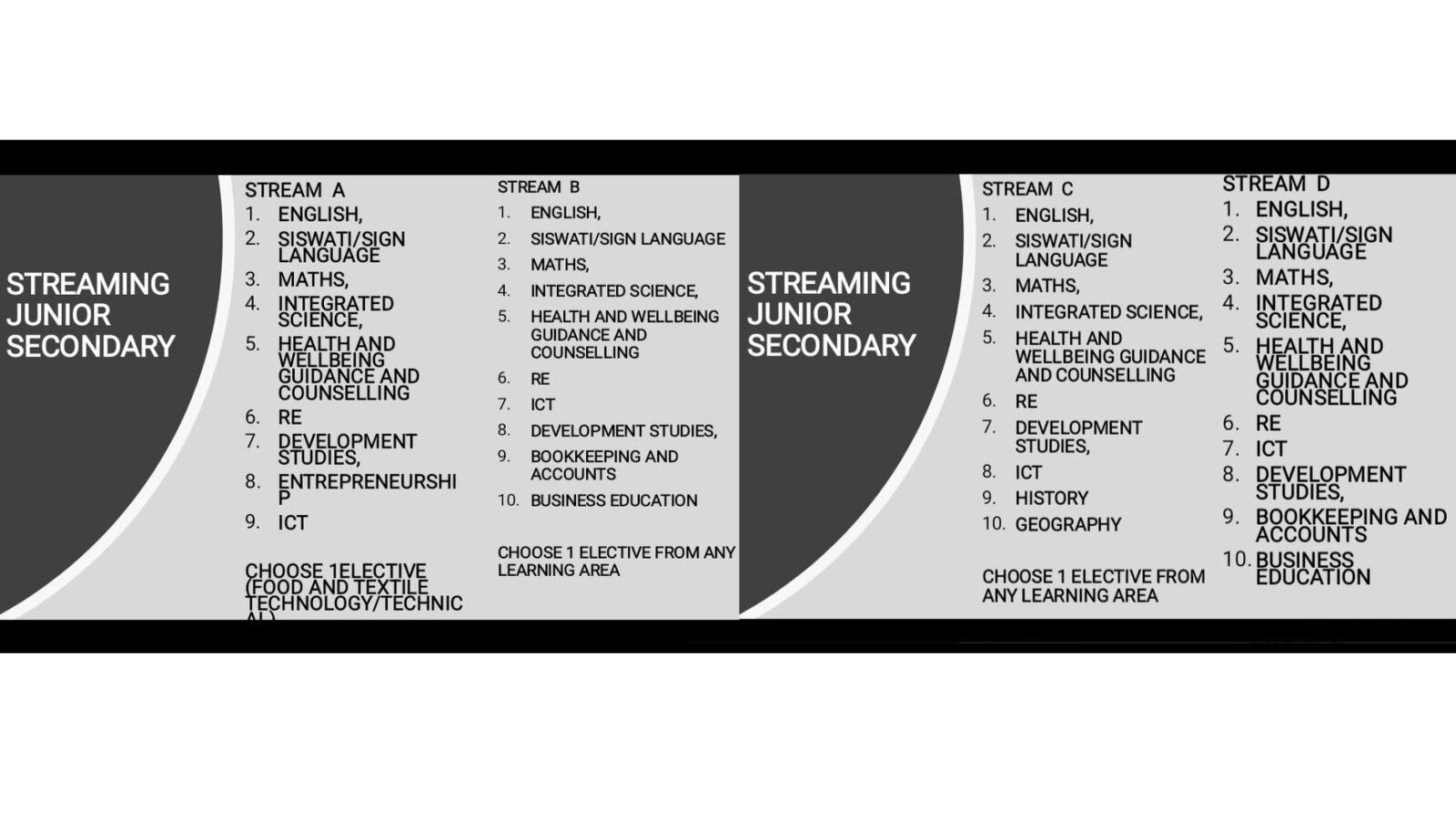
MBABANE – As part of the broader CBE reforms, several subjects will reportedly be introduced as new core subjects at secondary level beginning in 2026, marking a significant shift in the national curriculum.
Information and Communication Technology (ICT) will be compulsory for all secondary school learners, reflecting government’s intention to equip young people with digital literacy skills considered essential in modern economies.
According to excerpts from the 2024 National General Education Progress Report, ICT has been elevated to core status to ensure that all learners acquire foundational competencies in digital communication, information management, basic coding concepts and responsible technology use.
The report further notes that uneven internet connectivity across schools remains a challenge, but implementation will be phased alongside infrastructure development and partnerships aimed at expanding access. Development Studies has also been designated as a core subject under the new curriculum. The subject is said to have been introduced to strengthen learners’ understanding of civic responsibility, governance, sustainable development, entrepreneurship and socio-economic participation.
Under CBE, Development Studies focuses on critical thinking, problem-solving and community engagement, encouraging learners to analyse real-world challenges and propose practical solutions.
*Full article available in our publication



















Leave a comment