

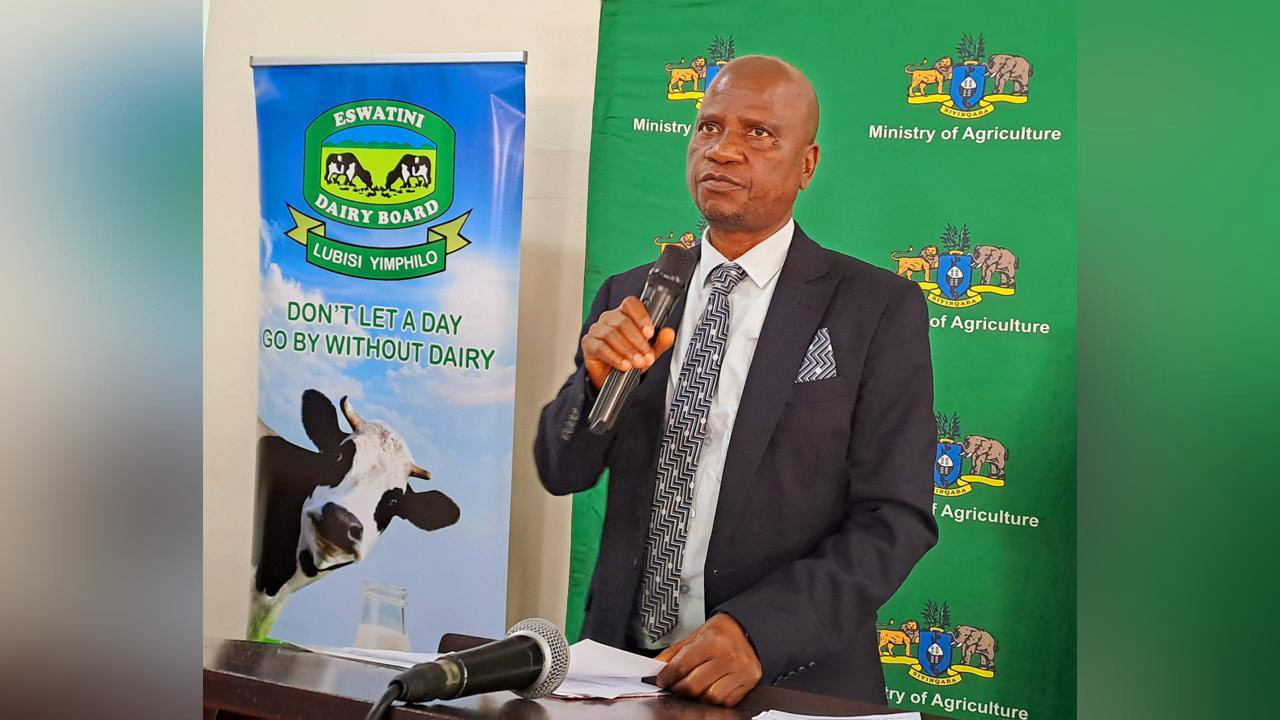
While we all sympathise with Minister for Agriculture Mandla Tshawuka for losing some of his cattle to the rampant foot‑and‑mouth disease (FMD), we must ask whether, as a minister, has he done enough to stem the tide of this crisis.
The fact that farmers and butchers, the very stakeholders the ministry should be leading, have been forced to organise themselves to find solutions, should deeply worry the ministry. It is not good news; it is a scathing indictment of the ministry’s management of the FMD outbreak that began six months ago.
Comments and concerns voiced by farmers during that explosive meeting of stakeholders on Thursday were not merely cries for help, but a sustained expression of anger at the manner in which government is handling (if not mismanaging) the situation.
Why has mass vaccination of animals not been prioritised? That farmers have even offered to contribute financially to containment efforts should be a national embarrassment for Minister Tshawuka.
FMD has been sweeping the country like wildfire, leaving hundreds of cattle dead while the minister and his Principal Secretary, Sydney Simelane, offer one excuse after another for the ministry’s failure to control the spread. Their main refrain is financial constraint.
To date, FMD has been confirmed in three administrative regions: Shiselweni, Lubombo and Manzini. By the time you read this, the disease may well have reached Hhohho, threatening to blanket the entire country. Minister Tshawuka admits the situation is crisis‑level yet offers little in the way of concrete remedy. He and senior officials appear to have an excuse for every proposed solution.
So far, measures implemented include controlling the movement of cattle and meat allowing transport only with valid permits and restoring cordon lines along porous border areas.
Requests for more cordon guards have reportedly been declined. Restoration of cordon lines is being supported by funding from the Food and Agriculture Organisation (FAO) and the European Union (EU). Vaccination and medication programmes are continuing in various districts, but progress is patchy and slow.
EmaSwati must be asking how a task as straightforward as erecting fencing along the cordon line is not being completed. Once again, the minister cites a lack of funds. The Times of Eswatini previously exposed how unreliable the border between South Africa and Eswatini is, notably at Lundzi , a route long favoured by cattle rustlers, who were every liSwati farmer’s dread long before FMD re‑emerged.
I say re‑emerged because this is not Eswatini’s first encounter with FMD. Recurring contagions have repeatedly followed outbreaks in South Africa. In 2000–2001, the disease destabilised the economy and devastated farmers’ livelihoods. Each outbreak invites trade bans from the EU and other markets, inflicting severe damage on beef exports, one of the country’s main pillars alongside sugar, manufacturing and SACU receipts.
Beef exports account for roughly two per cent of national GDP and 32 per cent of agricultural GDP. That is the scale of the damage FMD inflicts, a reality the minister must fully grasp.
As recently as 2019, there was an outbreak in South Africa’s Limpopo province; that episode prompted border controls and temporary bans on the movement of live animals and certain products.
The 2019 outbreak was less severe than the current one, which raises uncomfortable questions about what the 2018–2023 administration did to fortify our defences, and why the present administration cannot replicate or improve on those measures.
Has Minister Tshawuka reviewed remedies that worked in the past? Eswatini’s recurring battles with FMD should have sharpened our capacity to respond swiftly and effectively. Protecting the livestock sector, a crucial industry for national commerce must be an urgent priority.
The minister repeatedly blames porous cordon fences for undermining government efforts. From EU funds, government has managed to fence only about seven kilometres of the border.
With FMD showing no sign of slowing, the minister says additional sections are yet to be fenced pending FAO funding. The FAO has committed E6 million towards assistance, yet progress stalls and explanations multiply.
This is not merely an operational failing; it is a political failure. When those on the front line, farmers, butchers and veterinary staff are left to pick up the pieces, when proposed measures are delayed for budgetary or bureaucratic reasons, the minister must be held accountable.
EmaSwati deserve clarity: What exactly is the ministry’s timeline for mass vaccination, for adequate fencing, for the recruitment and deployment of cordon guards? Which funds have been allocated, which disbursements are pending and who is responsible for the delays?
If it is true that funding is the primary constraint, then the ministry must be transparent about its requests, the responses from donors, and the steps taken to re‑prioritise spending.
If administrative incompetence, poor planning or weak leadership are to blame, then those culpable must answer to the public. This crisis demands decisive action, not a catalogue of explanations.
The cost of inaction is clear: Lost livelihoods, trade bans and a blow to the national economy. Minister Tshawuka must move beyond sympathy and excuses.
He must lead with urgency, publish a clear, time‑bound response plan, mobilise the necessary resources and be prepared to be held to account if the ministry fails to deliver.
According to Tshawuka, the ministry relies on the national budget while engaging development partners for fencing projects.
Fine, except the national budget has limits, and the ministry should long since have worked around this by seeking emergency funding, such as a supplementary budget.
One suspects the original allocation ignored the possibility of an outbreak, so a supplementary request would be entirely reasonable in the circumstances. That farmers are complaining about the lack of quarantine facilities or arrangements for infected cattle is a scandal.
One feedlot farmer in Big Bend puts his losses at about E300 000 over six months of FMD. Restrictions stop him from selling, yet feed bills soar because he must keep feeding animals he should have sold months ago.
John Siyaya is not the only disappointed farmer. Many others across the affected regions are buckling under FMD’s toll.
Meanwhile, eight cattle at Mkhiweni suspected of infection were not quarantined weeks after testing.
PS Sydney Simelane said the tests showed no infection, but common sense suggests quarantine first and clearing later. What if those unquarantined animals had been positive?
The episode underlines my point: This looks less like a straightforward cash shortage and more like a failure of leadership and direction.

















Leave a comment