


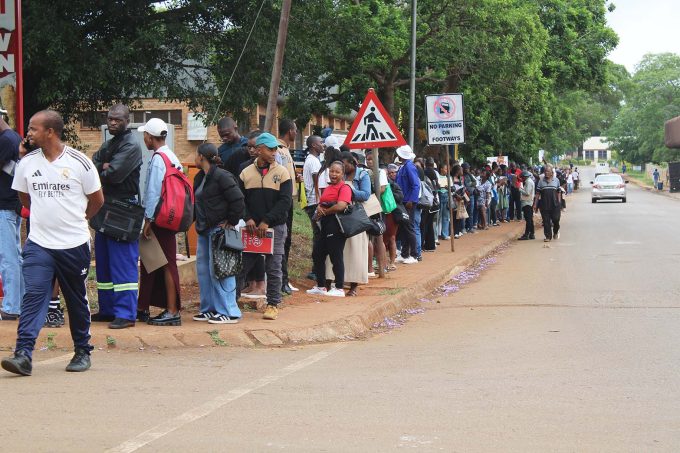
The festive season is upon us. Lucky workers are smiling as they get their bonuses and or 13th cheque payments. The reality for many unemployed emaSwati and those ravaged by poverty, there is nothing to anticipate in this joyous season because they face an uncertain future.
Poverty and employment remain our country major’s challenges. To justify why emaSwati should give, we need to understand the state of poverty and unemployment. According to the Africa Development Bank Strategy 2025 to 2030, poverty in Eswatini has a spatial dimension, with rural areas poorer and unequal compared to the urban areas. Eswatini also has a Gini index score of 54.6 per cent, reflecting outstanding inequality issues and limited inclusivity in the shared prosperity.
To this end, Eswatini stands in the top 10 per cent of countries with highest levels of poverty and inequality. Also noted is the fact that, between 2010 and 2017, the incidence of poverty in general was reduced from 63 per cent to 58.9 per cent, with 20 per cent in extreme poverty. According to the World Bank, poverty has marginally declined based on middle income poverty line estimated at 52 per cent of the population in 2024, compared to 53.7 per cent in 2021.
Poverty, unfortunately, affects children too. According to UNICEF, the latest data, 65.3 per cent of children in Eswatini live below the international poverty line of US$3.65 per day, and 40.6 per cent are in extreme poverty. In non-monetary terms, 46.6 per cent of children are deprived in at least multidimensional child poverty. These include nutrition, health, education, WASH (water, sanitation, hygiene), housing, child protection and information access, highlighting deep-seated deprivations beyond just income.
According to Eswatini National Development Strategy 2024-2028, Eswatini’s youth population stands at 72.9 per cent of the population. Unemployment has remained, for the last 20 years, at more than 20 per cent on average and has grown to 33.3 per cent (LFS, 2021). It affects mainly young people at 58.2 per cent unemployment rate, especially college graduates and women. It is noted that unemployment rates are higher in rural areas and especially in Lubombo and Shiselweni; which are the poorest, vulnerable and food insecure regions.
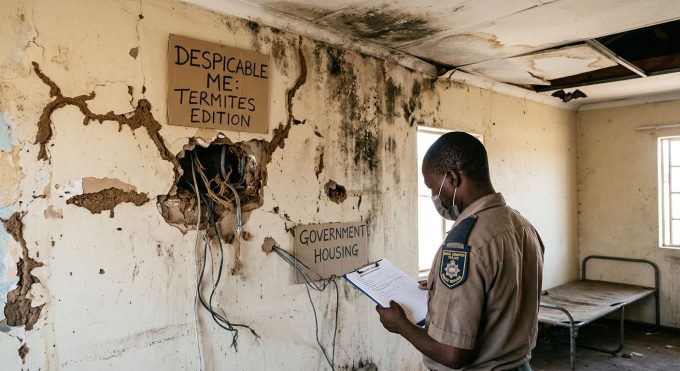
These are not mere statistics. Poverty, unemployment and inequality has the face of women, children, youth and disabled in our country. These are individuals who struggle to access basic needs including food, shelter, education, to mention a few. They have no voice in society. They also struggle to access the justice system among other challenges.
What is festive season?
According to Wikipedia, the festive season, also called the Christmas or holiday season, is an annual period from late November/December to early January, centred around Christmas and New Year’s; marked by traditions like gift-giving, family gatherings and retail peaks, encompassing Christian and secular celebrations. As already reflected in the description of the festive season, it is a season of giving and family re-union characterised by sharing meals.
With the high levels of poverty and unemployment, as explained above, thousands of emaSwati will not enjoy this festive season. Hence, the call for emaSwati who are blessed to share with their less fortunate relatives, neighbours and strangers.
Christ regarding giving
We should remember that Christmas has immense influence on the festive season. The Christian religious is founded on love. John 3:16 says: “For God so loved the world that he gave his son that whoever believes in Him shall not perish, but have eternal life”. This was the highest form of giving by God to humanity, thus setting a good example for humanity to also give.
Jesus Christ demonstrated the importance of giving. In Acts 20:35, Jesus said: “It is more blessed to give than to receive” Key examples include miraculously feeding the 5 000 from a boy’s small lunch. The Bible says a large crowd followed him. As evening approached, the people became hungry and Jesus had compassion on them. Hence, he asked Phillip where to buy food. Philip stated that they did not have enough money. However, Andrew pointed out a boy with five loaves and two fish, Jesus took the food and blessed it and 5 000 were fed. He also said: “It is better to give than to receive”.
Appeal for generous giving
For the 2025 season, may we emulate Christ’s love by giving generously. We may, for example, select an organisation of our choice like Baphalali Eswatini Red Cross, Cheshire Home, Cancer Association and many non-governmental organisations and make our donations. It may be money, food hampers, clothes just to mention a few.
We have noted that many churches have been appreciating their pastors, which is a good gesture. Churches, too, should mobilise donations from their churches so that they may distribute these donations to the needy.
Blessed is the hand that gives!

















Leave a comment