

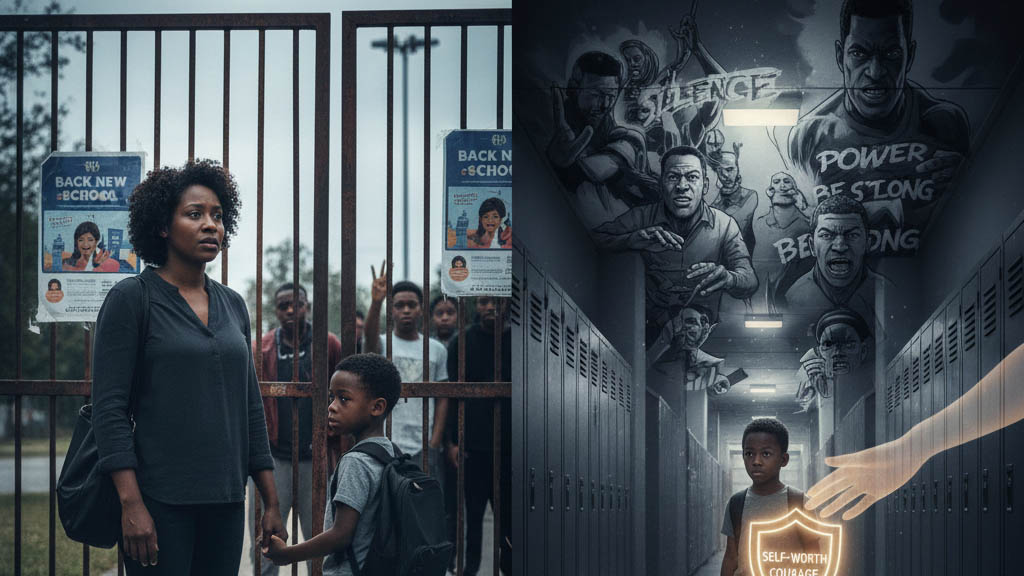
Going back to school is often marketed as a joyful reset; new uniforms, clean timetables and the comforting illusion of routine. However, for many women raising children in today’s world, especially mothers, this season also signals a quiet return to vigilance. School is not a neutral space. It mirrors society, carrying its violence, hierarchies and silences straight into the classroom. From bullying and academic pressure to vulnerability and exposure to dangerous social groups, our children are navigating far more than textbooks. As a feminist mother, I cannot overemphasise that we must be present, political and protective as parents.
Feminism teaches us that care is not passive, it is an act of resistance. To raise children who are emotionally aware, critical and safe is radical work in a society that often rewards domination over empathy. When our children walk back into school gates, they step into systems shaped by patriarchy: Where power is asserted through fear, difference is punished, and silence is demanded from those who are hurting. Bullying thrives in these conditions. So does vulnerability.
Too often, children are told to ‘be strong’ instead of being believed. However, strength without support is abandonment. Feminist parenting insists on listening deeply, consistently and without judgment. It requires us to notice changes in behaviour, sudden silences or new bravado that feels out of place. These are not phases to be ignored; they are signals.
I was forced into this awareness when I was made aware of gangsterism in my son’s school. It’s easy to notice when your child is changing – new words enter their vocabulary. Certain names carry weight. Conversations about school become guarded. Through a meeting and presentation by the school’s head teacher, I learnt that gangsterism was present in my son’s school environment – operating quietly, promising protection, belonging and power to young boys still searching for identity. This is how dangerous groups recruit: They target vulnerability and dress exploitation up as brotherhood.
As a mother, fear came easily. Again, fear alone cannot raise conscious children. Conversation can. I sat my son down and asked him what he was seeing and feeling. I listened without panic or punishment. We spoke honestly about the realities of gangsterism, the violence, the loss of freedom and the futures cut short. I made it clear that these groups do not offer power; they extract it. From a feminist lens, this is patriarchy at work: Training boys to equate masculinity with aggression and control, while robbing them of emotional expression and safety. I reminded my son that saying no is a form of courage. That standing alone can be safer than belonging to something that demands silence and harm. We spoke about focus, education and self-worth, not as abstract ideas, but as shields. Feminist parenting is not only about protecting girls; it is also about raising boys who reject violence as a rite of passage.
Beyond gangsterism, schools remain spaces where bullying is normalised and academic pressure is unevenly distributed. Children who are sensitive, different, or simply trying to mind their own business often carry the heaviest burden. Parents must advocate relentlessly, engaging teachers, challenging inaction and refusing narratives that blame children for the harm done to them. Resilience should never be demanded in the absence of justice.
As we send our children back to school, let us send them armed with more than stationery. Let us give them language for their emotions, permission to speak and the assurance that home is a place of refuge and belief. Let us raise children who know that belonging should never cost them their safety or their future.
Going back to school is not just a return to learning. It is a return to the daily work of resistance, raising children who can survive the world without becoming hardened by it.


















Leave a comment