

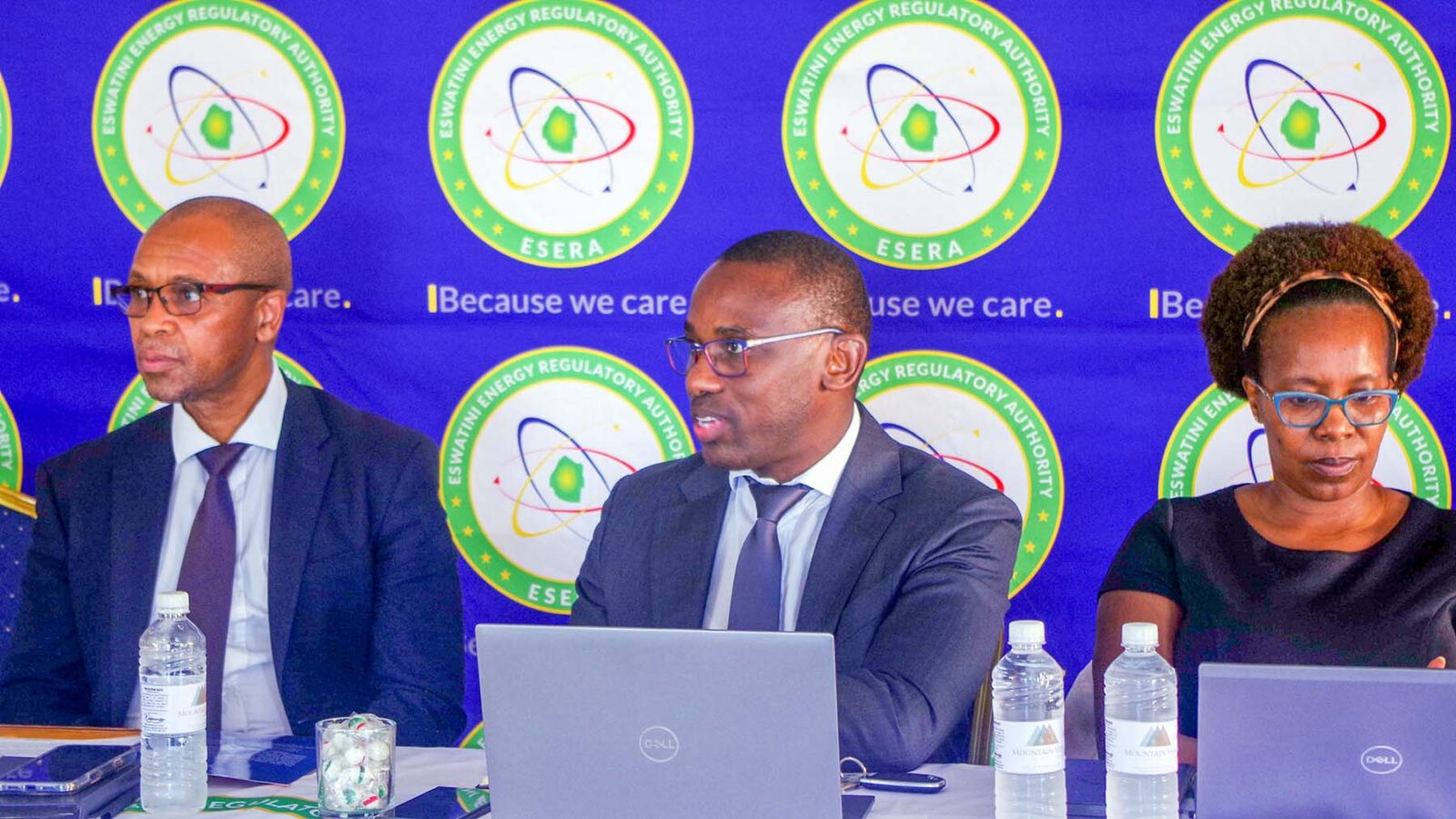
MBABANE – Consumers will get just 34 units for every E100 spent from April 1, after the Eswatini Energy Regulatory Authority (ESERA) approved an average tariff increase of 13.61 per cent for the 2026/27 financial year.
This is below the 20.67 per cent hike that was sought by the Eswatini Electricity Company (EEC).
The approved adjustment, announced yesterday at Mountain View, comes into effect on April 1, 2026 and combines the previously communicated seven per cent increase with an additional 6.61 per cent, bringing the total average adjustment to 13.61 per cent.
ESERA Chief Executive Officer (CEO) Sikhumbuzo Tsabedze said the regulator had carefully balanced the financial sustainability of the national utility with affordability concerns for households and businesses already under pressure from rising living and operating costs.
Under the new tariff structure, domestic electricity tariffs will increase by 17.23 per cent, while energy charges for both corporate time-of-use and corporate non-time-of-use customers will rise by 17 per cent. Demand charges will also increase by 17 per cent.
However, time-of-use and non-time-of-use facility charges, as well as access charges, will only increase in line with the approved inflation of 4.86 per cent.
In a move aimed at protecting vulnerable households, the lifeline tariff increase has been capped at six per cent.
“The authority was particularly mindful of the socio-economic conditions facing lifeline customers,” Tsabedze said, adding that shielding low-income households remains a core regulatory consideration.
The approved tariff adjustments exclude any taxes and levies that may be enacted or substantially enacted after the date of approval.
EEC had applied for a significantly higher adjustment, seeking approval to increase its revenue requirement by E437.9 million for 2026/27.
This request translated into an additional 13.67 per cent tariff increase on top of the already approved seven per cent, which would have pushed the average adjustment to 20.67 per cent.
Instead, ESERA approved an additional revenue requirement of E211.8 million, less than half of what EEC had requested.
*…
TUCOSWA calls for dialogue on soaring electricity costs
MBABANE – The Trade Union Congress of Swaziland (TUCOSWA) says government should establish a platform for dialogue to enable emaSwati to address the ongoing issue of rising electricity costs in the country.
In an interview yesterday, TUCOSWA President Bheki Mamba emphasised that the federation has consistently advised government to first form a committee to investigate the root causes of the challenges faced by the Eswatini Electricity Company (EEC) before engaging in discussions and seeking solutions.
He explained that in the absence of such an investigative committee and meaningful dialogue, electricity prices are likely to continue increasing, to the detriment of emaSwati.
“The government, as a shareholder, must first revamp EEC and then establish a committee to investigate the root causes of the challenges it faces.
“We cannot ignore the fact that the electricity company is experiencing serious issues that require urgent and serious intervention,” he stated.
Mamba also suggested that the country could utilise its available resources, such as coal at Mpaka, to generate electricity, rather than spending large sums on power generation methods that do not meet even a quarter of the country’s needs. He pointed to projects in Lavumisa and Maguga, which he said are not doing enough to address the challenges faced by EEC.
*…
Consumer Forum to explore appeal options
MBABANE – The Eswatini Consumer Forum says it will consult widely to determine whether there are legal provisions that allow consumers to appeal the latest electricity tariff adjustments.
Forum Chairperson Mandla Ntjakala said the body was not rushing into legal action, but was instead seeking clarity on whether the regulatory framework provides room for an appeal against the decision to approve an average 13.61 per cent electricity tariff increase for the 2026/27 financial year.
“As a forum, we are going to make consultations to see if, legally, there is a way to appeal the decision by ESERA,” Ntjakala said.
He stressed that the process would involve engagements with other organised groups and stakeholders before any position is adopted.
*Full article available on Pressreader*















Leave a comment