

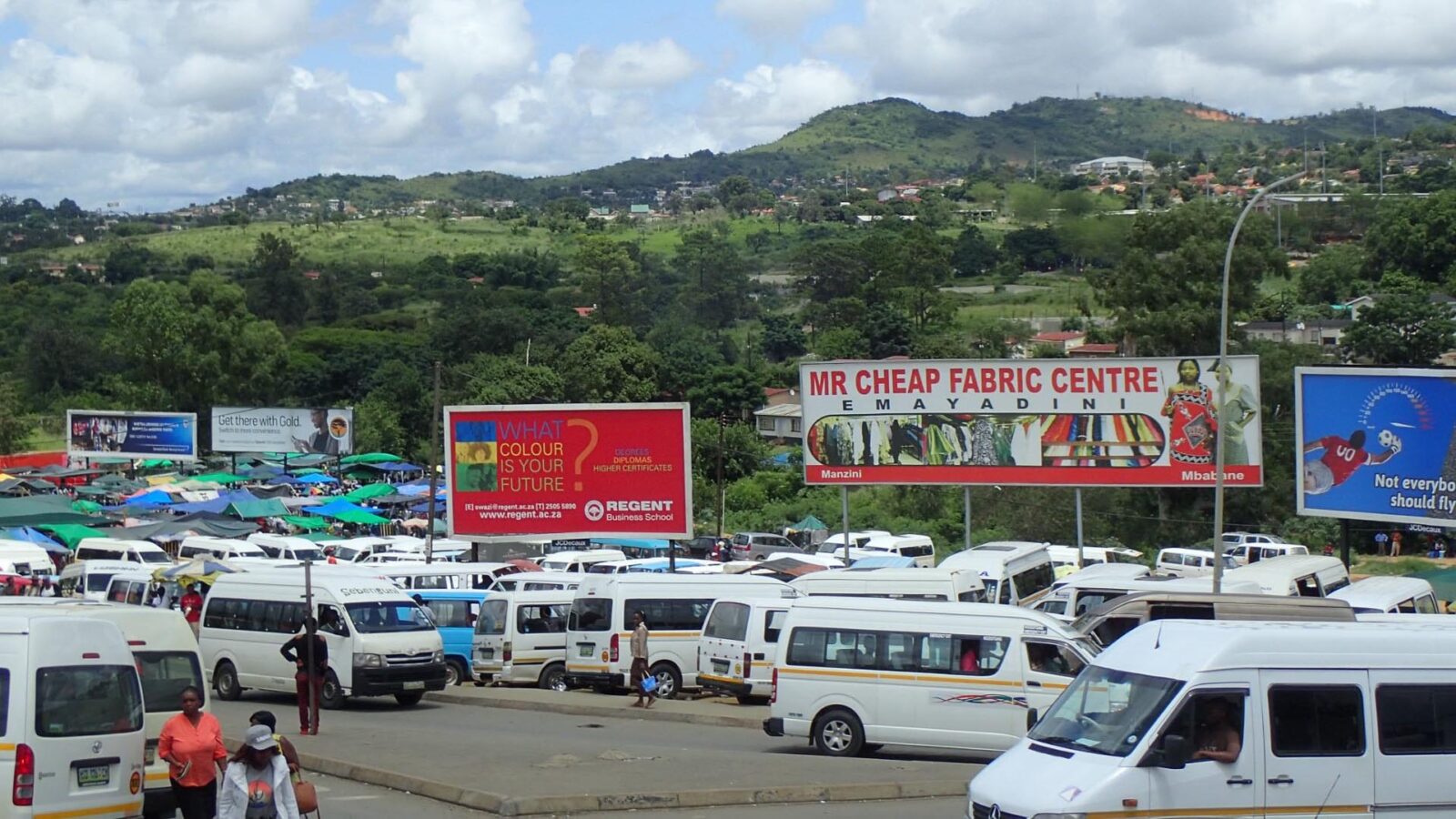
MBABANE – As public transport operators are caught between a rock and a hard place when it comes to the bus fare hikes, commuters’ budgets hang in the balance.
Following the increase in fuel prices, public transport operators are set to converge in Manzini on Thursday, at a venue yet to be decided.
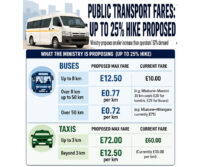
National Secretary General of the Swaziland Local Transport Association (SLTA) Ambrose Dlamini said their meeting will be to deliberate and reach a consensus on the possible percentage hike in their service fares.
He acknowledged that it has been a long time since the last upward review of the bus fares and this has strained their operations as the inputs and human resource remuneration have been increasing despite the pause in the public transport fare hike. Dlamini said the consultant they had recruited would deliver on the day the total of all their operational costs, which have accumulated in the past five years, against what they were getting in their investments.
This, he said, shall then give all those in the transport sector the margins they can plead with government to review. The proposed meeting is against the backdrop of Principal Secretary Lungile Mbingo last Wednesday announcing new fuel prices which came into effect on Friday. According to the announcement, the price of Unleaded Petrol (ULP95) will rise by E2.90 per litre, increasing from E19.45 to E22.35 per litre. Diesel (50ppm S) will see a much steeper increase of E5.35 per litre, moving from E19.85 to E25.20 per litre.
Meanwhile, the price of illuminating paraffin will climb by E5.30 per litre, from E14.20 to E19.50 per litre.
The ministry attributed these sharp increases to escalating international oil prices, driven largely by supply chain disruptions and heightened geopolitical instability in key oil-producing regions.
During March 2026, Brent crude oil prices surged to an average of US$104 per barrel, a substantial increase from the US$69 per barrel recorded in February 2026. This dramatic rise has had a direct impact on the cost of importing fuel products, resulting in extended delivery lead times and elevated procurement costs. Officials noted that the cumulative effect of these global pressures has created substantial under-recoveries in the domestic fuel pricing structure. Deficits across petroleum products reached as high as E12.14 per litre, making an upward adjustment unavoidable. Meanwhile, leading up to the meeting, some of the public transport operators said they were facing a conundrum, given that the hike in fuel prices escalated their costs of doing business, while on the other hand, households were already living with stretched resources.
They said increasing the transport fares could see some of their routes losing over 50 per cent of their clients. These routes, they said, were short-distance routes as commuters might opt to walk to their destinations to save.They said this was one of the challenges they were facing and as such, they were proposing that government suspends the fuel levy pending the normalisation of the current status quo caused by the tension in the Gulf region.
It is worth noting that as of March 1, 2025, the Roads Authority Act of 2023 approved E0.40 to be added to the fuel price to be able to fund the operations of the Road Agency Fund so that maintenance of the national, regional and local road infrastructure can be better executed. Also, taxes that play a role in the consumer price include the fuel levy remitted to the Sincephetelo Motor Vehicle Accident Fund (SMVAF) at 42 cents per litre, Eswatini National Oil Company (ENPC) levy of 35 cents per litre, the fuel oil levy at 50 cents per litre and the fuel tax E3.85. In total, the taxes amount to E5.52 per litre. The transport operators said they shall tender this submission during the meeting to the Sabelo Dlamini-led National Road Transport Council (NRTC) which will in turn advance it to government.
*…
Ministry promises fuel stability amid deficit
MBABANE –“We are already operating at a deficit, but there will be no fuel shortages,” says the Ministry of Public Works and Transport.
Principal Secretary in the Ministry of Public Works and Transport Thulani Mkhaliphi said their budget has already been knocked down by the Iran–Israel–US conflict; however, they had a plan to deal with the impact. The PS was responding to a questionnaire that sought to establish how they would ensure that the impact of geopolitics does not trickle down to frustrating the operations of government ministries and departments. Mkhaliphi said: “We have a plan and it is two-fold. We shall distribute fuel based on the ratio of the volume of imported fuel. Secondly, the supply to different ministries will also be influenced by the increment in the cost of fuel, so that we remain within our budget.” The controlling officer said the ministry shall be implementing a fuel management system, which shall ensure that this plan runs efficiently.
It is worth noting that though the Central Transport Administration (CTA) is responsible for the efficiency of the government machinery through the provision of transport.
*Full article available on Pressreader*












Leave a comment