

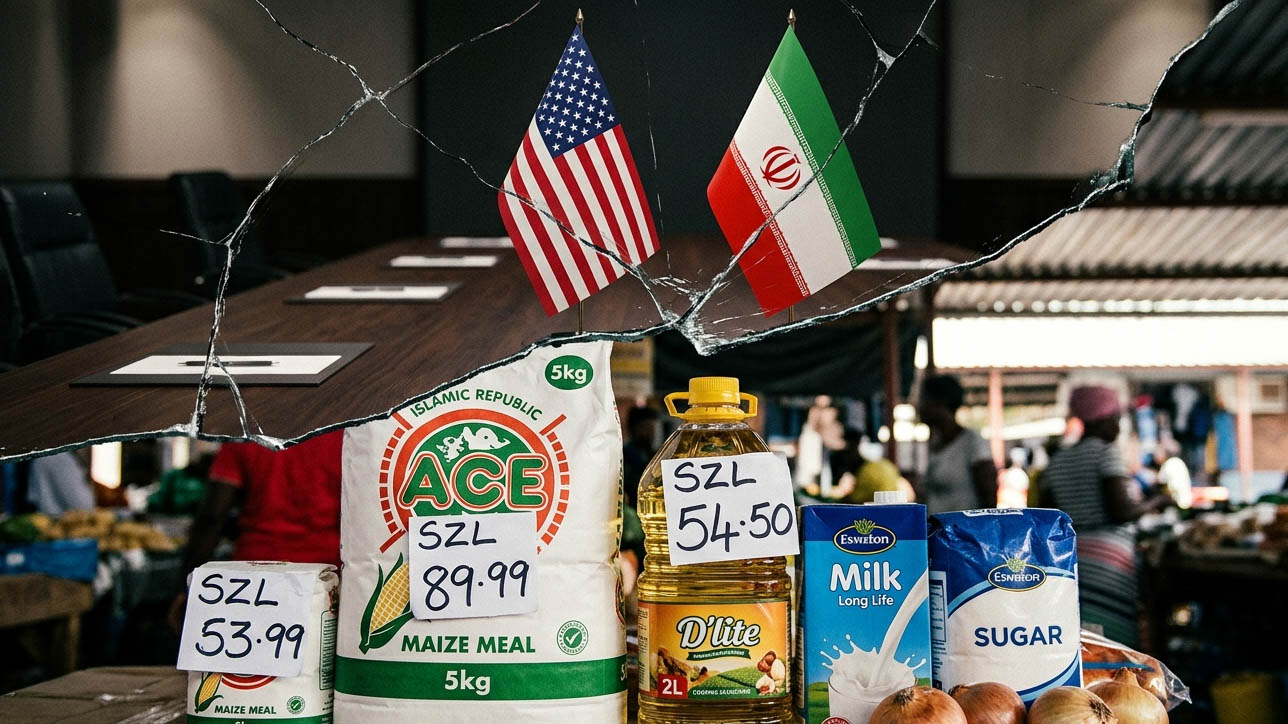
MBABANE – A tentative ceasefire between the United States and Iran may ease global tensions, but Eswatini’s economy is unlikely to feel immediate relief.
The development follows a turbulent month marked by escalating hostilities in the Middle East, with fears of a broader regional war disrupting global energy markets.
The conflict heightened concerns over the security of the Strait of Hormuz, a critical transit route through which a significant share of the world’s oil supply passes.
At the height of tensions, oil prices surged sharply on global markets, triggering a ripple effect in import-dependent economies such as Eswatini.
Locally, this translated into higher fuel costs and rising prices for basic commodities. Consumers have already endured knock-on effects, including more expensive food and other essential goods.
In recent weeks, the Kingdom has seen fuel price adjustments trend upwards, placing additional strain on households and small businesses.
Transport operators, citing unsustainable operating costs, have pushed for fare hikes, while retailers have passed increased logistics costs on to consumers.
The proposed ceasefire comes after Iran tabled a 10-point plan, which includes demands such as the lifting of sanctions, recognition of its nuclear programme, and continued control of strategic waterways.
It also calls for the withdrawal of US forces from the region and compensation for war-related damages. The plan envisages negotiations during a two-week cessation of hostilities.
While the ceasefire signals a potential de-escalation, an economist said the impact on Eswatini would not be immediate. He noted that global oil prices tend to respond gradually to geopolitical shifts, and any sustained reduction depends on the durability of the truce.
Moreover, supply chains disrupted over the past month may take time to normalise. Import costs remain elevated, and the volatility surrounding the United Nations Security Council and International Atomic Energy Agency dynamics Iran’s nuclear programme could prolong uncertainty.
For Eswatini consumers, this means continued pressure in the short term. Fuel and goods prices are unlikely to drop quickly, even if global markets stabilise. Economists caution that retailers and service providers often raise prices faster than they reduce them.
However, a sustained ceasefire could gradually restore confidence in global markets, potentially easing fuel prices and stabilising inflation over time. For now, households are bracing for continued tight conditions, with disposable incomes stretched and cost-of-living pressures persisting.
The coming weeks will be critical in determining whether the ceasefire holds and whether relief will eventually reach economies far removed from the conflict, including Eswatini.



















Leave a comment