

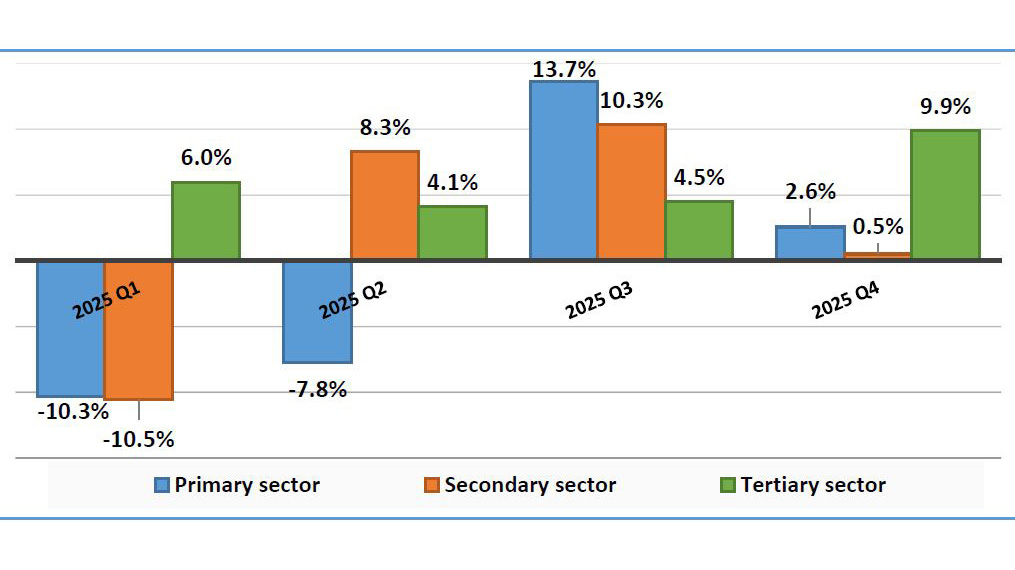
MBABANE – The mining and manufacturing sectors delivered a mixed and ultimately subdued performance in the fourth quarter of 2025, weighing on the broader secondary sector.
According to the Central Statistical Office’s latest Quarterly Gross Domestic Product (GDP) bulletin, the economy expanded by a robust 5.7 per cent year-on-year in the final quarter of 2025, a marked improvement from the 1.3 per cent growth recorded in the corresponding period in 2024.
However, beneath this strong headline growth, the secondary sector – which includes mining, manufacturing, electricity and water and construction – registered a modest growth of just 0.5 per cent year-on-year, highlighting underlying weaknesses in key productive industries.
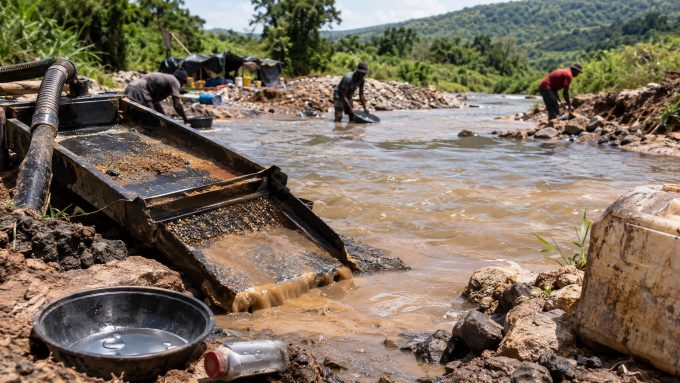
The mining and quarrying sector emerged as a relative bright spot within the primary industries, recording a 6 per cent year-on-year growth in the fourth quarter.
This growth reflects a recovery from volatility observed earlier in the year, particularly in the third quarter when the sector posted a sharp expansion. On a quarterly basis, mining activity has been characterised by fluctuations, pointing to its sensitivity to external demand conditions, commodity prices and operational disruptions.
Despite this positive growth, mining continues to play a relatively minor role in the overall economy. Data shows that the sector contributed only 0.7 per cent to GDP in Q4 2025, underscoring its limited scale within Eswatini’s production structure.
In real terms, mining output stood at approximately E250 million during the quarter, reflecting a recovery from E236 million, recorded in Q4 2024.
While the growth trajectory is encouraging, the sector’s small contribution to GDP highlights the need for further investment, diversification and value addition if mining is to become a more significant driver of economic transformation.
*Full article available on Pressreader*















Leave a comment