


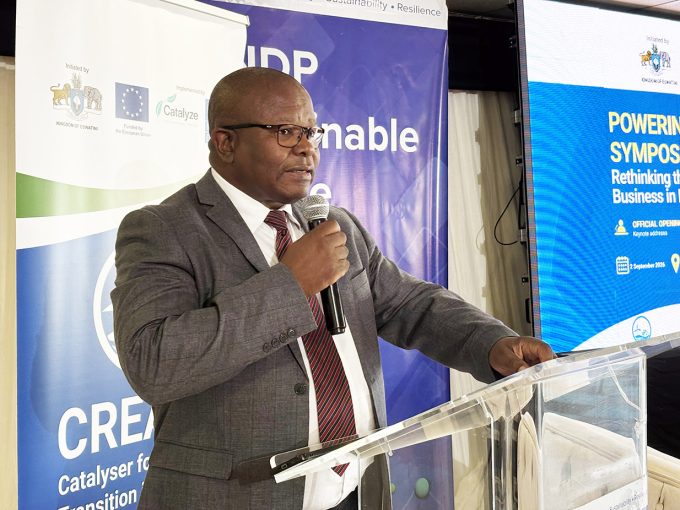
SIMUNYE – The local sugar industry players have declared value addition, diversification and innovation as critical components for future growth amid mounting global economic pressures.
Eswatini Sugar CEO Banele Nyamane highlighted renewable energy generation, ethanol production and specialty sugar manufacturing among the major opportunities capable of transforming the industry beyond traditional raw sugar exports.
“The future of the sugar industry lies in value addition, industrial diversification and sustainability,” he said.
Nyamane noted that the industry was increasingly exploring opportunities in climate-smart agriculture, precision farming, climate-resilient seed varieties and modern irrigation systems.
He also highlighted growing opportunities in pharmaceutical-grade sugar, biodegradable packaging and biochemical derivatives as part of broader industrial diversification efforts.
The diversification drive was further echoed by local sugar millers, who shared how their companies were repositioning themselves beyond conventional sugar production into integrated agro-industrial operations.
Ubombo Sugar Limited Managing Director Muzi Siyaya said the future sustainability of the industry depended on the ability of sugar companies to innovate and diversify their revenue streams in response to changing global market conditions.
Siyaya said the company had over the years intensified investments in renewable energy generation and ethanol production as part of efforts to unlock additional value from sugar cane by-products.
“We can no longer rely solely on raw sugar exports. The future lies in maximising every component of the sugar cane value chain through diversification, innovation and sustainability-focused investments,” he said.
He said cogeneration projects were increasingly becoming important in supporting national energy security while simultaneously improving operational efficiencies within sugar milling operations.
Siyaya further noted that ethanol production presented significant opportunities for industrial growth, energy security and import substitution, particularly as countries across the globe accelerated transitions towards cleaner energy solutions. He also highlighted the growing importance of sustainable production systems, saying international markets were increasingly demanding environmentally responsible products with lower carbon footprints.
Royal Eswatini Sugar Corporation Managing Director Nick Jackson similarly stressed the importance of diversification in ensuring the long-term resilience of the sugar sector amid volatile global sugar prices and rising production costs.
Jackson said the company’s diversification strategy had evolved significantly over the years to include renewable energy projects, ethanol development initiatives and broader industrial opportunities linked to sugar cane processing.
“The sugar industry today is no longer just about producing sugar. It is about becoming an integrated bio-economy player capable of producing food, energy and industrial products from a single crop,” he said.
He noted that renewable energy generation through biomass and cogeneration continued to create new opportunities for both revenue generation and environmental sustainability.
*Full article available on Pressreader*



















Leave a comment