

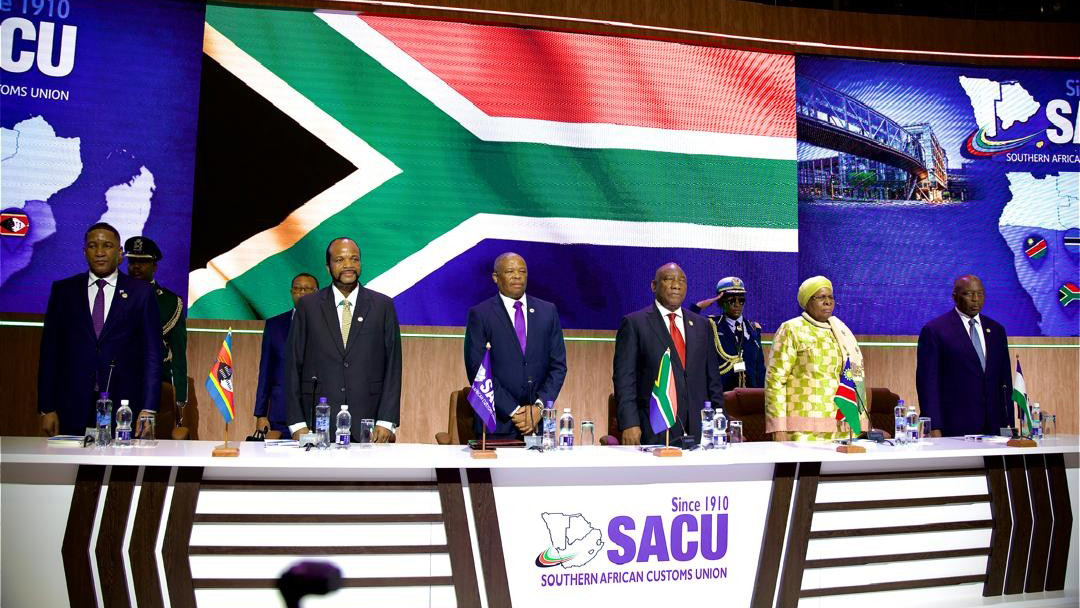
Following the 9th Southern African Customs Union (SACU) Summit held in Cape Town last week, which endorsed its move to gradually reimagine itself while retaining the current revenue-sharing formula, it is fair to say we have been thrown a lifeline.
Ironically, I have been reliably informed that this new form and shape of the organisation was heavily influenced by His Majesty the King during the 2023 SACU summit in Eswatini, where it seemed inevitable that the revenue-sharing concept was coming to an end. The question now is: Will we seize this opportunity or allow it to slip through our fingers?
His Majesty has repeatedly called for diversification of our local economy, with a warning that our heavy dependence on SACU receipts is a house of cards waiting to collapse. Yet year after year, we have procrastinated. We have listened to the warnings but failed to act with the urgency they deserve. This time must be different. This time we have no choice.
The adopted phased approach to change rather than abrupt disruption to our economy has given us precious time to prepare. But time is not guaranteed.
South African Finance Minister Enoch Godongwana made this crystal clear at the post-summit press conference when he said: “What we are moving away from is dependence. No member State should have its national budget entirely dependent on volatile customs revenues to survive.” These words should be repeated daily in every government office and boardroom across the country.
The urgency of the required action is further emphasised by events beyond our borders. Our brothers and sisters are returning from South Africa in significant numbers, fleeing hostilities directed at foreigners in that country.
Many are being branded as illegal immigrants and facing hostility that threatens their safety and livelihoods. What are these people coming home to because we already have a high number of unemployed, sitting at around 33.5 per cent according to the latest Labour Force Survey? This is the question that should haunt every decision-maker in this country. We cannot welcome them back to despair by telling them there are no opportunities here.
The summit has resolved to set up a SACU Development Fund with an initial capital of E5 billion to facilitate infrastructure projects to develop the region. This represents our best chance to create the jobs our people desperately need. These are not just construction jobs. They are opportunities to build skills, develop expertise and create sustainable livelihoods and spare our people from being portrayed as outcasts elsewhere.
We have to ensure our business industry players are capable of fully participating in the industrialisation of the region.
Minister Godongwana has given us assurance that SACU will prioritise regional firms for major infrastructure projects. “Our priority is to ensure that the companies contracting for these major infrastructure pipelines and plants come from SACU member States,” he said.
This is a commitment we must hold them to, but it is also a challenge to us. Are our local industries ready to take advantage of this opportunity? Are our contractors prepared to compete? If not, we have only our legislators and the Executive to blame, as governments elsewhere financially back their businesses to take up major projects across the globe.
What is our position on this?
Our economic situation is precarious, given word from government that it is desperately waiting for the next tranche of SACU receipts to pay for salary backpay for civil servants and government suppliers who have gone for months without payment. This is not a sustainable way to run a country. The revenue-sharing formula will continue to exist for now, but we cannot continue to treat it as our economic lifeline because it will be diverted to infrastructure in the near future.
Also agreed at the summit is the unified SACU approach to external trade negotiations, which offers us protection we would not have on our own.
Minister Godongwana made this clear when he said: “As a unified bloc, we cannot allow a divide-and-conquer approach to negotiation. We will continue to negotiate collectively as a union.” For Eswatini, with our unique diplomatic challenges, this solidarity is invaluable. But it is not a reason to relax. It is a reason to prepare thoroughly.
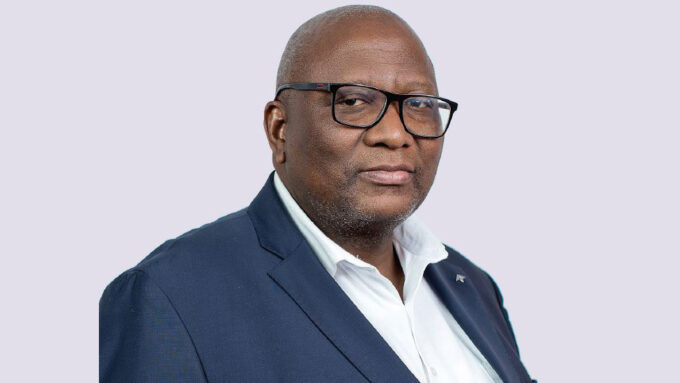
There were moments of pride at the summit, from Botswana president eloquently extolling praise on His Majesty the King and our preservation of history through praise singing, to the congratulatory messages extended to a liSwati, Dumisani Masilela, on his appointment as the new Executive Secretary of SACU.
Masilela’s presence at the helm of this organisation should not give us a false sense of comfort. His elevation should not be an excuse for complacency. We must be ready and organised to reshape our local economy under a reimagined SACU in the country south before we look to the Executive Secretary for help.
The time for procrastination is over. The King has given us direction and the SACU Summit has given us opportunity. Our returning emaSwati and the unemployed give us an urgency that requires us to act immediately.
All relevant stakeholders from government to business to labour must heed the call to prepare to contribute to the reimagined SACU.
The reality is that we may not get an opportunity like this to avert the collapse of our economy.














Leave a comment