

Water damage is a homeowner’s greatest concern and with the persistent heavy rains, your guttering system is the first line of defence in preventing it.
Without efficient drainage, rainwater can spill over, collect around your foundation and result in flooded basements, structural instability, and soil erosion. Over time, this excess water can strip away topsoil, kill plants and ruin garden paths, leaving your landscaping in disarray.
Fortunately, a well-kept gutter system can protect your property and garden with relatively little maintenance.
Many people only consider their drainage once a problem arises. However, blocked gutters, inadequate downpipes and poor runoff can lead to expensive repairs. Whether you are battling standing water, foundation cracks or garden erosion, implementing the right drainage solutions is essential.
This guide explores common issues, straightforward fixes and professional strategies to ensure your gutters perform effectively in all weather conditions.
What is a gutter drainage system?
A guttering system is designed to divert rainwater away from your property, protecting the foundation, roof and garden from water-related damage.
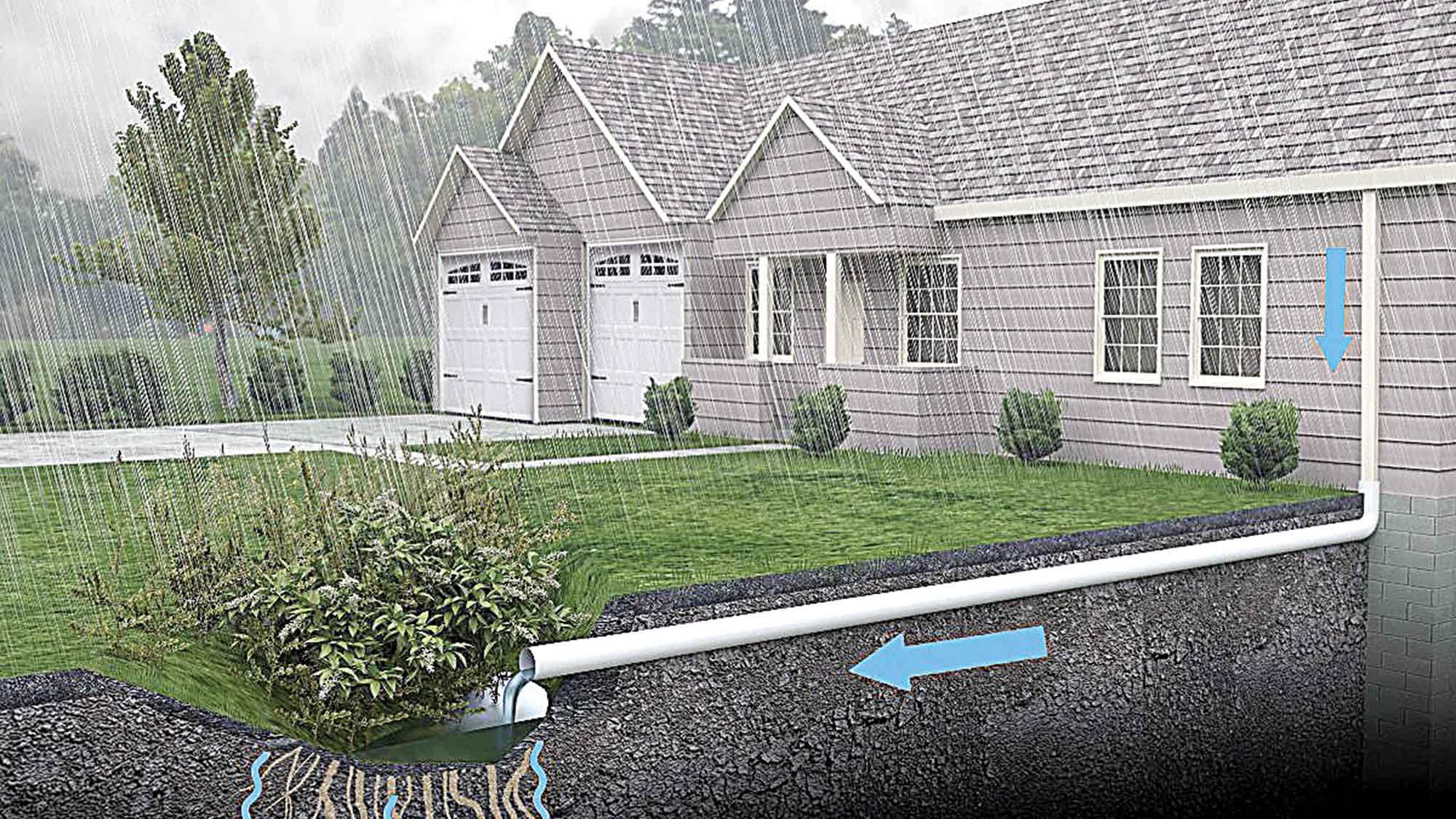
It functions by gathering rain from the roof and directing it safely through a network of gutters, downpipes and extensions. When every part of the system is working correctly, your home stays dry, your garden remains healthy and you avoid the need for structural repairs.
The process is simple: Gutters catch the rain as it runs off the roof tiles, preventing it from streaming down the walls or pooling at the base of the building. Downpipes then transport this water away from the roofline. To ensure water doesn’t settle near the footings, extensions or soakaways are used to move the discharge further into the garden or the main drainage system. Some homeowners also incorporate rain chains, French drains or silt traps to manage flow and prevent puddles.
Common guttering problems
Even high-quality systems can fail if they are poorly installed or neglected. Ineffective drainage can lead to damp issues and landscape damage. Key problems include:
Blocked gutters: Fallen leaves, moss and twigs can obstruct the flow of water. When gutters are blocked, water overflows, soaking the fascia boards, walls and foundation. This can lead to timber rot, dampness, and masonry cracks.
Short or poorly positioned downpipes: If downpipes release water too close to the house, it can compromise the foundations. Pooling water often seeps into cellars or basements, causing damp and weakening the structure. Beyond the house, improper placement can ruin your garden by washing away mulch and creating muddy patches that attract pests.
Incorrect gutter pitch: Gutters must have a subtle slope towards the downpipes. If they are too level, water will sit in the trough, increasing the risk of rust, leaks, and debris accumulation. The weight of standing water can also cause the guttering to pull away from the building.
Simple solutions for better drainage
Maintaining your system is the most effective way to prevent overflows and protect your home’s value.
Regular gutter cleaning
The easiest way to avoid blockages is to clean your gutters at least twice a year–ideally in spring and autumn. If your home is surrounded by trees, you may need to do this more often.
If you choose to clean them yourself, ensure you use a stable ladder with someone to assist you. Use a gutter scoop to remove organic matter and a hose to flush out fine grit. Always wear protective gloves and eyewear and keep an eye out for loose brackets or sagging sections. If working at height isn’t for you, hiring a professional service is a safer and more thorough option.



















Leave a comment