

There are some news stories one reads as a citizen and simply moves on from. Then there are those that force one to pause, reread the headline and ask: How did we get here?
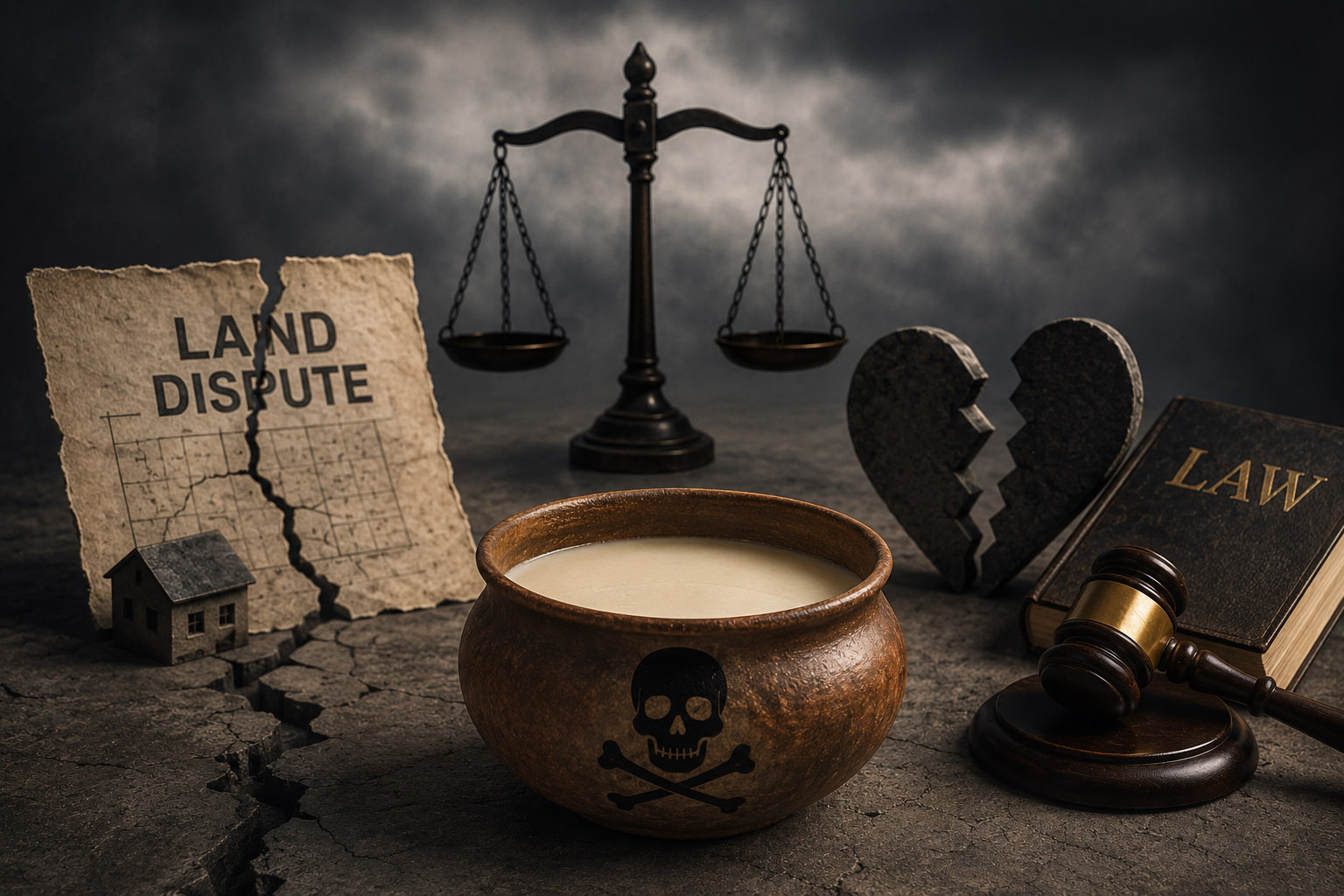
The reported poisoning of emahewu at Siphocosini, allegedly arising from a long-running land dispute, is one such story. A three-year-old child is dead. His eight-year-old brother and mother were hospitalised. And, most disturbingly, the allegation is that the poison may have been intended for an adult involved in a land dispute.
As a citizen, I find this profoundly difficult to comprehend. How does a disagreement over land, property or ownership evolve to a point where taking another person’s life becomes an option?
At what stage does disagreement stop being a disagreement and become a justification for violence? The tragedy is that the dispute reportedly had other avenues available. Land claims can be contested. Evidence of ownership can be examined. Traditional authorities can intervene. Lawyers can be consulted. Courts exist precisely because human beings will disagree, sometimes passionately, about what belongs to whom. Yet increasingly, there appears to be a frightening willingness within societies to treat violence as a shortcut to resolving problems that require patience, evidence and negotiation. This is not uniquely Eswatini’s problem. In India, for example, a 2026 case involved a man allegedly beaten to death by relatives during a confrontation over ancestral land after previous village-level attempts to resolve the dispute had failed. In another Indian case, a farmer was allegedly poisoned to death by relatives over a land dispute.
Closer to home, South Africa has also recorded deadly disputes over matters that should never have required a life to be lost. In February this year, a 33-year-old man was allegedly shot dead during a disagreement over access to a water tank in Delmas. What began as a dispute over access to a basic resource ended in murder. These cases should make us uncomfortable because they expose a disturbing human tendency: When anger becomes greater than reason, people begin to perceive the destruction of an opponent as a solution.
But killing does not resolve a dispute. It merely creates another one – between the perpetrator and the law, between families and between communities. It replaces a property disagreement with grief, criminal proceedings, orphaned children and a lifetime of consequences. And in the Siphocosini tragedy, the most devastating irony is that the alleged dispute did not even spare those who were not party to it. A child who could not possibly have understood the argument, let alone participated in it, reportedly became the one who paid the ultimate price. That should be a national wake-up call. We must teach ourselves, our children and our communities that conflict is not abnormal; violence is a choice.
Disputes will always exist. Families will disagree over inheritance. Neighbours will disagree over boundaries. Communities will disagree over land. Business partners will fall out. Couples will argue. People will feel cheated, insulted or wronged.
Civilisation is not measured by whether we have disagreements. It is measured by what we do when those disagreements occur. The first principle must, therefore, be simple: Do not respond to anger with an irreversible action. When emotions are high, step away. Do not threaten. Do not reach for a weapon. Do not recruit friends or relatives to intimidate the other party. Do not allow alcohol, gossip or social-media commentary to turn a disagreement into a confrontation.
Second, use mediation. A neutral third party can sometimes achieve what two angry parties cannot. In Eswatini, this can include appropriate traditional structures, community leaders, religious leaders or professional mediators, depending on the nature of the dispute. Third is the use of the law.
If the disagreement concerns land, establish the facts and pursue the appropriate legal or customary process. If it concerns money, seek arbitration, mediation or legal advice. If it concerns a family matter, involve people capable of calming the situation rather than those who will inflame it. Importantly, seeking justice does not mean seeking revenge.
There is a profound difference between saying: “I will have this matter resolved,” and saying, “I will make this person pay.” The first is rational. The second can become dangerous.















Leave a comment