

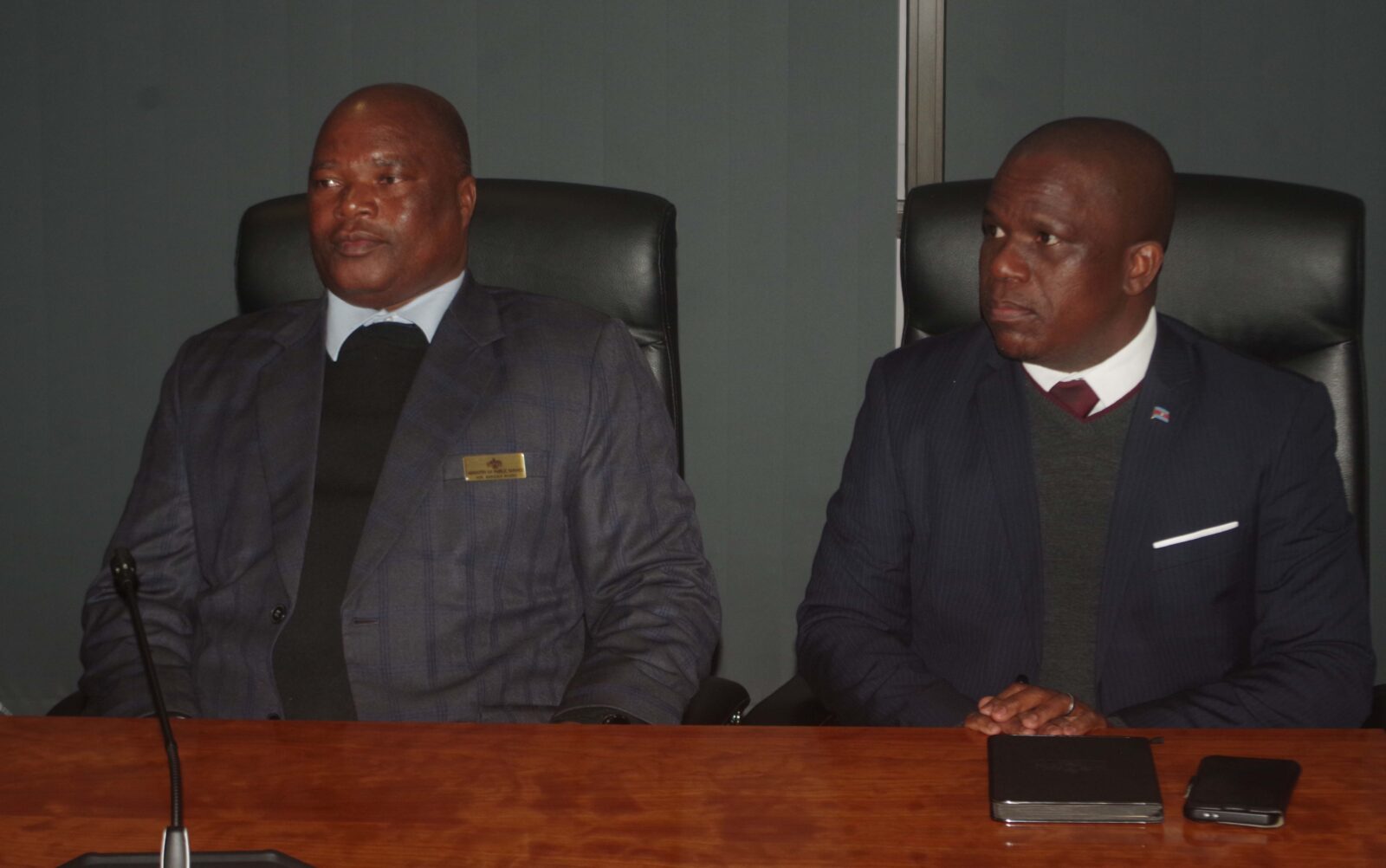
MBABANE- “Angeke sikhibike (we will not relax).”
This was said Prime Minister Mmiso Russell Dlamini concerning the predicted severe drought by the World Meteorological Organization.
The organisation has forecast a more severe drought than the country experienced during the 2015/2016 El Niño event.
El Niño is a natural climate phenomenon characterised by unusually warm ocean surface temperatures in the central and eastern tropical Pacific.
In Africa, it frequently triggers severe droughts and dry spells across Southern Africa, Central Africa, and the Horn of Africa, which can significantly impact agriculture and food security.
The latest update from the organisation indicates an 80 per cent probability of El Niño conditions occurring between June and August 2026.
To emphasise its severity, the organisation has termed this event a ‘super’ El Niño.
The weather experts also predict that this likelihood could increase to over 90 per cent towards the end of the year.
Similarly, the United States National Oceanic and Atmospheric Administration has placed the climate system under an El Niño Watch, projecting a strong possibility that the phenomenon could persist into early 2027.
When asked if measures were in place should the prediction materialise, the prime minister responded that the predicted drought falls under the jurisdiction of the Deputy Prime Minister’s Office and the National Disaster Risk Management Authority (NDRMA).
It is worth noting that the national economic losses following the 2015/2016 drought were estimated at approximately E3.843 billion. In response, he said the relevant ministry and its stakeholders have begun issuing warnings and advice aimed at preparing the nation for the anticipated risk.
The prime minister stated that the country would not relax but would instead work on strategies to mitigate the potential impact. He emphasised that the message to the nation was that people should refrain from burning veld as previous experiences had shown that livestock are greatly affected by drought.
He expressed hope that rainfall would play a significant role in improving vegetation, thereby supporting livestock survival. Additionally, he stressed the importance of water harvesting for the benefit of livestock.
On another note, the prime minister acknowledged that there is a possibility that the predicted drought may not become a reality; however, he reiterated that the country would remain vigilant because the predictions could cause setbacks if they materialise.
He specifically highlighted concerns regarding livestock, through which many emaSwati survive.
It is important to recall that during the 2015/2016 El Niño, the country experienced its most severe drought in 35 years.
Extremely low rainfall and prolonged heatwaves caused severe water shortages, critically depleting surface and groundwater resources. The crisis significantly affected the staple agricultural sector and urban water supplies.
The severe drought resulted in the deaths of approximately 60 000 to 88 000 cattle nationwide due to a lack of food and water.
Farmers were forced to ration feed for their livestock or bury their dead animals. Some farmers had no option but to sell their surviving livestock at severely deflated prices in order to purchase government-subsidised hay bales.
The National Disaster Risk Management Authority (NDRMA) has taken recent developments seriously.
In a statement issued following the global warning, the authority urged the nation to begin precautionary preparedness measures, citing growing international climate signals indicating a high likelihood of El Niño conditions developing during the latter half of 2026.
The authority clarified that, although the Eswatini Meteorological Service has not declared drought conditions and continues to forecast generally favourable winter conditions – including normal to above-normal rainfall in most parts of the country – experts have cautioned that El Niño may develop later in the year and influence the upcoming summer rainfall season.
Magman Mahlalela, the NDRMA Communications Manager, emphasised that this advisory should not be interpreted as a drought declaration but rather as an opportunity for the country to prepare early and minimise potential future impacts.
“Experience from previous El Niño events has shown that early preparedness significantly reduces the human and economic costs associated with drought and other climate-related impacts,” he said.
Mahlalela recalled that Eswatini experienced considerable hardship during the 2015 – 2016 El Niño event, which resulted in severe drought, widespread agricultural losses, reduced water availability and threats to food security












Leave a comment