

Madam,
I read with interest Mbuyiselo S. Sikhondze’s letter, ‘The myth of monogamy’. While I respect the writer’s views on love and human emotions, I disagree with the suggestion that monogamy is merely an idealistic concept that goes against human nature.
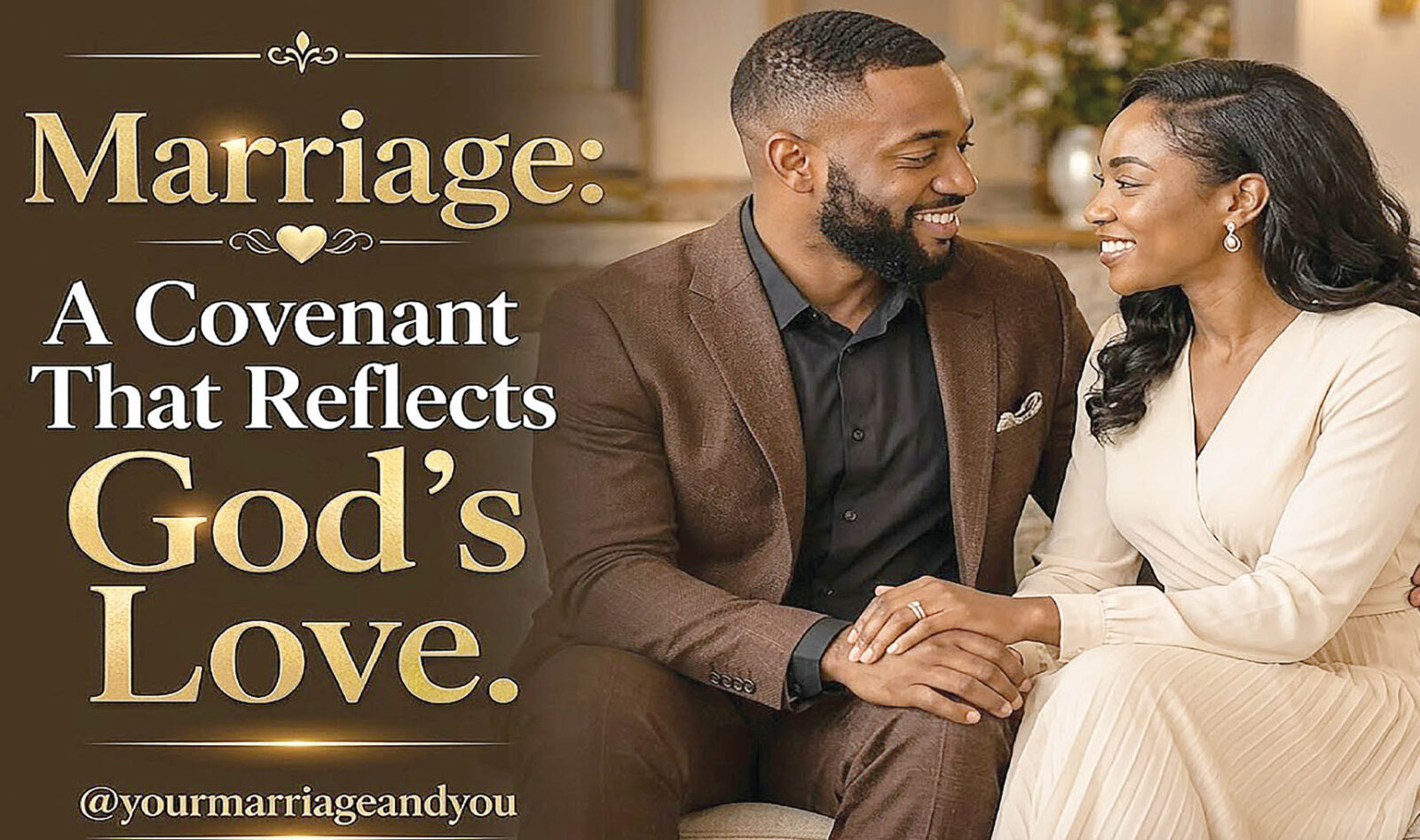
As a Christian, I believe marriage cannot be defined simply by what human beings are capable of feeling. It must also be understood through God’s design for marriage. The fact that a person can develop feelings or attraction towards more than one person does not mean that pursuing those feelings is right.
The Bible gives us a clear foundation for marriage in Genesis 2:24: “Therefore, a man shall leave his father and his mother and hold fast to his wife, and they shall become one flesh.” In our vernacular, we understand this as a man leaving his parents ‘anamatselele kumkakhe’, holding firmly to his wife. The scripture does not say that a man should leave his parents and attach himself to several women. It says he shall hold fast to his wife, and the two shall become one flesh.
This is not merely an Old Testament idea. Jesus Himself reaffirmed it in Matthew 19:5-6 when He said: “For this reason a man shall leave his father and mother and be joined to his wife and the two shall become one flesh.” Jesus was affirming God’s original design for marriage.
The word ‘two’ matters. Marriage, according to this teaching, is a covenant between two people. It is, therefore, difficult for me, as a Christian, to accept the argument that because human beings are capable of loving several people, they should then pursue several romantic relationships.
We must distinguish between having feelings and acting on those feelings. Human beings experience many emotions and desires, but Christianity does not teach that every desire should be followed. We are called to exercise self-control and discipline. Attraction is not a licence.
I also disagree with comparing romantic love between spouses to the love parents have for their children. A parent can love several children without violating the covenant of marriage. Romantic relationships involve intimacy, sexual commitment, responsibility and exclusivity in a way that the parent-child relationship does not. The argument that ‘love is not a limited resource’ may sound convincing, but marriage is not simply about measuring how much love the human heart can contain. It is about faithfulness. A husband does not promise his wife that he will love her only until another woman captures his attention. He makes a covenant to remain faithful.
The Bible also teaches in 1 Corinthians 13 that love is patient and kind and ‘does not seek its own way’. Christian love, therefore, involves sacrifice. Sometimes loving someone means denying yourself rather than satisfying every emotion you experience. We should also be careful about using the failures of some marriages as evidence that monogamy itself is a myth. The existence of adultery does not mean faithfulness is impossible. The existence of divorce does not mean marriage is meaningless. Human beings can fail to live according to a standard without proving that the standard is wrong.
As Christians, we are not called to make God’s standards conform to our desires. We are called to conform our lives to God’s Word. Proverbs 14:12 warns us that there is ‘a way that seems right to a man, but its end is the way to death’.
Yes, human beings are complex. Yes, someone may find themselves attracted to more than one person. But the Christian response is not necessarily to say, ‘Therefore, pursue them all.’ It is to ask: What does God require of me?
Monogamy is, therefore, not a myth to me. It is a covenant established in Scripture. Indvodza iyashiya uyise nenina, inamatsele kumkayo, bobabili babe nyamanye.
That is the biblical picture of marriage I believe in.
Lihlelemaswati Dlamini



















Leave a comment