
MBABANE – Eswatini’s public debt position is coming under increasing pressure as the cost of servicing government borrowing rises faster than economic output, according to the International Monetary Fund (IMF).
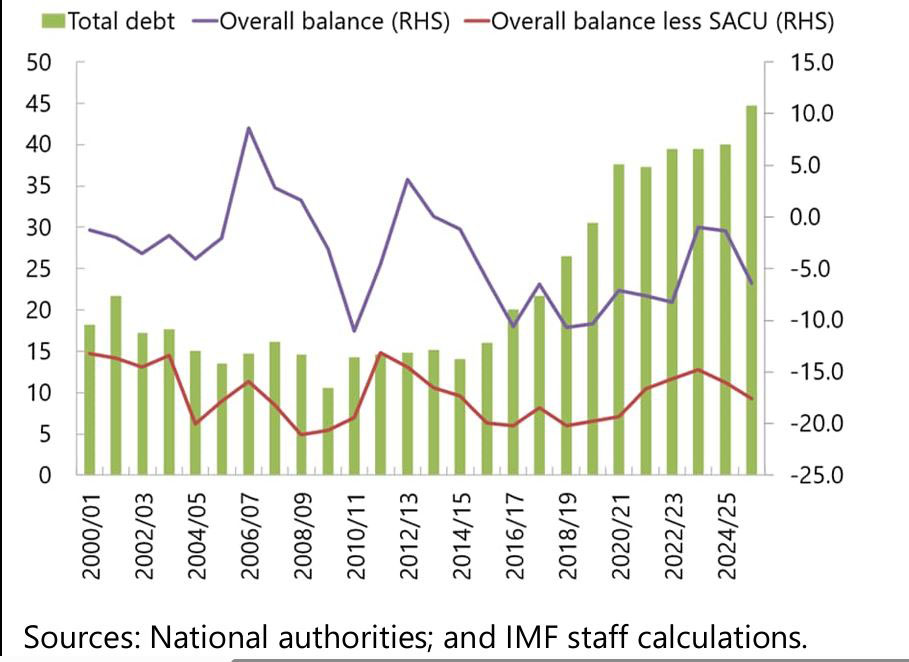
In its 2026 Article IV Consultation report released yesterday, the IMF said the country’s effective interest rate had risen further, exacerbating unfavourable debt dynamics because it exceeded nominal GDP growth. The warning comes as public debt increased sharply during the 2025/26 financial year, with the debt-to-GDP ratio rising from 40.0 per cent in FY2024/25 to 44.8 per cent in FY2025/26. The IMF attributed the deterioration largely to the widening fiscal deficit, which increased from 1.1 per cent of GDP to 7.8 per cent over the same period, following lower Southern African Customs Union (SACU) receipts, higher public investment, increased public wages and higher non-wage spending. The fund said Eswatini’s debt dynamics had become less favourable because the effective interest rate on government debt was now higher than nominal economic growth.
This means that, without sufficient fiscal adjustment or stronger growth, government’s debt stock can grow faster than the economy’s capacity to support it. The IMF’s debt sustainability analysis puts the issue into sharper perspective. It shows that the effective interest rate is projected at 8.7 per cent in 2026, compared with nominal GDP growth of 6.8 per cent, creating a gap of almost two percentage points.
The effective interest rate is calculated by dividing total interest payments by the debt stock at the end of the previous year. The IMF said the situation was particularly concerning because high borrowing costs were occurring alongside rising debt levels.
“Eswatini’s effective interest rate on its debt has exceeded its nominal GDP growth in recent years, worsening debt dynamics,” the fund said.
It explained that borrowing at such rates would likely increase the public debt stock faster than output if the efficiency of public spending remained at levels similar to those observed over the past decade. The fund further noted that stabilising the debt-to-GDP ratio under these circumstances would require government to run a primary surplus.