
MBABANE – The United Nations Development Programme (UNDP) is supporting the development of the University Innovation Pod (UniPod).
The UniPod is a shared innovation and product-development facility for businesses, students, engineers, artisans and innovators. It will provide specialised equipment and technical expertise for product design, prototyping, testing and small initial production runs.
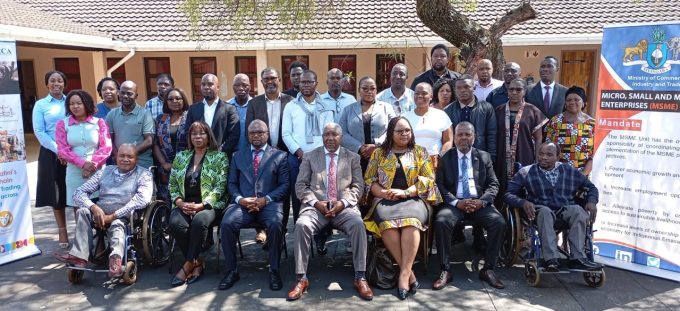
UNDP Deputy Resident Representative Nessie Golakai revealed the initiative during the King Mswati III International Airport Business Forum hosted by the Eswatini Civil Aviation Authority (ESWACAA) at Business Eswatini offices.
Golakai said the UniPod, being supported by UNDP and the Ministry of Economic Planning and Development, would provide a link between innovation, local production and the airport’s ambitions to become a more important economic and trade hub.
She said the development of air cargo could not be separated from strengthening Eswatini’s productive capacity, arguing that cargo starts well before goods reach an airport.
“Cargo begins in the factory, on the farm, in the warehouse and in the laboratory,” Golakai said.
She explained that if Eswatini wanted to increase the volume of goods moving through KMIII International Airport, it also needed to help businesses produce more, develop better products and overcome practical production constraints.
According to Golakai, the UniPod will serve as a shared innovation and product-development facility for businesses, students, engineers, artisans and other innovators.
The facility is expected to provide specialised equipment and technical expertise for product design, prototyping, testing and small initial production runs.
She said this could assist a business that has developed a product idea, wants to manufacture an imported component locally or is facing a technical problem affecting its production.
“The UniPod can help develop and test a possible solution before the business invests in full-scale production,” she said.
Golakai stressed that the facility was not intended to replace existing businesses or operate as a factory.
Instead, she said, its purpose would be to reduce the cost and risk associated with developing new products and help viable ideas progress towards commercial production.
The initiative therefore has a direct connection with the development of KMIII International Airport as an economic hub, particularly as the airport seeks to increase its role in facilitating trade and the movement of goods.
Golakai said the relationship between the UniPod and the airport was practical, with each initiative addressing a different part of the same economic value chain.
“The UniPod can help Eswatini develop and improve what it produces. KMIII International Airport can help bring in critical production inputs and connect suitable Eswatini products to regional and international markets,” she said.
She said UNDP was particularly interested in identifying products or components that could be prototyped through the UniPod and eventually manufactured by local businesses.
The organisation also wants to understand which production inputs could move more efficiently through KMIII International Airport, which local products could be suitable for air exports and whether products from different producers could be aggregated to make cargo services commercially viable.
However, Golakai cautioned against assuming that every imported product should immediately be manufactured locally or that every product was suitable for air transport.
She said opportunities needed to be technically possible, commercially sensible and based on actual industry demand.
“The economics, volumes, quality requirements, timing and reliability must all make sense,” she said.