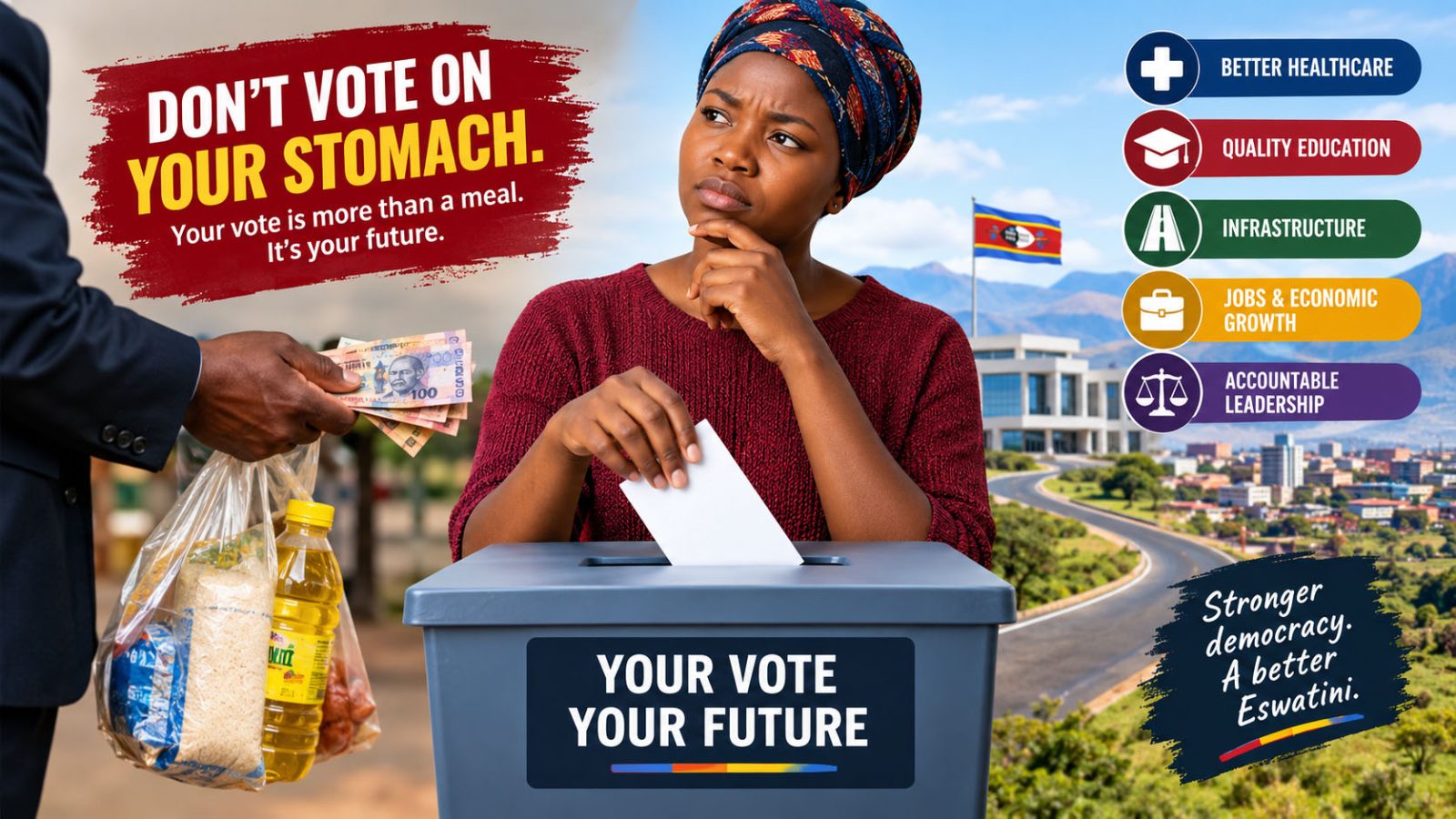
The Elections and Boundaries Commission, in its election education campaign, has issued a stern warning to voters in Eswatini: ‘Don’t vote on your stomach.’ I would like once again to congratulate the commission for having heard the public outcry from past elections that the commission should start early to educate voters on elections.
Why are elections important?
Elections form the bedrock of democracy. In fact, elections are the core mechanism through which democratic governance functions. They serve as the legal and operational bridge between public sovereignty and political power. Elections grant government officials a legal mandate to exercise power and enact laws, transforming political force into legitimate public authority. Elections provide a periodic mechanism for citizens to hold leaders responsible for performance, policy outcomes and ethical conduct, either renewing their mandate or voting them out. They allow diverse societal groups to secure formal representation in the Legislature and government decisions. Voting serves as the primary direct political action for most citizens, driving public debate, civic awareness and political interest. Voting outcomes signal public priorities on economic, social and political issues, guiding the government’s legislative and policy priorities.
Voting on the stomach phenomenon
In developing nations and socio-economically vulnerable communities around the globe, elections are marred by a socio-political phenomenon known as ‘voting on the stomach’.
This refers to electoral behaviour driven primarily by immediate material survival (e.g., accepting cash giveaways, foodstuffs, cooking oil or clothing items in exchange for votes) rather than long-term policy platforms, candidate merit or governance track records. While exchanging a vote for a meal may offer temporary relief to an impoverished voter, its long-term consequences weaken communities, erode institutions and entrench poverty.
Consequences of voting on one’s stomach?
When voters prioritise immediate material handouts over policy agendas, political officeholders face little pressure to deliver meaningful economic reform. Candidates seek substantial funds from individuals with self-interest during campaign cycles instead of investing in policy priorities that will address the long-term needs of their constituencies, such as long-term infrastructure, healthcare, public safety or education. Politicians who acquire power by purchasing votes view the transaction as complete. Having paid upfront for the seat, they feel no moral or political obligation to fulfil development promises or create jobs during their tenure. Vote buying entrenches corruption and erodes confidence in the electoral process. Electoral corruption at the voter level creates a cascading effect across every tier of government: Candidates who spend heavily to ‘buy’ electoral victories often enter office with the primary goal of recouping their investments through public procurement fraud, bribery and embezzlement.
Democratic elections are designed to hold poorly performing officials accountable. When money replaces performance as the main vote-driver, the democratic reward-and-punishment mechanism fails.
Relying on ‘stomach infrastructure’ devalues civic responsibility and deepens public cynicism: Citizens trade away their voice for short-lived items, effectively surrendering their leverage to demand better public services over a five-year tenure.
Visionary, ethical and competent candidates with limited financial backing are squeezed out of the race by wealthy political actors and this degrades the quality of governance and affects the very voter who needs quality services from government. The short-term gain in cash or meals replaces politicians’ commitment to addressing inadequate healthcare, poor infrastructure and unaddressed inflation. Governance quality is undermined as the oversight role of government gets neglected. Hence, this may result in corruption, looting of public treasuries and poor legislative policies. It further erodes the rights of voters to hold the elected accountable.
Eswatini governance
We are all aware that in Eswatini, politicians are elected based on individual merit. They seek a vote from the majority of voters who are trapped in poverty, unemployment and suffer from human rights violations, including land evictions. Many are unable to access quality services, as we are fully aware that the health system has been crippled by a lack of human and material resources, including essential drugs.
How to address this problem?
Addressing the issue of ‘voting on the stomach’ requires systemic reform rather than blaming voters trapped in poverty: Government has enacted legislation that governs elections. These include funding aspects of the campaign. It is time the Elections and Boundaries Commission and the police ensure that the electoral laws are adhered to. Those who are found violating the law should be punished.
Government should continue to invest in the reduction of extreme poverty and economic vulnerability, as it makes citizens less susceptible to short-term financial inducement during elections. The Elections and Boundaries Commission is doing well in investing in civic and voter education. Non-partisan civil society organisations must educate voters on the true value of their vote and how brief handouts compound long-term deprivation. The commission should open doors for civil society organisations such as NGOs to also complement its civic education efforts.