MANZINI – Eswatini is strengthening its public health surveillance and response systems to ensure the early detection and timely management of disease outbreaks, as the country prepares for possible public health emergencies, including the threat of ebola.
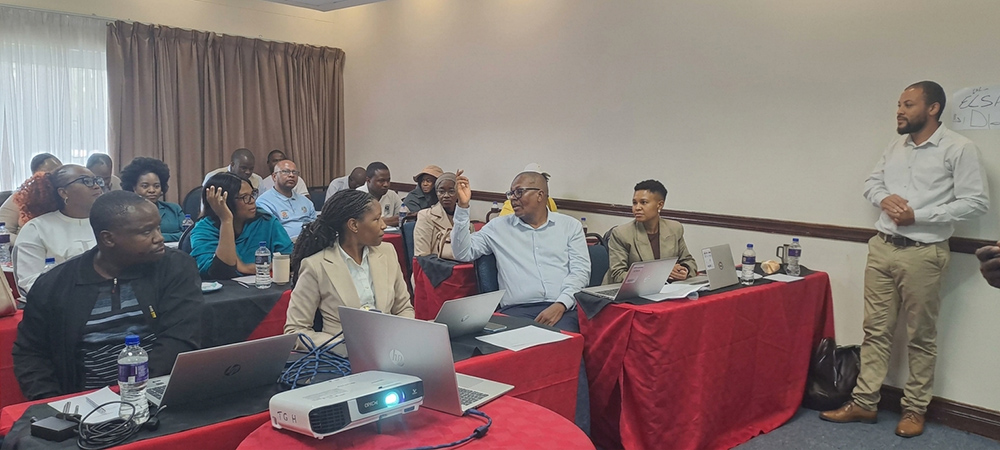
This was highlighted by Nkosinathi Dlamini from the Epidemiology and Disease Control Unit (EDCU) during a workshop organised by the Ministry of Health in conjunction with the National Disaster Risk Management Authority (NDMRA) at The George Hotel in Manzini.
Dlamini explained that the country was using the Integrated Disease Surveillance and Response (IDSR) strategy to strengthen its ability to identify, report and respond to priority diseases, health conditions and public health events.
He said the strategy was designed to ensure that potential threats were detected early at community, health facility and national levels, allowing the relevant authorities to respond before situations escalated.
“In a nutshell, IDSR says we need to be able to detect, notify and respond. Those are the three things,” he explained.
Dlamini said the strategy had several core functions within the health system, beginning with the identification of cases and events, followed by reporting, data analysis and interpretation, as well as investigations.
He explained that investigations could involve individual case investigations or broader outbreak investigations, depending on the nature of the health threat.
The EDCU representative further highlighted two important surveillance approaches used under the IDSR strategy: Indicator-Based Surveillance (IBS) and Event-Based Surveillance (EBS).
He said the two approaches complemented each other in strengthening early warning systems and epidemic intelligence.
According to Dlamini, Indicator-Based Surveillance involved collecting structured information using specific variables and indicators. Such information could be gathered at health facilities, within communities and at Points of Entry (PoEs), among other surveillance platforms.
On the other hand, EBS relied on information that was often unstructured or reported on an ad hoc basis, particularly when unusual health events or potential disease threats were identified.
He said both approaches were important in ensuring that health authorities received information about possible outbreaks as quickly as possible.
Dlamini said the IDSR strategy was also part of the country’s preparedness obligations under the International Health Regulations (IHR), which require countries to develop the necessary capacities to detect, assess, report and respond to public health emergencies.
He explained that the ongoing preparedness activities, including efforts to understand the ebola situation and its spread across Africa, were intended to ensure that Eswatini was ready to respond should a case be detected.
“We are still trying to prepare ourselves so that when ebola comes into the country, we are able to respond,” he said.
He further emphasised the importance of communicating with communities as part of disease surveillance and outbreak preparedness.
According to him, communities need to understand how to recognise possible warning signs, report suspected cases and alert the relevant authorities when they encounter unusual health events.
He said effective community communication is essential because early detection does not depend solely on health facilities and national institutions, but also requires the participation of ordinary citizens.
Dlamini said the overall objective is to ensure that the country has the necessary systems and capacities to identify potential health threats, communicate information promptly and initiate appropriate responses.
This additional section provides an important angle for the article: Eswatini’s preparedness is linked to its obligations under the International Health Regulations (IHR), particularly the need to detect and report public health threats before they become international emergencies.
Dlamini also explained the importance of the International Health Regulations (IHR), saying the framework provided international standards for countries to identify, assess, report and respond to public health threats.
He said countries needed to have functional surveillance systems because it would be difficult to determine the extent of a public health threat if cases could neither be detected nor reported.
He explained that a public health emergency of international concern (PHEIC) was determined by considering whether an event posed a public health risk to other countries through the international spread of disease and whether it potentially required a coordinated international response.
Dlamini traced the development of the IHR, noting that the regulations were revised in 2005 to strengthen the international response to public health threats.
He also highlighted previous declarations of public health emergencies of international concern, including the H1N1 influenza pandemic in 2009, polio in 2014, Ebola outbreaks, COVID-19 in 2020 and subsequent international health emergencies.
He said understanding this history was important in appreciating why countries needed to prepare in advance rather than wait until an outbreak had reached their borders.
Dlamini challenged participants to reflect on the reasons for the current preparedness activities, emphasising that strengthening surveillance and response capacities was necessary to ensure that Eswatini could respond effectively to emerging public health threats.
Meanwhile, Bhembe, the Principal Environmental Health Officer in the Ministry of Health said, as Eswatini is signatory to the IHR Regulations, it must be seen to be actively capacitance its front line workers to be on the lookout against the Ebola disease.
“We are on alert mode, and are bringing together all the information to ensure that our workers are up to speed. He said participants of the workshop were selected from all the border gates of the country as well as some emergency preparedness workers and health workers.”