

KWALUSENI – An internal investigation into a University of Eswatini (UNESWA) lecturer, who was allegedly implicated in the death of student Farido Singwa, has concluded there is no concrete evidence against him.
The report instead attributes his death to a complex web of academic and financial struggles, social withdrawal and significant deficiencies in the university’s support systems.
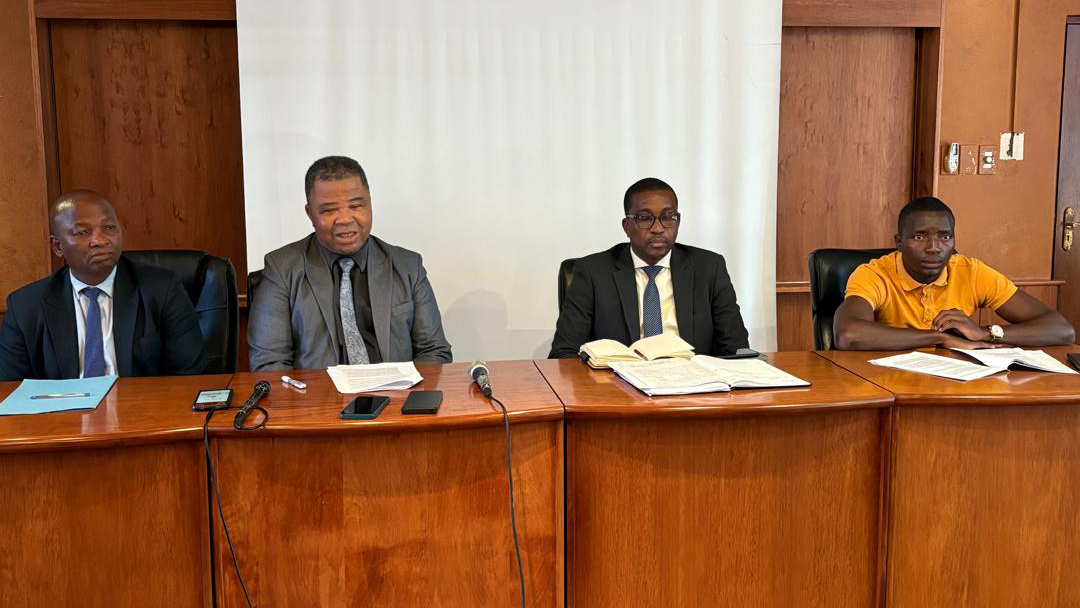
These findings are contained in the task team’s report, which was delivered yesterday by the University of Eswatini (UNESWA) Vice-Chancellor, Professor Justice Thwala.
The report was submitted two months after the task team was appointed by the university to investigate the student’s death.
Singwa, a Bachelor of Arts in Humanities student, tragically committed suicide after allegedly being ill-treated by a university lecturer. In response, students protested, seeking justice for Singwa and demanding the suspension of the implicated lecturer.
The university subsequently appointed a task team to investigate, and the implicated lecturer was instructed to work from home.
The task team was initially given two weeks to deliver its report but failed to do so within the timeframe.
When this publication sought comment regarding the failure to deliver the report within the set timeframe, the university stated it was delayed by a protest that took place within the university premises, and some of the task team members were part of the protest. Students viewed this delay by the university as a betrayal of their feelings.
When delivering the report, the vice-chancellor first offered condolences to the Singwa family and expressed sorrow for the loss.
He stated that the task team was investigating what caused Farido to commit suicide, including whether Farido had reported any complaints and to also look into his personal welfare among other things.
He also mentioned that it was said Farido had wished to change his programme, and the name of a certain lecturer was among the things the task team was investigating.
He explained that the task team found that Farido was facing many challenges, including academic and financial difficulties.
Thwala stated that even though Farido was government-sponsored, he owed the university about E11 000 for repeated courses.
He said that while the task team was interviewing all those involved in the matter, such as the Student Representative Council (SRC) president and the implicated lecturer, it showed that Farido had challenges in different modules he was enrolled in, especially English Literature.
“When he committed suicide, he was about to register for the fourth semester, but it was found that there were some challenges.
“He tried to change the programme he was enrolled under, but he encountered certain difficulties,” he said.
Thwala stated that Farido’s wish was to be registered for subjects such as Mathematics, but he faced challenges. He explained that if a student wishes to change a programme, they need to do so in year one, especially if they are government-sponsored, because government issues scholarships based on the subjects the student is going to learn.
He stated that changing the programme at the stage Farido wanted to would have been very difficult as he had already been awarded a government scholarship.
However, he mentioned that it is said he tried to change his programme, but there is no proof, such as filled forms, that he wanted to change a programme.
Thwala said what was found were only conversations Farido had with different people, including the friend he was staying with, indicating he did not want to pursue the programme he was enrolled in, which led him to be frustrated as he couldn’t cope with it. He added that there is no evidence that Farido sought assistance from the dean of student affairs.
Thwala said the task team also found that Farido was someone who did not like to share his problems, which could be another factor that led to Farido not being easily assisted, thus leading him to commit suicide.
He stated that in one audio recording Farido made, he did bid farewell stating he has failed in life.
“When the implicated lecturer was asked, he explained he taught Farido Computer Science in Semester one, year one and had never engaged with Farido before he committed suicide,” he said.
Thwala said the implicated lecturer further stated that the words he is alleged to have uttered to Farido were never said by him.
“There is no concrete evidence that the implicated lecturer played a role in Farido committing suicide. The only challenge could be that there was no time for Farido to be assisted promptly,” he said.
Thwala apologised for what happened and stated that the university is working tirelessly and is always ready to assist students. He stated that currently, the dean of student affairs is reviewing the procedures for lodging complaints by students who are facing different challenges, such as programme changes.
He also mentioned that the report recommended an increase in the number of people who counsel students, as currently, they are insufficient.
“There are only 10 staff members at the Dean of Student Affairs, yet we have about 9 000 students. There are two people who assist those students in need of counselling,” he said.
However, he mentioned that due to the university’s financial challenges, the university has implemented peer counselling, with about 60 people assisting the dean to promptly help students who have challenges.
Thwala said they also need to improve in this area to be able to assist those children who have challenges as early as possible.
Thwala also added that they have a grievance procedure that students can follow, whether they are being abused or facing academic challenges.
“But due to fear, students often end up being afraid to report such matters due to fear of victimisation. We are still reviewing how they could report such issues without their identities being known,” he said.
The vice-chancellor also thanked their different partners and organisations for helping the university and students with various things such as food and sanitary pads.
Thwala pleaded with other organisations to assist them as there is a huge need for their support at the university.
Meanwhile, UNESWA SRC President Zakhele Seyama said these were allegations. He thanked the university for finally delivering the report, even though it was beyond the stipulated timeframe.
He said that inasmuch as the report has been delivered, stating that there is not much valid evidence against the implicated lecturer, they would not then say the alleged lecturer is indeed implicated in the matter.
He added that as students, they were also saying that he was indeed implicated, and social media was also insisting on it, which is why they asked for the investigation, as he would not be just accused for nothing.
He also mentioned that there are complaints from students who claim to be ill-treated in classes, which affects them.
Seyama expressed gratitude to the vice-chancellor that they are addressing this.
Seyama said personally, he would not say he is satisfied with the findings of the report, but they are still to engage with the students, as they were the ones who wrote a petition to the university asking for the investigation and report, and it will be the students’ reactions that determine whether they are satisfied or not.
… report details student’s hardship, lack of support
MATSAPHA – Nine individuals were interviewed as part of a University of Eswatini (UNESWA) investigation into the suicide of student Farido Singwa, with a lecturer accused of mistreatment strongly denying the allegations.
Ngubeni, a lecturer in CSC101, was among those interviewed, providing his account of the allegations linking him to Farido’s death.
Ngubeni asserted that he never taught Farido, and their only interaction was a brief encounter during the September 2024 registration period when Farido sought assistance.
Given Farido’s ‘proceed conditionally with academic warning’ status, Ngubeni maintained that the student should have been directed to the faculty administrator’s office for support, and he had no further contact with Farido before his death or in 2025.
Ngubeni denied being on campus at the time he was allegedly quoted making derogatory remarks to Farido.
Farido’s sister provided a different perspective, detailing her brother’s background as the youngest of three orphaned siblings, raised by their maternal grandfather.
She stated that Farido was dissatisfied with his programme, which was his second choice, and found it difficult.
She recounted Farido’s attempt to register, his name not being in the system and his subsequent plea for assistance from Ngubeni.
According to her, this individual reportedly told Farido he had failed literature, called him ‘useless’, stated, “there is nothing I can help you with,” and advised him to “go home and come back after two years.”
She identified the officer as a personnel member in the Faculty of Humanities.
She also noted that current and former students had expressed online that Ngubeni was a bully and rude.
However, she admitted to not having recordings or concrete evidence to support her claims, expressing regret that she had not recorded her conversation with Farido.
UNESWA management still weighing lecturer’s future
KWALUSENI – UNESWA Vice-Chancellor Justice Thwala, says the university management is still addressing what will happen with the implicated lecturer.
He explained that the university took the decision for the implicated lecturer to work from home, considering the nature of how things happened and that the truth of the matter had not yet been found, thus ordering him to work from home while investigations were being carried out.
Thwala said the implicated lecturer is still working from home, and the university senate received the report and discussed it.
The university management is still to decide what is going to happen regarding the implicated lecturer.
However, the vice-chancellor stated that if a university staff member is found guilty of having abused a student, disciplinary action is taken.
Thwala also mentioned that workshops are conducted for lecturers on how they should conduct themselves.
He further mentioned that the allegations against the implicated lecturer were sourced from a conversation Farido had with his sister, but unfortunately, his sister did not have a recording of it.
However, Thwala stated that Farido’s sister did mention Farido’s complaints to the task team, but there was no evidence for it, and the matter was then spread all over social media.
While dismissing direct lecturer culpability, the report critically examines the broader university environment, revealing several systemic issues:
- Understaffed counselling services: The Student Counselling Office is severely understaffed, assisting an average of 50 students per month with limited personnel. Despite dealing with prevalent issues like financial difficulties, relationship problems and suicidal ideation, Farido had never sought support from the office.
- Misunderstanding of university processes: There appeared to be a significant misunderstanding regarding the university application process and programme choices among Farido and his family.
- Problematic campus culture: Anecdotal evidence suggests a ‘problematic culture of name-calling towards students’ exists at UNESWA, with terms like ‘nitidvomu’ and ‘nitilima’ reportedly used. However, the veracity of these claims could not be independently verified by the committee.
- Ineffective grievance procedure: The effectiveness and awareness of the student grievance procedure were questioned, with students reportedly unaware of its contents.
In light of its findings, the report puts forward a series of crucial recommendations aimed at creating a more supportive and transparent environment for students and staff:
- Pre-University Education Campaigns: To clarify university processes, programme choices and entry requirements for prospective students.
- Establishment of an academic success centre: To provide dedicated academic support, separate from counselling services.
- Enhanced counselling services: Expanding staff and ensuring greater accessibility, potentially 24/7.
- Routine student psychosocial assessments: To proactively identify and support at-risk students.
- Improved and widely disseminated grievance procedure: Making it more user-friendly and accessible to all students.
- Staff wellness and induction programmes: For both academic and administrative staff, including training on engaging with students, the psychology of teaching and learning, and recognising/assisting struggling students.
- Strengthening of teaching and learning evaluations: To include lecturer behaviour and inform continuous development programmes
- Proactive engagement by Student Counselling Office: Especially with first-year students, to promote their services.









Leave a comment