


MBABANE – The Public Service Pensions Fund (PSPF) has warned that reducing the benefits of its 41 000 existing members could trigger a legal storm.
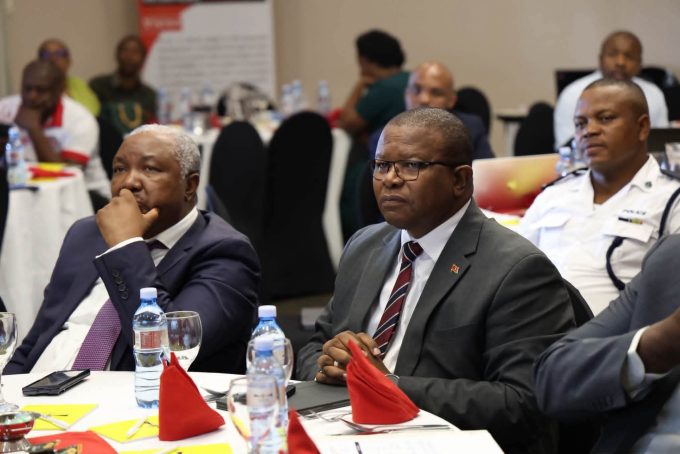
Management of the fund raised this concern during a meeting with the Editors Forum on Thursday, where the agenda focused on the potential impact of the proposed conversion of the Eswatini National Provident Fund (ENPF) on members of both entities.
As has been widely reported, if the Eswatini National Pension Fund Bill, 2025 is passed in its current form, the PSPF will be significantly affected.
This is because as current PSPF members retire, all civil servants will eventually be enrolled under the ENPF, which would make reduced contributions to the PSPF permanent.
The PSPF has, therefore, called for its members to be exempted from joining the proposed national pension scheme, given that its contribution rates and benefit levels are far higher than those proposed under the ENPF.
Instead, it has proposed that the new pension scheme should focus on employees who currently have no pension coverage, rather than duplicating existing benefits.
Another of the fund’s demands is that, should its members be absorbed into the new scheme, government must not reduce the current contributions made to the PSPF.
The Fund revealed that it had engaged actuaries to determine whether the inclusion of civil servants under the ENPF would be in members’ best interests.
The finding was that it would not, if PSPF contributions were reduced.
Optimally, the PSPF maintains that inclusion should only occur if contributions remain intact at 20 per cent – five per cent from the employee and 15 per cent from the employer (government).
Addressing editors, PSPF Chief Executive Officer (CEO) Masotja Vilakati emphasised that because new ENPF members would contribute less, the PSPF would be forced to reduce its benefits.
However, he warned that benefits are protected by law.
“You cannot just reduce them anyhow. It can only happen if the civil servants themselves agree to be made worse off. In order to stay afloat, the PSPF would have to reduce benefits, but even then, it cannot be done until the existing 41 000 members are removed from the fund and it is left with just the new ones,” he said.
The CEO elaborated that reducing benefits would be particularly challenging, as the current members had been contributing for many years and would retire gradually.
He further noted that civil servants could take either government or the PSPF to court, citing Section 195 of the Constitution, which clearly stipulates that pensioners’ livelihoods must not be worsened.
The conversion of the ENPF into a pension fund would mean that it becomes a defined benefit scheme. Under such a scheme, members receive a monthly payment until death, as well as a lump-sum payout calculated as a percentage of total savings based on years of service.
The PSPF began operating in 1994, following the promulgation of the Pensions Order No. 13 of 1993, as a defined benefit fund paying benefits according to a set formula rather than contributions.
*…
E37bn in assets ‘misunderstood’ – PSPF CEO
MBABANE – The PSPF has argued that its E37 billion worth of assets is widely misunderstood.
Chief Executive Officer (CEO) Masotja Vilakati told editors that there was a misconception that the PSPF could easily share contributions with the proposed national pension fund because of its seemingly vast assets.
He clarified that while the figure may appear impressive, it is offset by liabilities amounting to E42 billion.
“By definition, assets represent everything a company owns, while liabilities are obligations and debts owed to others. For us, the liability figure is larger than the asset base,” Vilakati said.
He further revealed that the PSPF had in recent years been facing liquidity challenges, as current contributions are insufficient to cover benefits and expenses annually.
He warned that further reductions in contributions – from 20 per cent to 10 per cent under the ENPF – would worsen the situation. On another note, Vilakati unpacked why the deficit of the PSPF will widen.
By definition, a deficit, as explained in the Cambridge Dictionary, is the amount by which something, especially an amount of money, is smaller than it should be; or the total amount, by which money spent by a business or government is more than the money it receives.
The CEO explained that contributions are variable and depend on the average age of active members, while benefits are fixed according to pension payroll and retirement patterns. “The death of a member does not extinguish liability, as this is transferred to dependants,” he noted.
Any reduction in contributions, he argued, would expand the gap between contributions and benefits paid, forcing the fund to liquidate investments, restrict impactful domestic investments and eventually become financially unsustainable.
“The outcome could be a scheme requiring government bailouts and, in the long run, closure,” he cautioned.
Vilakati stressed that government would then find itself burdened with financing two defined benefit funds – the PSPF and ENPF – as both sponsor and guarantor, potentially straining the national fiscus.
*…
PSPF met government twice on new pension proposal
MBABANE – It has also been revealed that PSPF met government representatives over the matter.
Even though the fund did not make submissions or presentations at Cabinet, it was able to meet the government representatives on two occasions where its position on the issue was communicated with clarity.
It has been established that government representatives received the same presentation that was shared by the fund with editors.
PSPF, it has been learnt, wishes its executives and Board could be in the same room with their fellow colleagues at ENPF where they can deliberate on this issue in the presence of government representatives.
*Full article available in our publication.


















Leave a comment