

MBABANE – Eswatini Revenue Service (ERS) is seeking to ensure wealthy individuals contribute fairly to national development while strengthening domestic revenue mobilisation.
Eswatini is translating African Tax Administration Forum (ATAF) research into practical tax reforms.
The move follows the publication of ATAF’s guide to implementing an effective high-net-worth individual (HNWI) taxation regime in Africa, in which Eswatini featured as one of nine African case study countries that informed the continental framework.
The guide has now moved beyond research, with the Eswatini Revenue Service receiving targeted technical assistance to establish a taxation framework specifically designed for high-net-worth individuals (HNWIs).
ATAF experts Paul Khanare and Michael Mwaura from the Kenya Revenue Authority recently worked alongside ERS officials to develop a country-specific HNWI taxation strategy tailored to Eswatini’s economic and social context.
The technical mission supported ERS in identifying and defining wealthy taxpayers, strengthening legal and administrative systems, improving taxpayer data utilisation, enhancing compliance risk management and developing an operational strategy that can be implemented over time.
The initiative places Eswatini alongside Lesotho as one of the first ATAF member States transforming continental research into practical tax administration reforms, demonstrating how evidence-based recommendations can strengthen domestic revenue collection.
Across Africa, governments are increasingly seeking sustainable domestic sources of revenue as development financing becomes more constrained and public expenditure continues to rise.
ATAF argues that improving compliance among wealthy individuals represents one of the greatest opportunities to increase tax revenue without imposing additional burdens on ordinary taxpayers.
According to the report, high-net-worth individuals frequently earn income from several sources simultaneously, including company ownership, investments, rental properties, professional services, dividends, capital gains and financial assets.
They also tend to use sophisticated ownership structures and complex financial arrangements that make them more difficult to assess under conventional tax administration systems.
“The taxation of high-net-worth individuals (HNWIs) has become an increasingly important topic in tax debates globally. Acknowledging that these individuals rarely contribute their fair share in taxes, governments around the world are putting in place systems to bring HNWIs into the tax net and to tackle tax-reduction practices such as aggressive tax planning, as well as enhance fairness and equity in the payment of taxes,” reads the guide in part.
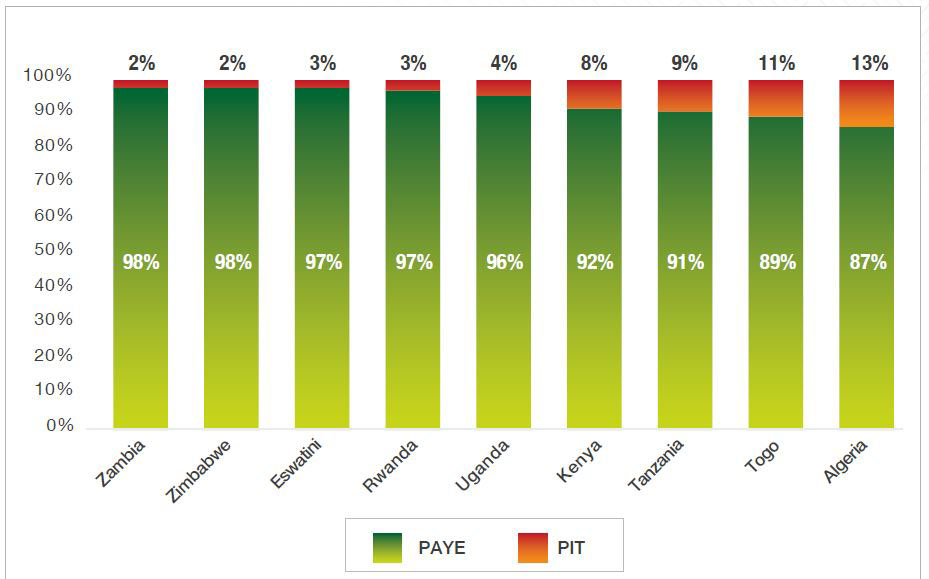
The guide notes that while most African countries successfully collect taxes from salaried employees through Pay-As-You-Earn (PAYE), comparatively little revenue is generated from investment income, rental earnings and other wealth-related income streams commonly associated with affluent individuals.
ATAF found that approximately 97 per cent of Eswatini’s personal income tax collections come from PAYE, leaving only 3 per cent generated from other forms of personal income. The finding reflects a tax system that relies heavily on formal employment while capturing comparatively little revenue from investment income, rental earnings and accumulated wealth.
Rather than introducing new taxes, the reforms seek to improve administration of existing tax laws by ensuring wealthy individuals accurately declare all taxable income and comply fully with current legislation.
Property ownership a major focus
MBABANE – One of the strongest themes throughout the guide is the importance of property ownership in identifying wealthy taxpayers.
ATAF describes Africa as a ‘property continent’, where ownership of multiple residential and commercial properties remains one of the clearest indicators of accumulated wealth.
Yet despite this, property-related taxes continue generating relatively low revenues across many African countries because of fragmented land registries, hidden ownership structures, weak enforcement and opportunities for taxpayers to offset rental income using unrelated business losses. To strengthen compliance, ATAF recommends requiring Taxpayer Identification Numbers during property registration and transfers, strengthening withholding tax on rental payments, improving property databases and simplifying filing procedures while increasing monitoring of rental income.
The report repeatedly emphasises that modern HNWI taxation depends on data rather than tax rate increases.
Revenue authorities are encouraged to integrate information from company registries, beneficial ownership databases, customs systems, property registries, financial institutions, vehicle registration databases and procurement systems to build comprehensive taxpayer profiles.
Cross-checking these datasets enables authorities to identify discrepancies between declared income and observable wealth.
The guide also recommends broader use of Taxpayer Identification Numbers across financial, business and property transactions, mandatory annual filing requirements for higher-income individuals and improved information sharing between government institutions.
Importantly for Eswatini, the report notes that although the country’s data protection framework contains exemptions permitting tax enforcement, institutions sometimes incorrectly interpret privacy legislation as preventing data sharing. ATAF recommends improving awareness so legitimate information sharing can occur while protecting taxpayer confidentiality.
ATAF believes effective HNWI taxation requires specialised expertise rather than conventional audit approaches.
The organisation recommends establishing dedicated teams comprising auditors, legal specialists, investigators, international tax experts, valuation professionals and data analysts capable of handling complex taxpayer affairs while maintaining strict confidentiality.
Strengthening the legal framework
MBABANE – Beyond identifying wealthy individuals, the technical assistance mission also focused on strengthening the legal foundations supporting effective HNWI taxation.
The guide recommends reviewing legislation covering employment income, dividends, investment income, rental earnings, capital gains, consultancy income, intellectual property income and cryptocurrency transactions to ensure all major sources of wealth are adequately taxed. It also encourages stronger anti-avoidance provisions capable of addressing sophisticated tax planning arrangements frequently used by wealthy individuals to minimise tax liabilities. ATAF says effective HNWI taxation depends not on introducing entirely new taxes but on ensuring existing laws adequately capture modern forms of wealth generation.
How ERS will identify wealthy individuals
MBABANE – One of the report’s most significant contributions is providing African countries with a practical definition of a high-net-worth individual.
Rather than relying on fixed monetary thresholds commonly used in developed economies, ATAF recommends a flexible approach based on measurable indicators of wealth that reflect each country’s economic circumstances.
The report proposes that a high-net-worth individual should be defined as a person who, directly or indirectly, exhibits significant indicators of wealth, income or asset ownership placing them among the country’s wealthiest segment, with national authorities determining the specific thresholds.
To support this, ATAF recommends that Eswatini Revenue Service (ERS) develop taxpayer profiles using multiple data sources instead of depending solely on declared income.
Core indicators include ownership or control of major companies, consistently high annual incomes, significant business turnover, ownership of multiple high-value properties, substantial rental income, valuable financial investments and beneficial ownership of corporate entities.
Additional indicators include repeated high-value imports and exports, government contracts, ownership of luxury vehicles or aircraft, prominent public lifestyles, major commercial farming operations, investments in regulated industries and significant digital asset holdings such as cryptocurrencies.
The guide recommends that a single core indicator may be sufficient to classify an individual as a potential HNWI, while several non-core indicators should generally be present before similar classification is made.
ATAF further advises revenue authorities to rank wealthy taxpayers according to risk rather than simply classifying individuals as either HNWIs or non-HNWIs, allowing scarce enforcement resources to focus on the highest-risk cases.


















Leave a comment