


EZULWINI – Just in the same year that His Majesty the King commanded nkwe, some suppliers delivered goods, but government still owes them.
To ensure fast service delivery, his Majesty had commanded government that when they act, it should be done with great speed, which he coined nkwe!, meaning acting with urgency.
However, yesterday, a representative of a pharmaceutical supplier revealed that there are some companies which are still being owed. The Ministry of Health, government departments, including the Accountant General’s Office, gathered with pharmaceuticals and other stakeholders to discuss issues surrounding the drug shortage.
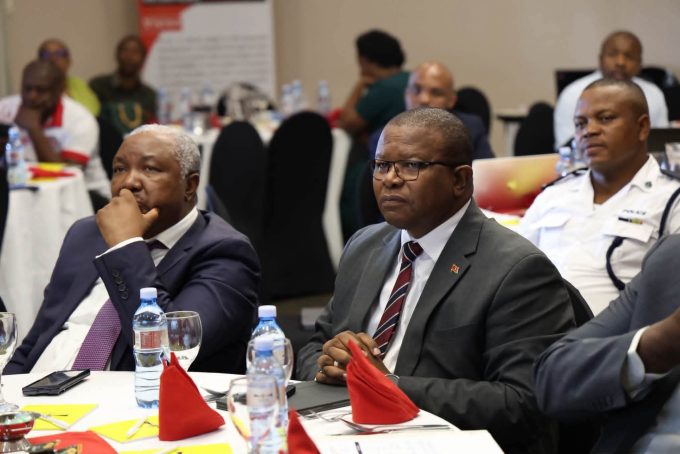
During the tense meeting, which was held at the Royal Villas in Ezulwini, between the Ministry of Health, the Eswatini Public Procurement Regulatory Authority (ESPPRA) and drug suppliers, firms expressed concern that delayed payments were crippling their operations. Several invoices, they said, remained unsettled despite repeated follow-ups.
One supplier warned that the backlog was leaving companies ‘really struggling’, with staff salaries, manufacturer orders and shipping costs going unpaid, while government debts mounted. “There are suppliers who are still owed from 2023,” the representative said, stressing that the delays had affected these companies. The suppliers wondered how government expected them to continue operating when they were not being paid.
The failure by government to pay suppliers had resulted in far more implications according to the suppliers. They revealed that even financial institutions were now reluctant to offer them the much-needed services.
The suppliers also wondered why government, sometimes, requested drugs when it was a matter of urgency.
The issue of quantification was also raised, with suppliers complaining that drug orders often arrived without warning. “Why is it that we can’t plan ahead together and plan with the manufacturers?” asked one supplier, adding that advance planning would help avoid shortages and reduce the cost of urgent imports.
Another participant said the delays had become routine, with invoices taking months rather than weeks to process.
*…
Wrong spelling on orders also blamed
How does wrong spelling contribute to the drugs crisis?
A supplier noted that during the delivery of drugs, they sometimes get turned back because the name noted by the person receiving does not match the product. He said in most cases, this is genuine mistake, but added that the Central Medical Stores (CMS) does not accept the deliveries. “We are then forced to turn back,” he said.
Another supplier requested that there should be a schedule for deliveries at the CMS. He said this is because suppliers sometimes all arrive at the same time. This resulted in some being turned back due to issues of space.
*…
Banks reluctant to finance suppliers
Medication suppliers in Eswatini say financial institutions are increasingly refusing to provide them with credit.
The financial institutions are citing government’s slow record in settling invoices. “The banks are reluctant to give financing if you are dealing with government. They need more assets and companies like ours are finding it very difficult,” one supplier said. Another added that some lenders are now classifying pharmaceutical tenders as high-risk investments because of ‘frequent late settlements’.
They said banks are now hesitant to extend financing to companies supplying government, citing high risk. “The banks are reluctant to give financing if you are dealing with government. They demand more assets, and it has become very difficult to keep operations afloat,” one participant told the meeting. He said this was a strain to companies and that it could potentially force them out of business.
Suppliers noted that the situation was exacerbated by the length of the drug procurement cycle.
*…
‘Fail to supply, lose future contracts’
Pharmaceutical suppliers have been warned that underperforming companies will no longer be guaranteed government contracts, as Eswatini shifts to a performance-based procurement model.
Addressing stakeholders at the Royal Villas, Lovemore Magagula, a procurement specialist with the Eswatini Public Procurement Regulatory Authority (ESPPRA), said the new system would hold suppliers accountable for results.
“We are introducing new contracts and these will be performance-based,” he explained. “So if you are not performing, we will ask you, ‘my friend, you are failing.’ Why should we keep you when you are not delivering? Why should we hire you in the second term?”
*…
Let’s stop the blame game – PS
The Ministry of Health has urged pharmaceutical suppliers and government agencies to end the cycle of finger-pointing over medicine shortages.
The ministry insisted that transparency and trust must guide future partnerships. During the meeting, some of the suppliers accused the Ministry of Health of defending corrupt officials.
This was after the principal secretary (PS) had made a statement that officials were perceived as being corrupt.
He also expressed concern about information that he said was being leaked, particularly sensitive information.
“We are not being vindictive. Our views are based on in-depth analysis. Things are not as they were in the past. We saw there was a need to address this. These are the issues we have to address,” Mabuza said.
*Full article available in our publication.




















Leave a comment