


MBABANE – The Central Bank of Eswatini (CBE) has left its key discount rate unchanged at 6.75 per cent, maintaining a cautious stance aimed at balancing economic stability and growth prospects.
This marks the second consecutive meeting where the Central Bank has opted to keep the discount rate steady at 6.75 per cent, having taken a similar stance during its August sitting. The rate had previously been reduced from 7.0 per cent in May 2025 to the current 6.75 per cent, a level which has now been maintained as policymakers weigh global and domestic economic developments.
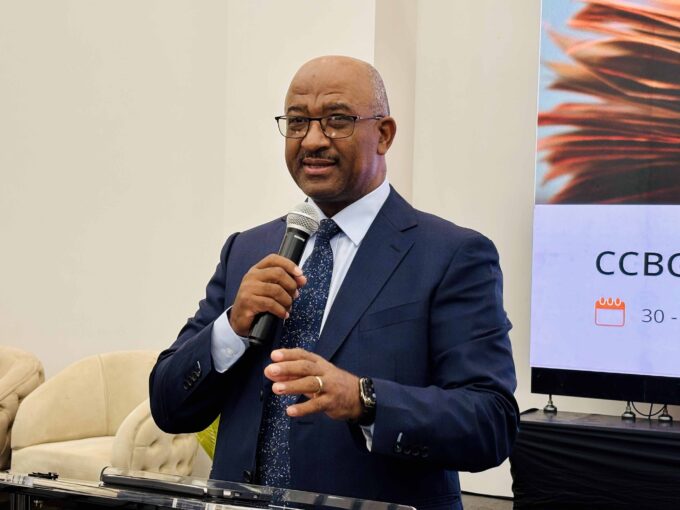
The decision, announced by Governor Dr Phil Mnisi after the Monetary Policy Consultative Committee (MPCC) meeting on Friday, comes amid subdued global growth, moderating inflation and efforts to safeguard the country’s currency peg with the South African Rand.
The decision was widely anticipated by economists, given the country’s relatively low reserves, slowing economic growth and the recent monetary policy trajectory of major economies.
Significantly, the South African Reserve Bank (SARB) also kept its repo rate steady at 7.0 per cent on September 18. This has now narrowed the policy rate differential between Eswatini and South Africa to just 25 basis points.
The International Monetary Fund (IMF) believes this alignment is not merely symbolic. A tighter policy differential with South Africa reduces the risk of capital outflows, helps maintain confidence in the currency peg and enhances monetary policy effectiveness.
*…
Credit conditions, bank sector health
For households and businesses, the unchanged discount rate means the prime lending rate stays at 10.25 per cent.
This offers some predictability for borrowers, especially amid rising concerns over non-performing loans (NPLs), which increased by 14.1 per cent year-on-year to E1.3 billion in July 2025. The NPL ratio climbed to 7.2 per cent, highlighting potential stress in parts of the banking sector.
Private sector credit fell slightly by 0.6 per cent month-on-month to E21.5 billion in July, reflecting weaker demand from households and businesses. Credit to households and non-profit institutions serving households dropped by 2.0 per cent, while lending to businesses declined by 0.6 per cent. In contrast, credit to other institutional sectors rose sharply by 13.2 per cent, suggesting uneven borrowing patterns across the economy.
Despite the monthly decline, private sector credit grew by 8.1 per cent year-on-year, indicating underlying resilience. Analysts say stable interest rates could support credit growth in coming months, provided economic activity continues to recover.
For ordinary liSwati households, the decision to keep rates unchanged means loan repayments on mortgages, car loans and personal credit will remain steady in the near term. With inflation easing and food prices moderating, consumers may experience some relief on the cost-of-living front, even as economic growth remains patchy.
*…
Revises inflation forecast slightly downward
On the inflation front, the Central Bank’s stance is supported by encouraging data.
Headline inflation slowed to 2.6 per cent in August 2025, down from 2.8 per cent in July, driven largely by falling food prices, stable fuel costs and moderate domestic demand.
The CBE has revised its 2025 inflation forecast slightly downward to 3.24 per cent, compared to the 3.49 per cent projected in July. Lower global oil prices, a stronger exchange rate assumption and easing food price pressures contributed to the revision. For 2026, inflation is now expected to average 3.78 per cent, while the 2027 forecast remains unchanged at 3.71 per cent.
Eswatini’s economic performance has shown both resilience and vulnerabilities. The economy expanded by 3.0 per cent in 2024, down slightly from 3.5 per cent in 2023. However, the first quarter of 2025 recorded a year-on-year contraction of 0.3 per cent, driven by sharp declines in agriculture, mining and manufacturing. The primary sector shrank by 7.3 per cent, while the secondary sector contracted by 10.2 per cent.
In contrast, the services sector rebounded strongly, growing by 7.2 per cent year-on-year in the first quarter of 2025, up from 0.4 per cent in the previous quarter. On a quarter-on-quarter basis, overall economic activity grew marginally by 0.5 per cent after a revised 1.6 per cent decline in the previous quarter.
*Full article available in our publication.


















Leave a comment