

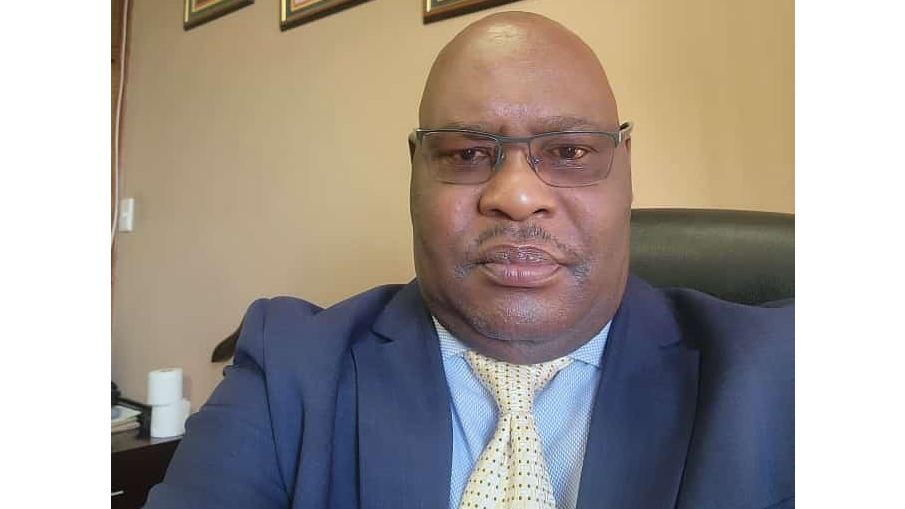
MBABANE – Alpheous Nxumalo, whose contract as government spokesperson has been renewed, says in terms of Eswatini Law and Custom, it is permissible to have sexual relations with girls aged 17 and 18 years.
Nxumalo, who has been charged under the Sexual Offences and Domestic Violence (SODV) Act No.15 of 2018 for allegedly having sexual intercourse with two women of 17 and 18 years respectively, however, denied committing the offences. He made this claim in his replying affidavit in the matter where he is challenging the constitutionality of the SODV Act.
“Having sexual relations with these women was permissible under Eswatini Law and Custom; not that I admit committing the said act. The SODV Act read with the Child Protection and Welfare Act of 2012 stipulates that a child is free to marry after reaching the age of 18 years and says nothing about sexual relations.
“Further to that, before the SODV Act was passed in the year 2018, sexual intercourse with a girl of 17 years was permissible under Eswatini law. The custom of kujumisa could be exercised to a girl of 17 without a problem. Sexual intercourse was prohibited under the Girls and Women’s Protection Act of 1954 to girls of 16 years and below.
“The age of 17 years being excluded meant that the Customary Law created no inroads on the custom of kujumisa intfombi, to which no age limit applies. This remains true even under the custom of kwendzisa, child betrothal and related customs which could cover even girls below 14 years of age,” Nxumalo submitted.
He also mentioned that the SODV Act came to criminalise sexual intercourse with girls of the age of 17 years, yet before the promulgation of the Act, this conduct was allegedly permissible and not criminalised.
He pointed out that the only thing prohibited was marriage to such a girl without parental consent, otherwise, the law placed no restrictions on sexual relations whatsoever.
Thus, Section 3 of the SODV Act, according to Nxumalo, which now stipulates the age of 18 years as the new age for the lawful sexual conduct changed a custom, which has been long uniformly observed by emaSwati since time immemorial.
Nxumalo also told the court that the Children’s Protection and Welfare Act of 2012, which was passed earlier than the SODV Act, did not criminalise sexual intercourse with children, hence no inroads were created into the customary law until the year 2018, when Section 3 of the SODV act was passed into law.
The accused, who is represented by Khumbulani Msibi of Magagula Attorneys, argued that before year 2018, a 17-year-old could consent to sexual relations and same was lawful.
Nxumalo’s application is fundamentally based on his constitutional right to a fair trial under Section 21 of the Constitution. He argued that this right includes being charged and tried under a law that has been lawfully promulgated. He asserted that the principle of legality (nullum crimen sine lege) dictates that the crime an accused is charged with must be promulgated in compliance with the manner and form stipulated by the constitution and must be lawfully enforceable.
*…
DPM: Nxumalo’s application lacks basis in customary law
MBABANE – Deputy Prime Minister (DPM) Thulisile Dladla says the accused, Alpheous Nxumalo, has failed to establish that the alleged unlawful conduct which he has been charged is permissible under customary law.
The DPM also stressed that Nxumalo has also failed to establish that the customary law has criminalised the conduct he has been charged for. According to the DPM, Nxumalo’s application is not ripe for determination and he has no standing to move the present application.
Dladla, whose portfolio includes gender and family issues, is responsible for administering the impugned Sexual Offences and Domestic Violence Act. She contended that Nxumalo’s application is based on abstract and academic claims and argued that he lacks the standing to move the present application and that the matter is not ripe for determination.
The DPM emphasised that for a constitutional challenge to engage the High Court’s jurisdiction, the applicant must establish an actual or imminent threat to their rights. She argued that Nxumalo has failed to meet this threshold for his alleged failure to establish that the alleged unlawful conduct was permissible under customary law. Furthermore, she argued that he has also failed to prove that the SODV Act has criminalised conduct that was previously lawful under custom.
Nxumalo is charged with two counts of rape with aggravating factors, contrary to Section 3 of the Act. Dladla suggested that the challenge is not connected to the criminal case he is facing. According to the DPM, the accused faces no actual or imminent threat to his rights under Chapter III (Bill of Rights) of the Constitution simply because he has been charged with rape. She reiterated that constitutional issues relating to criminal proceedings are typically raised during those proceedings or on appeal.
“The two counts with which the applicant has been charged do not engage the Constitution. I reiterate that the present application is abstract, theoretical and of interest to the academy. It raises no concrete issues which warrant the attention of this honourable court,” said the DPM in her answering papers.
Constitutional issues falling outside the Bill of Rights, said Dladla, are also abstract, theoretical and academic in this context, asserting that the High Court’s constitutional jurisdiction is only engaged by concrete issues. Nxumalo’s application is based on the argument that the SODV Act was not lawfully passed because Parliament failed to comply with Section 115 of the Constitution, which he argued required consultation with the council of chiefs as custodians of customary law.
*Full article available in our publication.












Leave a comment