

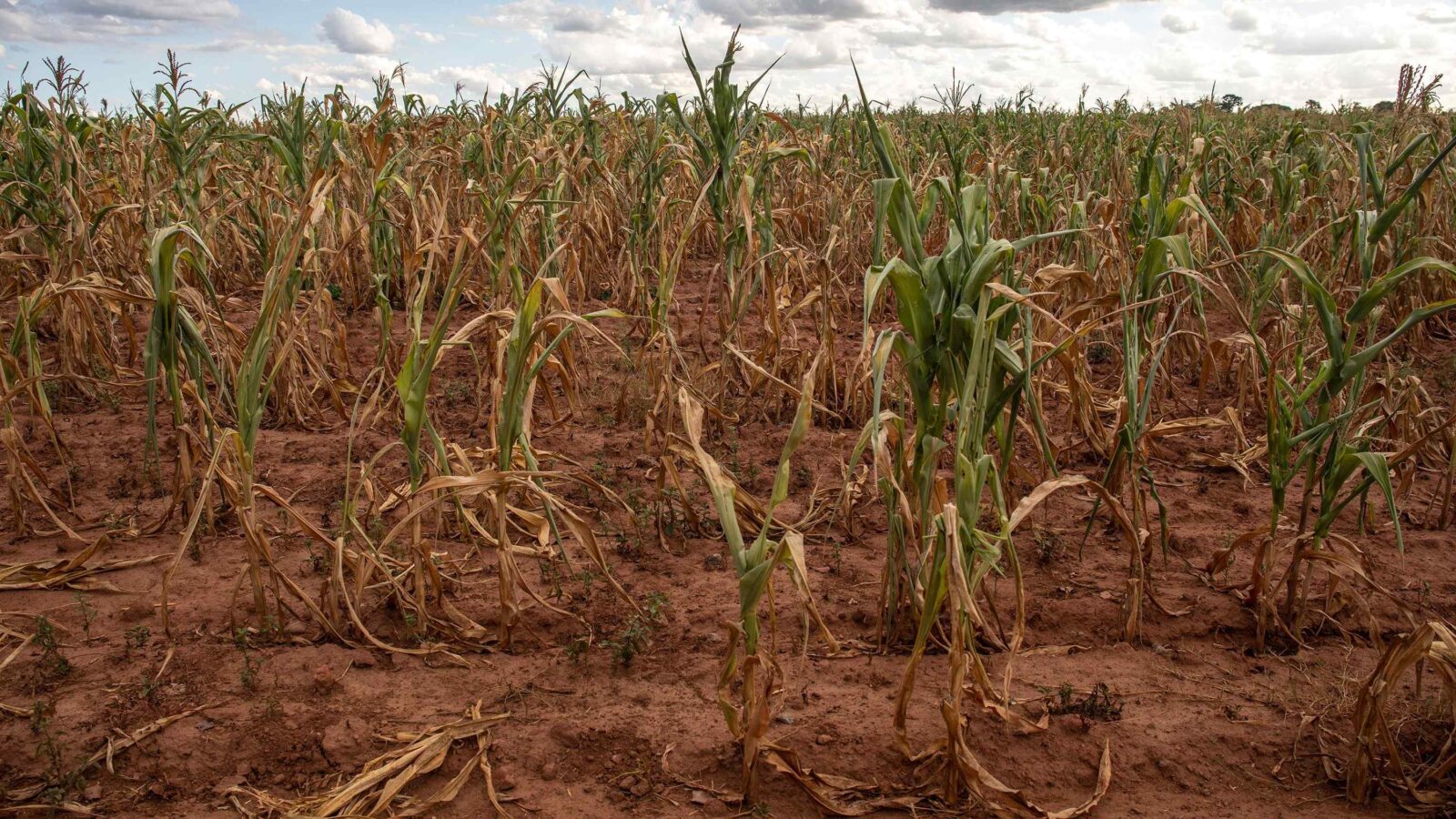
Over 10 Southern African Development Community (SADC) States gathered in the kingdom last week to address the recurrent drought conditions that continue to subvert agricultural output and food security across the region. The meeting placed drought resilience at the centre of discussion, drawing attention to the reality that most SADC States remain heavily dependent on rain-fed agriculture.
This reliance leaves them exposed to climate variability and increasingly unpredictable rainfall patterns. The gathering also brought to the fore the need to strengthen meteorological services, which play a core role in early warning systems, planning and long-term adaptation strategies.
Drought is not a new concern in southern Africa. Instead, it has become a recurring feature of life, with severe consequences for livelihoods, economic stability and political planning. Regional collaboration is necessary, as drought cross-cuts border lines. Shared river basins, cross-border trade and population mobility all mean that when one country suffers, the effects extend across the region. This necessitates a collective approach, not only to understand climate patterns, but also to prepare communities and governments for the impacts that follow.
The challenge is illustrated by Malawi, which continues to struggle with repeated dry spells that disrupt maize production – its staple crop. In early 2025, large parts of the country reported poor yields, creating pressure on household food supplies and pushing up maize prices. Similarly, Namibia faces persistent drought conditions that threaten both agriculture and livestock farming, while also straining water supply systems in urban areas. These examples point to a regional challenge that can only be addressed through better forecasting and long-term planning.
Meteorological services, however, remain underfunded and underdeveloped in many SADC States. Weather stations are few and often outdated, leaving gaps in data collection and reducing the accuracy of forecasts. Limited communication between national agencies also hinders the ability to issue timely warnings to farmers, herders and communities who depend directly on rainfall. Where early warnings are given, they sometimes fail to reach local levels in a way that people can act upon. This gap between knowledge and practice means that even when drought can be predicted, the full advantage of that knowledge is not realised.
If this issue is not addressed, the consequences will spread beyond agriculture. Food insecurity will rise, placing more families at risk of hunger and malnutrition. In turn, governments will face pressure to import food, draining scarce foreign reserves and pushing up national debt. Rural poverty will deepen, leading to migration into urban areas, where services are already stretched. This could fuel social tensions, as people compete for jobs and resources in cities that are not equipped to absorb rapid population growth. Over time, political stability itself may be tested if communities perceive that governments are failing to protect them from climate-induced hardship.
Another dimension lies in the link between drought and energy. Several SADC States depend on hydropower, which relies on consistent water levels in dams and rivers. When rainfall declines, power generation falls, leading to blackouts that disrupt industry, commerce and everyday life. Zambia, for example, has experienced frequent power shortages due to low water levels in the Kariba Dam, which it shares with Zimbabwe. These shortages not only affect households, but further cut into industrial production, negatively affecting economic growth.
Addressing these challenges requires investment in meteorological infrastructure and skills development. Improved data collection, forecasting and dissemination are necessary to guarantee that information is reliable and accessible. Farmers can then make informed decisions on when to plant or harvest, while governments can anticipate food shortfalls and take measures before crises deepen. Equally, strong meteorological services would support water resource management, ensuring that dams and reservoirs are planned and managed with climate variability in mind.
Nonetheless, meteorological services alone are not enough, integrating weather data into agricultural policies, water strategies and energy planning is key. Climate-smart agricultural practices, such as drought-resistant seed varieties, soil moisture conservation and efficient irrigation, must be promoted in tandem with better forecasting. Likewise, investment in water storage, such as dams and boreholes, will be essential to capture and preserve rainfall.
There’s also an opportunity to examine financing. Most SADC States face competing priorities and limited budgets, which often push meteorological services to the margins. Regional cooperation could create cost-sharing mechanisms, allowing countries to pool resources and expertise.
Partnerships with international agencies may also provide financial and technical support, helping to modernise weather stations and train personnel. Importantly, long-term financing must be secured, as drought adaptation is not a short-term project, but an ongoing requirement.
Another issue is communication. Forecasts and climate information must reach people in formats they can understand and act upon. This means using local languages, radio and community networks to ensure that warnings are not confined to official bulletins. Farmers and herders need to trust that the information is reliable and relevant to their circumstances. Building this trust requires sustained engagement and cooperation between meteorological services, agricultural ministries and community organisations.
Without decisive action, the region risks sliding into a cycle of recurring crises that usurp growth and development. The stakes go beyond agriculture, touching on food security, health, energy, migration and political stability.
Comments may be sent to bongwebagcinile@gmail.com or 7927 8210.
















Leave a comment