

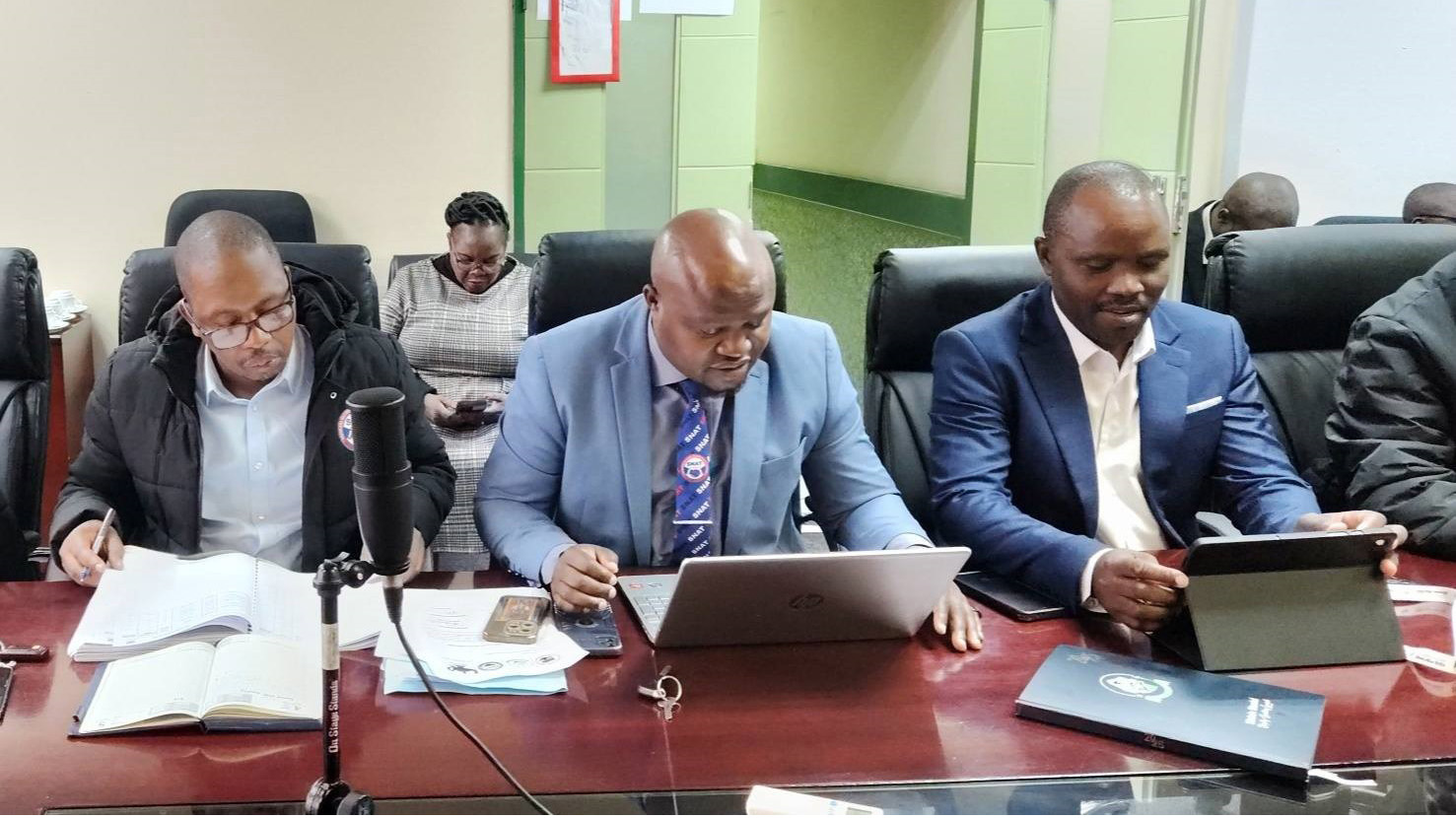
MBABANE – All civil servants who have grievances regarding their October salary review have been advised to submit their concerns in writing to their union representatives by the end of today.
This follows a Joint Negotiation Forum (JNF) meeting held yesterday after Public Sector Unions (PSUs) requested urgent engagement with the Government Negotiations Team (GNT). The meeting sought to address widespread anomalies identified in the implementation of the long-awaited 2025 salary review exercise.
According to the unions, numerous complaints have been received from members across the public service. Among the major concerns are instances of employees being downgraded despite recommendations that existing staff would retain their grades, with downgrades applying only to new positions.
Swaziland National Association of Teachers (SNAT) Secretary General Lot Vilakati said one of the key grievances involved the downgrading of stagnant posts, such as those in the C3 to C2 cadre.
“There were also issues related to tax bracket calculations and incorrect grading of Grade 0 (ECCDE) teachers,” Khoza stated.
The unions and the GNT reportedly agreed that some errors were inevitable, given the complexity and scale of the salary review process. Both parties acknowledged that while the implementation had been challenging, the issues raised by PSUs were legitimate and warranted prompt attention.
The JNF resolved that PSU representatives would meet with the consultant overseeing the review to clarify the disputed implementation categories before salaries for November are processed.
Members who identify discrepancies in their pay have been instructed to lodge their complaints in writing through their school or departmental union representatives. For those not under SNAT, submissions should still be made via their respective union branches.
“It is important to note that these interventions are unrelated to the appeals process,” Khoza clarified. “They are purely meant to correct technical errors arising from the implementation of the salary review exercise. The letters must be accompanied by supporting documents, such as two payslips, the old and the new.”
He added that PSUs also followed up with government on the delayed salaries of the security forces, which the authorities have promised to finalise urgently.
Khoza further emphasised that the unions’ mandate extends to all civil servants, including the security forces.
“As representatives of civil servants, when we negotiate, we negotiate for everyone. It is well known that we have an interest in the salaries of the security forces since they are expected to receive Phase II adjustments according to the SADC scale,” he said.
He explained that the agreement between PSUs and the consultant had been clear, no civil servant was to be downgraded.
“After the issuance of salaries and the circular, it was discovered that some employees who were not supposed to be downgraded were in fact downgraded, which is an anomaly,” Khoza said.
He acknowledged that the implementation process had encountered errors, which were likely due to the haste in executing the review.
“The aim is that these anomalies will be resolved in the November payroll,” he added.
Khoza revealed that there were also discrepancies in backpay calculations. “In some cases, employees expected a backpay of E3 000 but only received E600,” he said.
Meanwhile, in the previous week, some civil servants decried that their improved salaries under the new government salary review have not brought the relief they expected, with many saying tax deductions have swallowed up much of the increase.
Public sector employees across various ministries expressed disappointment after receiving their October remuneration, stating that the much-anticipated adjustments reflected minimal take-home pay. The review, which came into effect last month, was intended to cushion workers against the rising cost of living and align salaries with prevailing economic conditions.
However, several civil servants expressed that the difference between their old and new salaries was far less than they had anticipated.
According to information gathered by this publication, the increases pushed some workers into higher tax brackets under the Pay-As-You-Earn (PAYE) system administered by the Eswatini Revenue Service (ERS). This means that as their gross income rises, the percentage of tax payable also increases, thereby reducing their disposable income.
















Leave a comment