

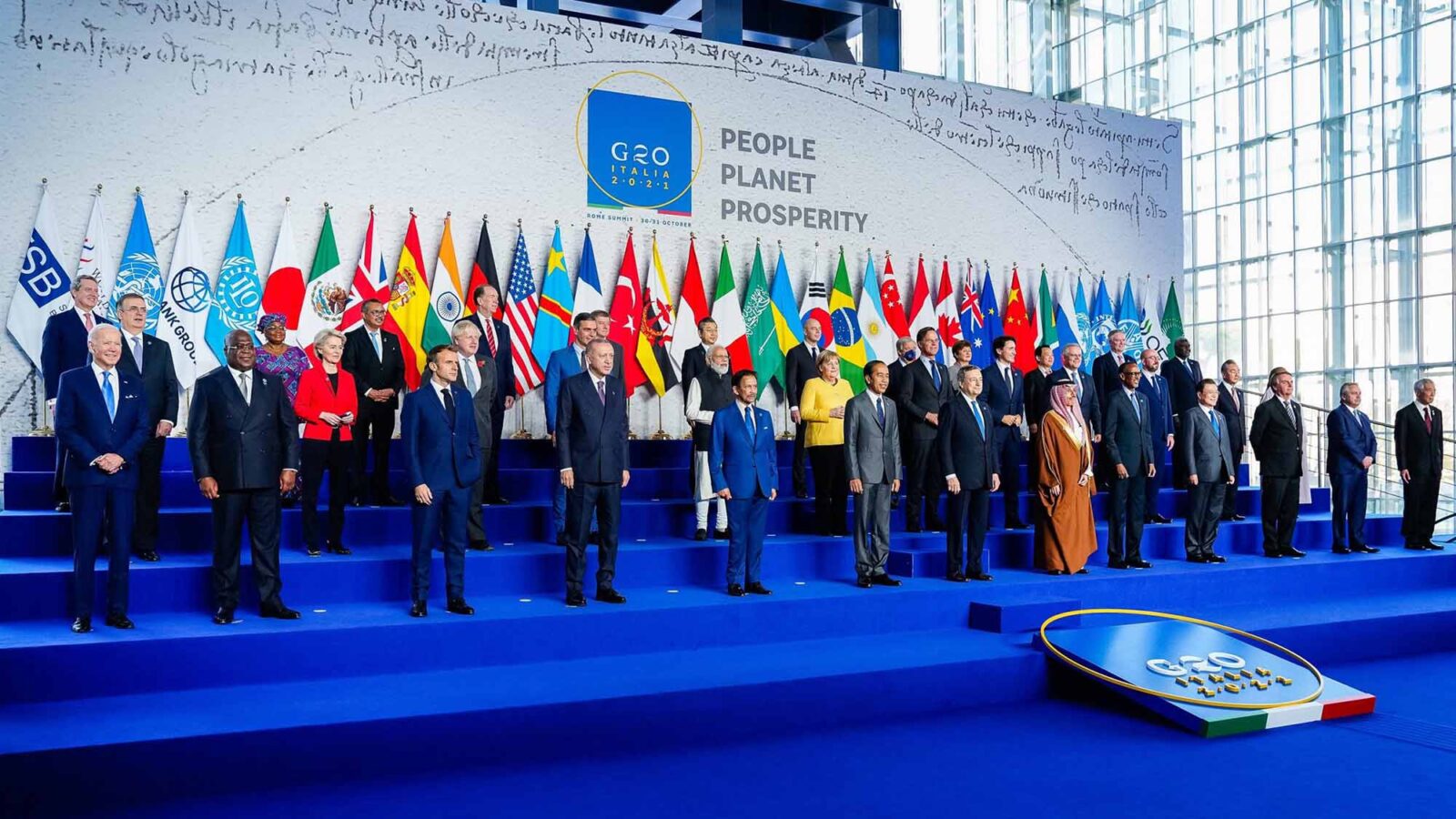
MBABANE – Although Eswatini is not a member of the G20, outcomes of the upcoming summit are expected to have far-reaching implications for the country and others across the continent.
This is according to University of Eswatini (UNESWA) Lecturer and Economist, Sanele Sibiya, who says the gathering could influence the direction of global financial flows, climate financing, and development support that small developing economies depend on.
The G20 is expected to take place from November 22 to 23, 2025 in South Africa, making this the first G20 Summit on African soil.
Speaking in an interview, Sibiya said the agenda expected at the G20 Summit would be “key for developing countries like Eswatini”, particularly as Africa positions itself more assertively on global economic and political platforms.
Sibiya said there were strong expectations that the G20 would also explore the future of global development assistance, including reforms to multilateral financial institutions such as the World Bank and the International Monetary Fund (IMF). “We also expect talks around the architecture of these institutions, looking at how the World Bank Board of Governors can put a spotlight on Africa,” he said.
He noted that even if the resolutions do not directly discuss development aid for African countries, the summit could still reshape how loans are structured “to work for Africa” and how global governance bodies ensure equitable peace and stability on the continent. “The summit being on the continent for the first time shows that Africa is really ramping up the pressure and wants to be on the global stage. So we hope the agenda will go beyond global issues to also focus on the African side,” Sibiya said.
“We anticipate that much of the discussion will also centre on climate change and climate financing,” he explained. He added that with South Africa hosting the summit, it was hoped that “the funds allocated for climate action are also disbursed regionally.”
Despite not being part of the G20, Eswatini is deeply affected by global economic trends shaped within such forums. Analysts note that shifts in interest rates, climate finance arrangements, development funding frameworks and trade policies often originating from G20 agreements then filter down to smaller economies.
According to Business Insider, developing countries, which are vulnerable to climate shocks, reliant on foreign investment, and interconnected with other economies, stand to gain or lose depending on how the summit frames its commitments.
South Africa is the region’s financial gateway and Eswatini’s largest trading partner. Business Insider highlighted that policies endorsed at the G20 often influence South Africa’s own strategic direction, which in turn impacts Eswatini’s growth, inflation, energy supply stability, and development financing options seeing as the economies are interconnected.
The G20 was founded in 1999 following the Asian financial crisis of 1997–1998 as an informal platform for Finance Ministers and Central Bank Governors to discuss global economic and financial stability. While initially focused on macroeconomic coordination, the forum has broadened its scope significantly. Today the agenda includes climate change, sustainable development, health, agriculture, energy, environment, trade, and anti-corruption.
According to the G20 website, its composition makes it influential: G20 members represent 85 per cent of global GDP, 75 per cent of international trade, and two-thirds of the world’s population. Its membership includes 19 countries—Argentina, Australia, Brazil, Canada, China, France, Germany, India, Indonesia, Italy, Japan, Republic of Korea, Mexico, Russia, Saudi Arabia, South Africa, Türkiye, the United Kingdom, and the United States—plus the European Union. The African Union (AU) joined as a permanent member in 2023, marking a significant step for continental representation.
Since the first leaders’ summit in 2008, held in response to the global financial crisis, the G20 has evolved from a crisis-prevention platform into a forum for shaping long-term global policy. Each summit sets collective goals on issues driven by the global landscape of the time—such as pandemics, debt sustainability, green transitions, and global inequality.
Meanwhile, in South Africa, the summit’s host, civil society groups are planning demonstrations to highlight urgent domestic issues.
According to a recent news article from The Citizen, the organisation Women for Change has called for a nationwide shutdown on Friday to protest the country’s ongoing gender-based violence crisis. Citizens have been urged to wear black and participate in a 15-minute lie-down at noon to honour the estimated 15 women murdered daily in South Africa. The protest is expected to take place in town centres across the country.
As the world’s major economies prepare to converge in South Africa, Sibiya notes that the global and local contexts surrounding the summit highlight the urgency for inclusive, equitable, and sustainable development commitments—commitments that could significantly shape Eswatini’s future.















Leave a comment