

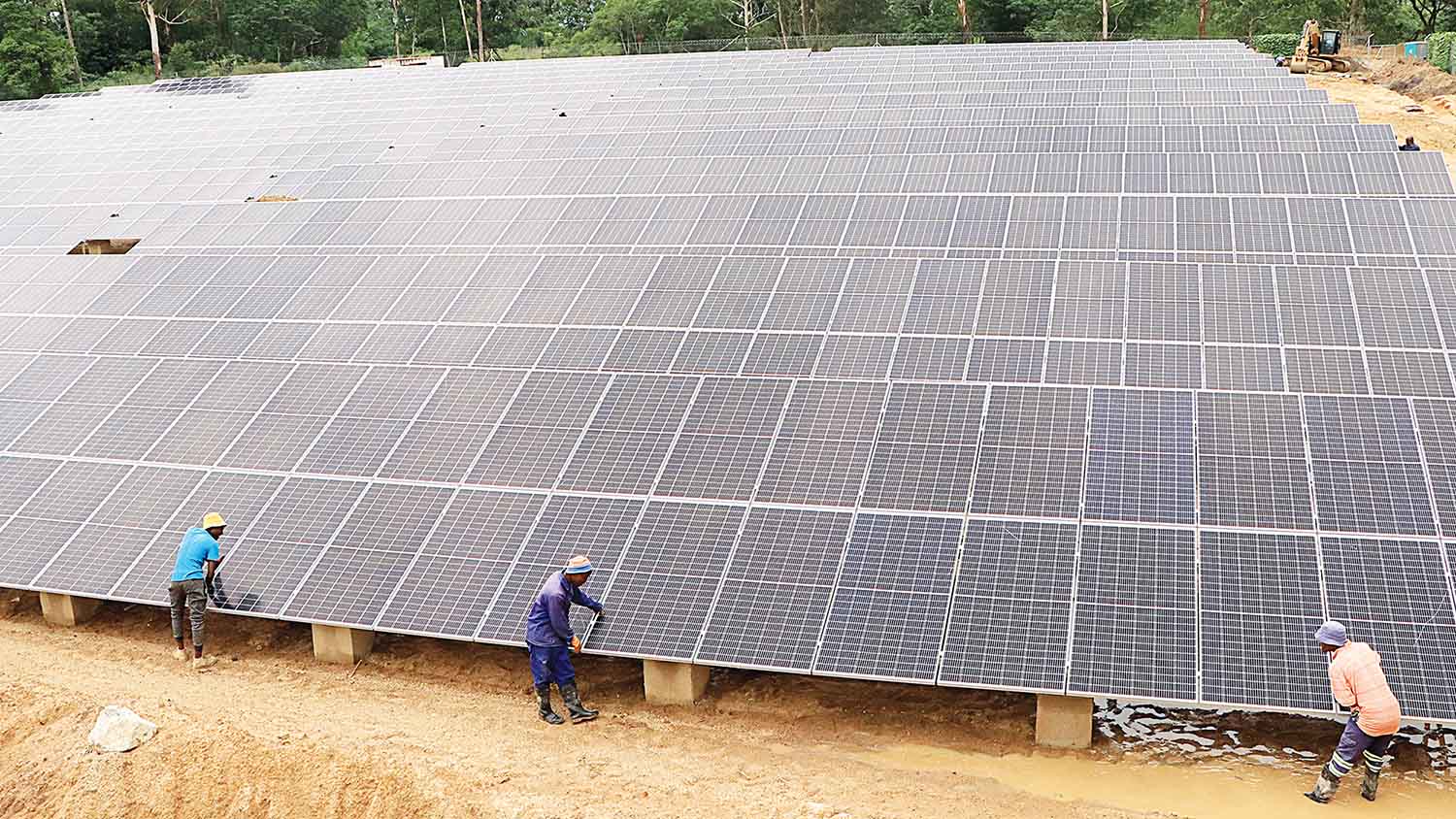
MBABANE – Some of Eswatini’s solar installers have expressed frustration over what they describe as an “unrealistic” 80 per cent pass mark set by ESERA.
“This is too much; we will fail,” said a concerned solar photovoltaic (PV) installer, reacting to the standard imposed by Eswatini Energy Regulatory Authority.
The test, which serves as the benchmark for all solar energy practitioners seeking formal certification, has sparked debate among those already in the trade, particularly informal installers who have been operating without official accreditation.
Speaking to the Times SUNDAY, another installer who already runs a small solar installation business, said he was shocked by the regulator’s decision to maintain what he termed an excessively high threshold.
“We were surprised that ESERA expects us to pass with such flying colours,” he said, arguing that the authority should consider a 60 per cent mark instead.
The installers believe that high academic performance does not always reflect a person’s technical skill or experience.
“Passing with 90 per cent and above does not necessarily mean that one is competent,” said another installer.
“There are people who can score 100 per cent but still perform poorly in the field, whereas someone scoring 30 or 40 per cent might be more practical and skilful.”
They requested anonymity, citing fear of being victimised before undergoing the mandatory testing process. ESERA, on the other hand, has publicly maintained that all individuals and companies wishing to instal solar systems in Eswatini must undergo testing and be duly accredited. The authority insists that the measure is aimed at ensuring safety, compliance with technical standards and consumer protection as the country continues to expand its renewable energy sector.
The high pass mark, according to industry observers, is likely meant to ensure that only qualified and competent technicians handle installations, a matter of public interest given the increasing number of faulty solar setups reported across the country.
Similar controversies over testing and certification standards have arisen in other parts of the world. In South Africa, for instance, a significant number of technicians seeking accreditation through the South African Photovoltaic Industry Association (SAPVIA) have struggled to meet technical and safety requirements.
In Kenya, the Energy and Petroleum Regulatory Authority (EPRA) has also found that many informal solar installers fail competency tests conducted as part of its renewable energy licensing framework.
Outside Africa, countries such as India and the Philippines have reported high failure rates among small-scale solar technicians during national certification programmes, often due to inadequate training in electrical safety and system design.
*Full article available in our publication














Leave a comment