

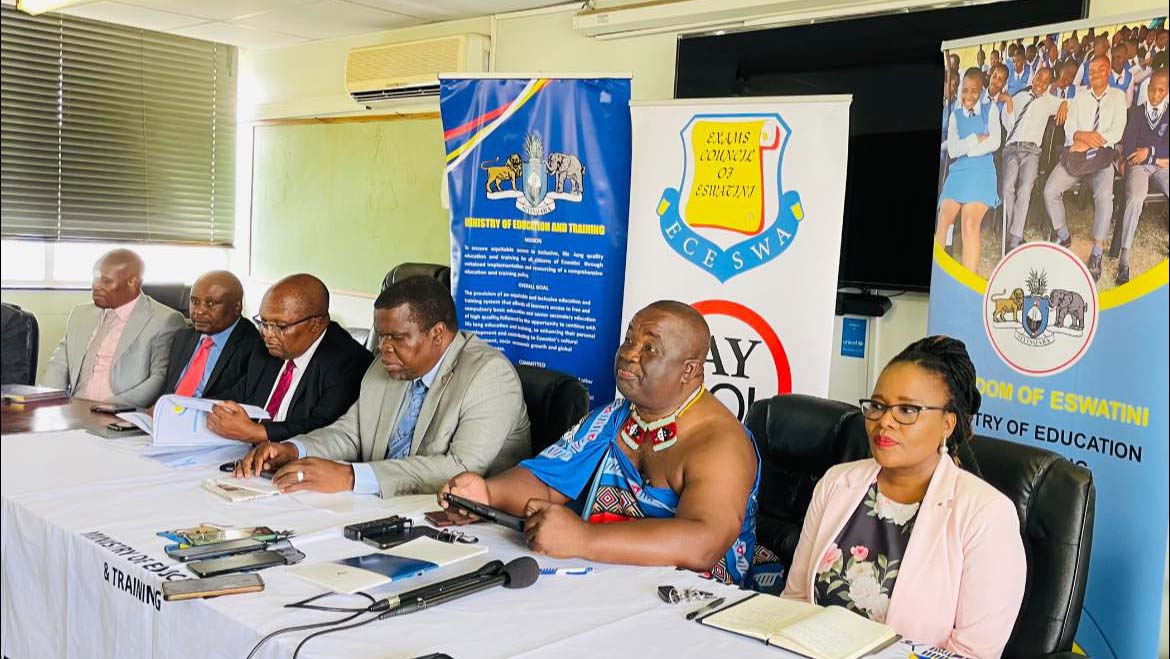
MBABANE – The taxpayer will have to fork out over E2.7 million for the more than 4 000 learners who did not make it in the 2025 Grade VII examination.
As reported last week following the release of the first-ever Competency-Based Education (CBE) syllabus examination results, about 4 100 pupils were graded Insufficient under the 2025 CBE examination.
Of these, 2 174 were males, while 1 386 were females.
This means that all of them are eligible to repeat Grade VII this year, in line with Circular No. 3 of 2025.
The circular directs schools to retain learners graded Insufficient in their final Grade VII examination results, using a four-pronged intervention approach.
Notably, in 2024, the number of Grade VII fails stood at 2 716, compared to 2 295 in 2023.
By definition, grade repetition, sometimes referred to as grade retention, is the practice of requiring learners who have not achieved a certain academic standard to repeat the grade, rather than being promoted to the next grade with their age peers.
In other words, it involves retaining learners who have not fully mastered the curriculum or achieved the required academic standard.
As per the existing policy in the Kingdom of Eswatini, the 4 100 learners will be accommodated to repeat through the Free Primary Education (FPE) Programme.
Having been revised by about 20 per cent in recent years, it will cost around E672 per learner for each pupil to repeat.
The FPE Programme, established in 2010, covers school fees and provides essential learning materials for primary school learners. It has played a crucial role in increasing access to education and reducing dropout rates in Eswatini.
The timely release of funds ensures a smooth start to the academic year and guarantees uninterrupted learning for all children.
The Ministry of Education and Training established a Bill (gazette) in 2010, which serves as a roadmap for the implementation of FPE.
The gazette outlines conditions on how and when non-Swati children may be admitted, as well as who determines the fees they should pay. Primary education in Eswatini begins at the age of six and, under normal progression, is a seven-year programme that culminates in an external examination.
This examination is regarded as a national assessment and is compulsory for every child in order to qualify for enrolment into secondary school education.
*Full article available in our publication











Leave a comment