

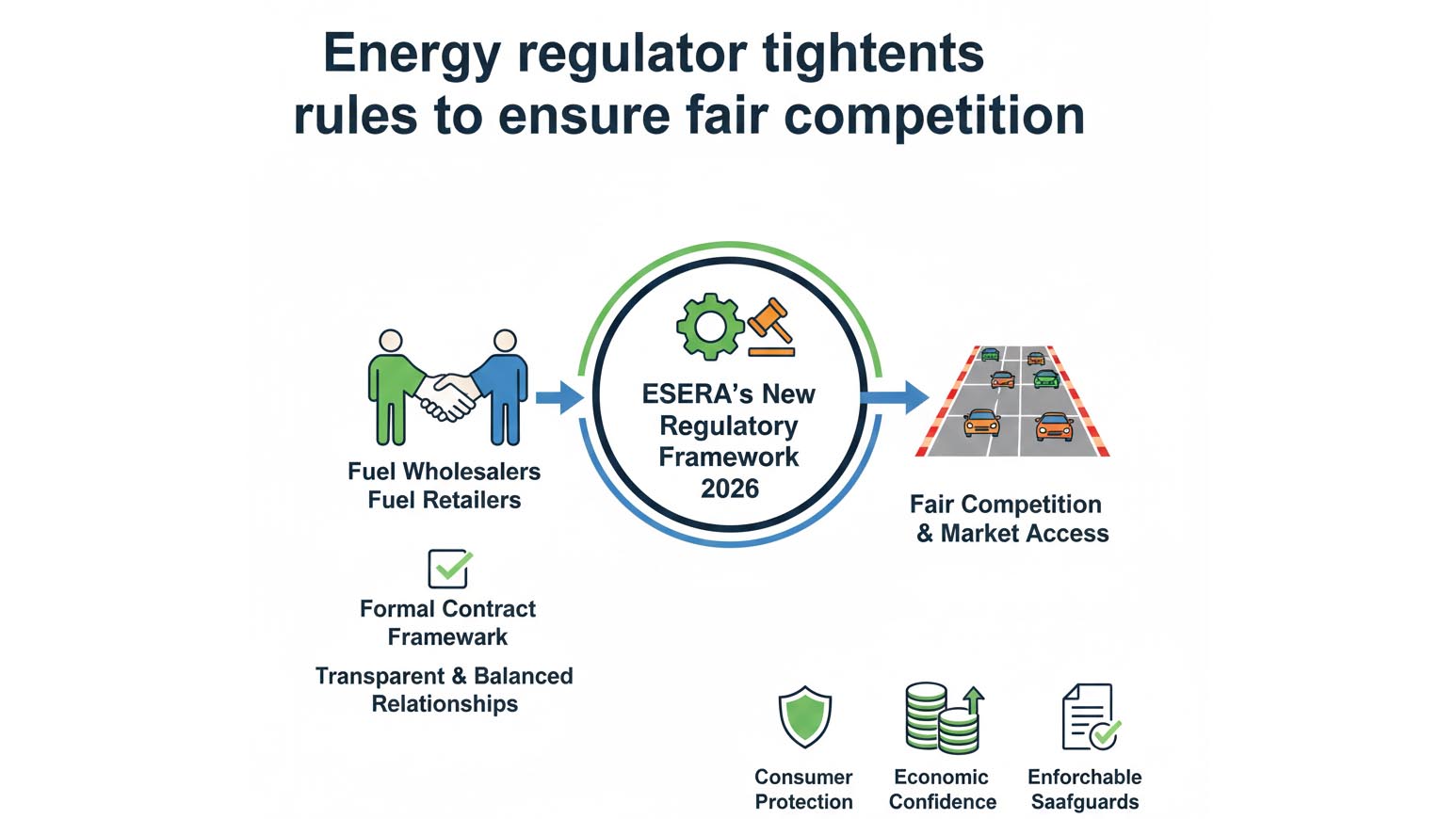
MBABANE – The Eswatini Energy Regulatory Authority (ESERA) is set to intensify its oversight of the country’s energy and fuel markets in 2026.
The regulator is making moves meant decisively to promote fair business practices, strengthen competition and prevent any form of market abuse within the fuel sector.
This renewed regulatory focus is anchored in ESERA’s decision to procure consultancy services for the development of a formal contract framework between fuel retailers and fuel wholesalers in Eswatini, a move that signals a broader push to modernise market governance and align the sector with international best practice.
The initiative comes at a time when energy regulation is increasingly recognised as a critical pillar for economic stability, consumer protection and investor confidence.
With fuel and energy costs having wide reaching implications for households, transport, manufacturing and commerce, ESERA’s 2026 agenda reflects a determination to ensure that market relationships are transparent, balanced and free from exploitative conduct.
At the centre of the regulatory intervention is the relationship between fuel wholesalers and retailers, a critical link in the downstream petroleum value chain. Historically, these commercial relationships have often relied on varied contractual arrangements, sometimes lacking standardisation, clarity or enforceable safeguards.
By commissioning the development of a structured contract framework, ESERA aims to eliminate ambiguity that can give rise to unfair trading conditions, discriminatory practices or abuse of market power by dominant players.
According to the tender document issued in December 2025, the consultancy will focus on creating a framework that is legally sound, commercially fair and aligned with Eswatini’s public procurement and regulatory laws.
For ESERA, this is not merely a technical exercise. It is part of a deliberate regulatory strategy to ensure that competition in the fuel market is driven by efficiency and service quality rather than unequal bargaining power.
Fair competition remains one of the core objectives of energy regulation globally, and ESERA’s 2026 focus mirrors this trend. By standardising contractual expectations between wholesalers and retailers, the regulator seeks to prevent practices that may limit entry, distort pricing or disadvantage smaller operators.
















Leave a comment