

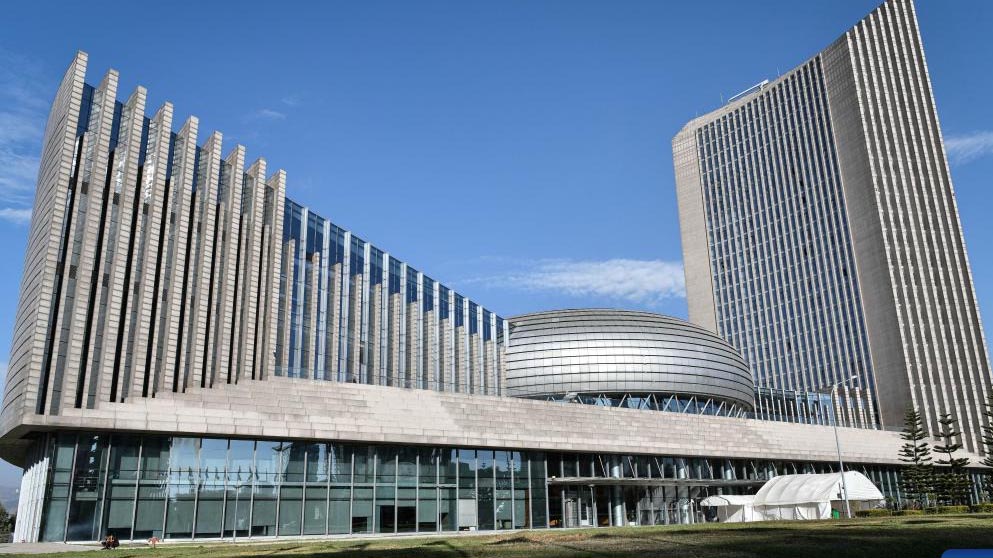
MBABANE – Is it a long journey?
The question is: “How can this be achieved if African countries are failing to ratify the Malabo Protocol?”
The Times of Eswatini can mention that 40 countries have not ratified this instrument, which seeks to transform the Pan-African Parliament (PAP) into a fully-fledged legislative arm of the African Union (AU).
It also comprises of other institutions like the African court. Can Africa have one army?
For starters, it must be said that only 15 countries have ratified the protocol, which was adopted during the AU Assembly of Heads of State and Government in June 2014 in Equatorial Guinea.
The protocol requires the ratification of a minimum of 28 countries to come into force.
The transformation of the AU was seen by other analysts as a step in the right direction towards the old dream of having the United States of Africa.
The concept by the defunct Organisation of African Unity (OAU), now African Union’s (AU) to have a ‘United States of Africa’ (USAfrika) is a long-standing Pan-African vision for a unified continent with one government, army and currency, aiming to boost collective strength, economic power (like the European Union) and a stronger global voice.
It was championed by leaders like the late Kwame Nkrumah of Ghana and Muamar Gadaffi of Libya to overcome colonial fragmentation.
While the AU’s Constitutive Act lays groundwork for integration, such as free movement and single market, achieving a full federal USAfrika faces challenges like diverse political systems, and deep-seated differences.
It has been learnt from sources of diverse political backgrounds and disciplines that the AU is focused more on gradual economic and political union rather than immediate political federation.
Back to the Malabo protocol, it simply means that if it is ratified, Eswatini Parliament, for instance, shall have the right to elect non-parliamentarians to represent the country in the African Parliament.
It effectively means that the African Parliament will take superior status, with local laws not expected to conflict with the AU Constitutive Act. Currently, only members of national Parliaments are eligible to represent their countries in the Pan African Parliament, which is commonly known as PAP.
Of the 15 countries that have so far heeded to the call to transform PAP into a fully-fledged continental legislative body, only one of the SADC members have signed it.
The countries that have deposited instruments of ratification to the Constitutive Act of the African Union relating to the Pan-African Parliament, also known as the Malabo Protocol –
- Morocco.
- Benin.
- Cameroon.
- Chad.
- Equatorial Guinea.
- Sierra Leone.
- Somalia.
- Gambia.
- Ghana.
- Madagascar.
- Mali.
- Niger.
- Togo.
- Western Sahara.
- Angola.
Angola, as a matter of fact, has become the AU member to ratify the statute of the African Court of Justice and Human Rights.
The Malabo Protocol also aims to add criminal jurisdiction over certain international crimes to the mandate of the intended court. The proposed court will deal with interstate complaints and human rights cases.
Notably, countries that have given formal consent to the Malabo Protocol are drawn from different geographical parts of Africa, except the Southern African region.
There are 16 members of the Southern African Development Community:
- Angola
- Botswana
- Comoros
- Democratic Republic of Congo
- Eswatini
- Lesotho
- Madagascar
- Malawi
- Mauritius
- Mozambique
- Namibia
- Seychelles
- South Africa
- United Republic Tanzania
- Zambia
- Zimbabwe
In 2014, the AU adopted the Protocol to the Constitutive Act of the African Union relating to the Pan-African Parliament (Malabo Protocol).
Regarding legislation, the Malabo Protocol was adopted to amend the current Protocol relating to the PAP and is expected to enable the Parliament to extend its functions and allow Members of the Parliament to be elected through adult suffrage.
The AU is made up of 55 member States which represent all the countries on the African continent.
It must be said that the protocol seeks to, among other things, extend the powers of the PAP into a fully-fledged legislative organ.
Article 5 (6) of the adopted Protocol provides that a member of a national Parliament is eligible to contest an election to PAP, but, if elected, he or shall resign from being an MP in his home country.
“For the avoidance of doubt, a member of a national Parliament or other deliberative body is eligible to contest an election to the Pan African Parliament. However, if elected, he or she shall resign from the national Parliament or other deliberative body,” reads Article 5 (6) of the adopted Protocol.
Article 5 of the Protocol, adopted in June 2014, provides that the national Parliament or other deliberative body shall elect from outside its membership five members of the Pan African Parliament.
Reads the Article 1(a): “the national Parliament or other deliberative body shall elect from outside its membership, five (5) members of the Pan African Parliament.”
Subsection (b) provides that the representation of each State must reflect the diversity of political opinions in each national Parliament or other deliberative body.
It is proposed in the protocol that the elections of members of the Pan African Parliament by the national Parliaments or other deliberative body shall be conducted as far as possible in the same month throughout the member States as may be decided by the Assembly (meeting of Heads of State).
In the protocol, it is said that the election of the president of PAP shall be presided by the chairperson of the Assembly.
It is also mentioned in the proposed protocol that the qualifications for election to the Pan African Parliament shall be the same as for a national Parliament or other deliberative body.
Qualifications in Eswatini
Section 96 of the Constitution of the Kingdom of Eswatini prescribes qualifications for a person to be appointed, elected or nominated as a Senator or a member of the House.
It is stated in the Constitution that a person qualifies to be a member of the House or Senate if he is a citizen of Eswatini, has attained the age of 18 years and is a registered voter.
The person with the ambition to be a legislator should have paid all taxes or made satisfactory arrangements to the commissioner of taxes.
Section 96 (d) emphasises that aspirant-MP should be registered as a voter in the Inkhundla (voting centre) in which he or she is a candidate.
Lesotho
Section 58 of the Constitution of Lesotho prescribes qualifications for people with the ambition to be legislators.
It is also provided in the Lesotho Constitution that a person shall be qualified to be nominated as a senator if he is a citizen of Lesotho, able to speak and, unless incapacitated or other physical cause, to read and write either the Sesotho or English languages well enough to take an active part in the proceedings of the Senate.
A person qualified to be elected as a member of the National Assembly if he is a citizen of Lesotho, registered in some constituency as an elector in elections to the National Assembly, and is not disqualified from voting in such elections.
He shall be able to speak and, unless incapacitated by blindness or other physical cause, to read and write either the Sesotho or English language well enough to take an active part in the proceedings of the National Assembly.
In the case of members of political parties that might want to have representatives at PAP, it effectively means that they would have to go there through the Tinkhundla System of Government.
This is because the protocol observes laws and constitutions governing national Parliaments.
According to the protocol, membership of the Pan African Parliament shall not be compatible with the exercise of executive or judicial functions in a State Party or a permanent office in the African Union, a regional economic community or other international organisation.
Until a code is developed for election to the PAP by direct universal suffrage, the document states that procedure for the election shall be determined by the National Parliament or other deliberative body of each Member State.
It is provided in the document that the institution of a member State which determines disputes about elections to the National Assembly or other deliberative body shall be responsible for determining any question that may arise as to whether a person has been duly elected a member of the Pan African Parliament or whether a vacancy has occurred in the representation at PAP of a member State.
In Eswatini, the High Court has the power to deliberate on election disputes.
Where the institution, for instance, the High Court of Eswatini, decides that a vacancy has occurred, it is proposed that a by-election shall be conducted to elect another person to fill the vacancy.
Article 4 (1) states that until the Assembly decides otherwise, each State Party shall be represented in the Pan African Parliament by an equal number of parliamentarians.
The membership of the PAP shall comprise five members elected by each State Party. It is said that, at least two of the elected members, shall be women. The current format states that, at least one of the elected members should be a woman.
It has been proposed that any delegation which does not satisfy this requirement shall not have the right to be accredited for representation in the Parliament.
The term of a member of the Pan African Parliament shall be five years and he or she shall be eligible for re-election for one further term only.
It is provided that the term of a member of the PAP shall commence from the date on which he or she is sworn into office and shall end on the last day of the term of the Parliament.
The seat of a member of the Pan African Parliament shall become vacant if the holder dies, ceases to satisfy the eligibility criteria stipulated in this protocol for members of the Pan African Parliament; is unable to perform his or her functions because of physical or mental incapacity.
The seat shall be vacant if he or she does the following –
- resigns in writing to the President.
- is removed on grounds of misconduct by the Pan African Parliament in accordance with its Rules of Procedure.
- is absent from the Pan African Parliament meetings for such period and in such circumstances as are prescribed by the Rules of
Procedure of the Pan African Parliament.
- is convicted by a court of competent jurisdiction of an offence involving fraud, dishonesty or moral integrity and sentenced to a term of imprisonment exceeding six months.
- Represents a State Party which is suspended from participating in the activities of the AU.
- When his or her term expires.
- Removal on the grounds stipulated in paragraph 6(c) or 6 (e) above shall be by a resolution on a motion to be decided on by secret ballot and supported at the end of a debate by two-thirds majority of all the members of the Pan African Parliament. In the case of a removal on the grounds stipulated in paragraph 6(c), the motion shall, in addition, be supported by a medical report in accordance with rules provided for in the Rules of Procedure.
PAP functions/powers
1. The Pan African Parliament shall be the legislative organ of the African Union. In this regard,
(a) The Assembly shall determine the subjects/areas on which the Pan
African Parliament may propose draft model laws;
(b) The Pan African Parliament may on its own make proposals on the subjects/areas on which it may submit or recommend draft model laws to the Assembly for its consideration and approval.
2. The Pan African Parliament shall also:
(a) Receive and consider reports of other organs of the African Union as may be referred to it by the Council or the Assembly, including audit and other reports and make recommendations thereon;
b) Debate and discuss its own budget and the budget of the Union and make recommendations thereon to the relevant policy organs;
(c) Establish any Parliamentary Committee and determine its functions, mandate, composition and term of office;
(d) Discuss any matter relevant to the African Union and make recommendations to the Council or the Assembly as it may deem appropriate;
(e) Make proposals to the Council on the structure of the Secretariat of the Parliament taking into account its needs;
(f) Request the attendance of officials of the other organs of the African Union at its sessions to aid the Parliament in the discharge of its duties.
(g) Promote the programmes and objectives of African Union in member States.
(h) Receive, consider and submit opinions on draft legal instruments, treaties and other international agreements as may be referred to it by the Council or Assembly.
(i) Liaise with national Parliaments or other deliberative bodies and the Parliaments of the Regional Economic Communities on all matters relating to the African Union and regional integration in Africa;
(j) Carry out such other activities as it deems appropriate to achieve the objectives set out in Article 3 of this Protocol.
3. Without prejudice to the preceding paragraphs and in so far as it is not in conflict with the mandate of any other organ of the AU, the powers and functions of the Parliament may also be exercised through:
(a) Fact-finding or inquiry missions.
(b) Observer missions.
4. (a) The Pan African Parliament shall have the power in accordance with the Financial Rules and Regulations of the African Union, to engage in fund raising activities.













Leave a comment