

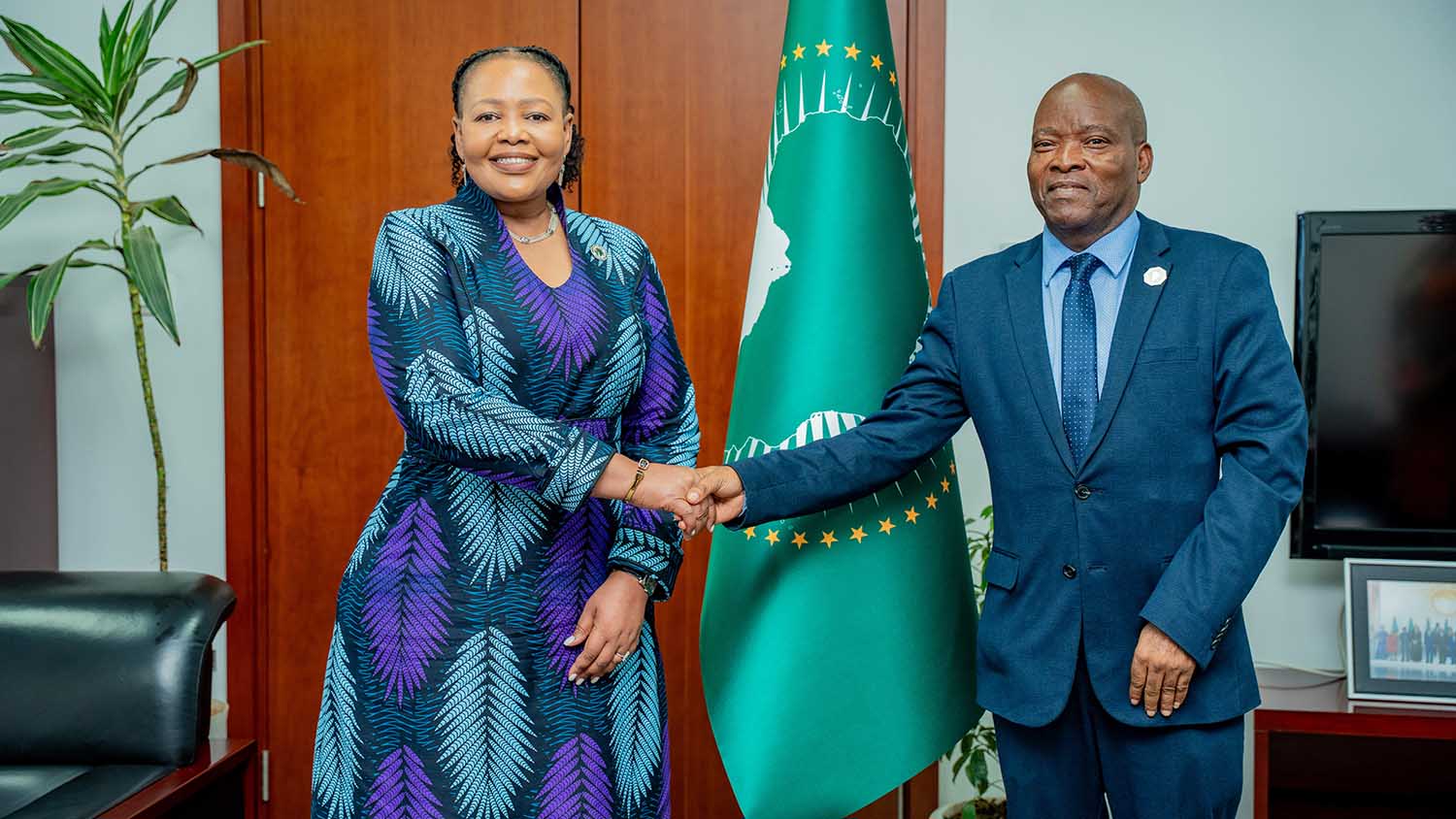
ADDIS ABABA-The Kingdom of Eswatini will take over the stewardship as Chair of the African Union Peace and Security Council in March.
This was relayed by Minister for Foreign Affairs and International Cooperation Pholile Shakantu when delivering her speech at the 1 330th meeting of the council
The minister extended warm congratulations to the Arab Republic of Egypt on assuming the Chairmanship for February, assuring the incoming Chair of Eswatini’s full cooperation and support in advancing the council’s mandate. The Peace and Security Council (PSC) is the standing decision-making organ of the AU for the prevention, management and resolution of conflicts.
It is a collective security and early warning arrangement intended to facilitate timely and efficient responses to conflict and crisis situations in Africa. It is also the key pillar of the African Peace and Security Architecture (APSA), which is the framework for promoting peace, security and stability in Africa.
The Protocol Relating to the Establishment of the Peace and Security Council was adopted on July 9, 2002 in Durban, South Africa and entered into force in December 2003.
The PSC became fully operational in early 2004.
The PSC Protocol, together with the PSC Rules of Procedure, the AU Constitutive Act and the conclusions of various PSC retreats, provides operational guidance for PSC activities.
The powers of the PSC, in conjunction with the Chairperson of the AU Commission, include anticipating and preventing disputes and conflicts, as well as addressing policies, which may lead to genocide and crimes against humanity and undertaking peace-making and peacebuilding functions to resolve conflicts, where they have occurred.
The PSC also has a mandate to authorise the mounting and deployment of peace support missions and to lay down general guidelines for the conduct of such missions, including their mandate.
Futhermore, it also recommends to the Assembly, pursuant to Article 4(h) of the AU Constitutive Act, intervention, on behalf of the union, in a member State in respect of grave circumstances, namely, war crimes, genocide and crimes against humanity as defined in relevant international instruments.
*Full article available on Pressreader*















Leave a comment