

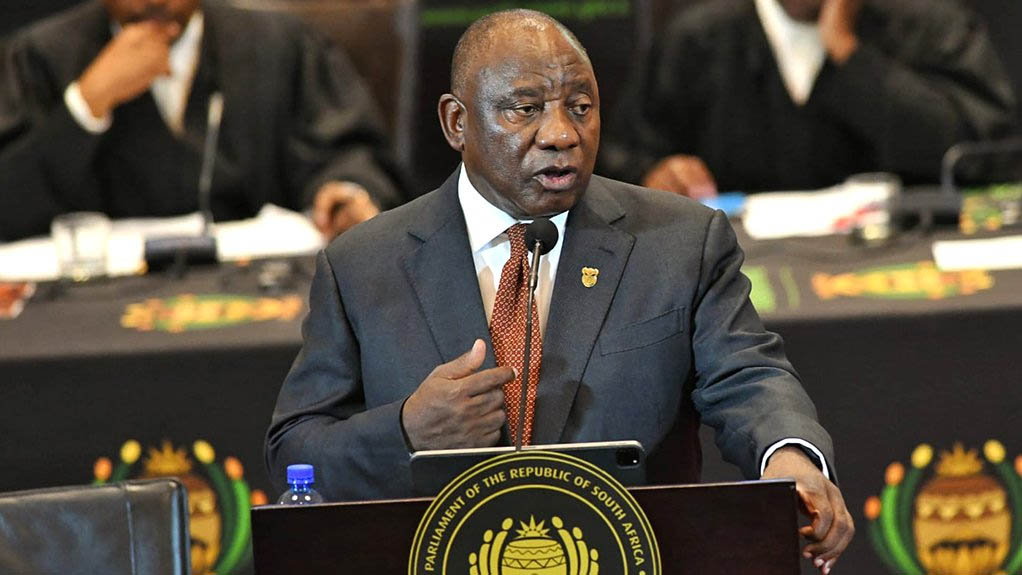
MBABANE – As South African President Cyril Ramaphosa delivered his State of the Nation Address (SONA) recently, his message resonated far beyond the borders of South Africa.
Striking a chord with the socio-economic realities currently facing Eswatini, Ramaphosa highlighted the deepening water crisis to the urgent need for local government reform and job creation, the priorities outlined by the South African leader reflect a shared regional agenda for stability and growth.
President Ramaphosa identified water as the single most important issue for many people, citing systemic failures and years of neglecting infrastructure as the root causes of dry taps. In a move that mirrors the cross-border nature of water security, he noted that the construction of the Lesotho Highlands Water Project is advancing – a project critical for regional water stability.
For Eswatini, where rural and peri-urban communities often face similar infrastructure hurdles, Ramaphosa’s decision to chair a National Water Crisis Committee and intervene in failing municipalities serves as a potential blueprint for addressing service delivery backlogs. The president’s warning that “revenue from water usage must be put straight back into fixing pipes” is a lesson in fiscal discipline that holds relevance for utility management across the SACU region.
A significant portion of the address focused on the “dysfunction” of local government, which Ramaphosa characterised as being plagued by patronage and a lack of technical capacity. He proposed a fundamental overhaul through a new White Paper on Local Government, which seeks to ensure that senior officials are appointed based on merit through an independent process free from political interference.
This focus on building a “capable, ethical, and developmental state” is a priority that Eswatini observers have long advocated for within domestic structures. Ramaphosa’s proposal for “more structured cooperation between municipalities and traditional leadership” is particularly applicable to Eswatini’s unique governance model, where the integration of modern administration and traditional structures is a cornerstone of national identity.
On the economic front, Ramaphosa pointed to signs of recovery, including four consecutive quarters of GDP growth and inflation hitting its lowest level in 20 years. However, he admitted that “jobs are scarce and opportunity is out of reach” for too many—a sentiment deeply felt by Eswatini’s youth.
The South African strategy to drive inclusive growth through over R1 trillion in public infrastructure investment and a focus on the digital and green economies offers a roadmap for regional economic integration. As Eswatini seeks to diversify its economy and reduce unemployment, the success of South Africa’s “Presidential Employment Stimulus”—which has created 2.5 million opportunities—provides a model for state-led job creation.
Addressing the “immediate threat” of organised crime, Ramaphosa announced the deployment of technology and integrated law enforcement to dismantle criminal networks. He also emphasized a “zero tolerance” approach to corruption, specifically targeting the procurement system where most incidents originate.
For Eswatini, which shares porous borders and integrated financial systems with its neighbor, South Africa’s commitment to strengthening anti-corruption bodies and protecting whistle-blowers is a vital step toward a more secure regional investment climate.
President Ramaphosa concluded by noting that a “stronger South Africa must be safe and secure,” but more importantly, it must be equal. As Eswatini navigates its own path toward the 2030 National Development Plan goals, the themes of the SONA—fixing local government, fighting crime, and creating livelihoods—remain the primary pillars for a stable and prosperous Southern Africa.










Leave a comment