

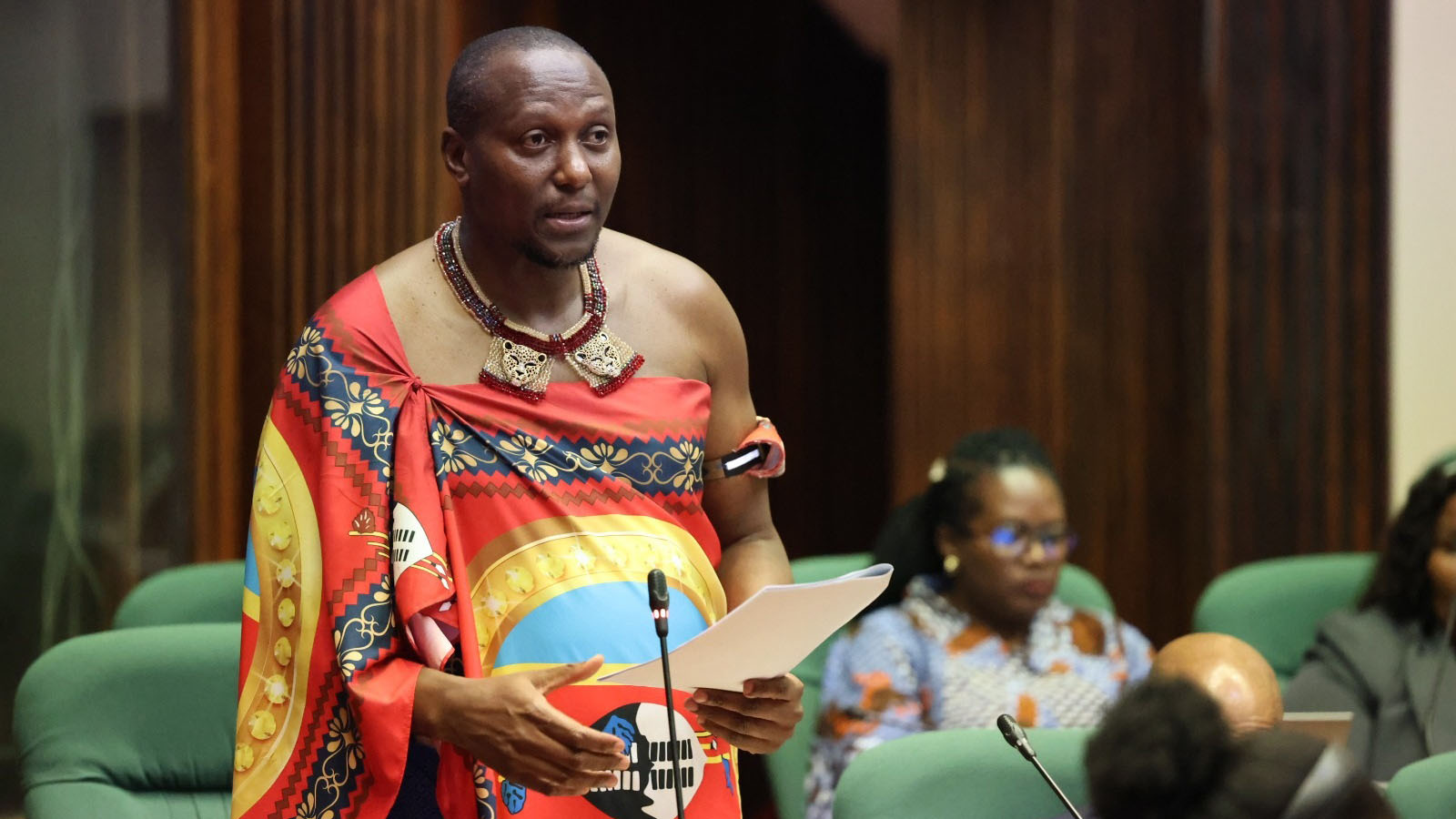
MBABANE – The influx of foreign nationals, some of whom are now suspects of illegal online gambling activities, is giving senators the biggest fear.
They fear that this has the potential of becoming a threat to national security.
As if that is not enough, senators fear that this could threaten the next national elections set to take place in 2028.
The fears were relayed yesterday during the Senate Portfolio Committee debate of the Prime Minister’s Office.
Leading the charge was Senate President Lindiwe Dlamini, who spoke candidly and urged fellow legislators to confront the issue directly.
“The issue of foreign nationals coming in to engage in illegal activities worries me a lot. I do not know how emaSwati perceive it,” she said. “The police must search everywhere, even in houses where we have kept them. They come in and splash cash where they pay rent. Take them out.”
She warned that such activities may not be isolated incidents, but could be linked to broader networks that undermine the country’s stability.
“There are people who are standing against the country, they are cashing in and they are pushed by these foreign nationals,” she added.
Giving the issue a global context, the Senate president drew parallels with ongoing geopolitical tensions. Referencing the conflict between Iran and Israel, she warned that Eswatini could inadvertently become entangled in external dynamics if vigilance is not exercised.
“In geopolitics, there is a war between Iran and Israel. Now there is this thing of looking at who is in support of Israel. We may find ourselves entangled in this whole thing,” she cautioned.
Of particular concern, she said, is the potential impact on the country’s electoral integrity.
With national elections on the horizon, she warned that financial influence from foreign nationals could distort the democratic process.
“They will tempt people and force their way into the electoral process. In the end, we will think that the electoral system has emaSwati only to find that it is packed with foreign nationals who have been funding certain people,” she said.
She further raised the alarm over the technological dimension of the alleged activities, claiming that some individuals are involved in sophisticated cyber operations.
“It is not a small matter. These people work through hacking, they carry gadgets and have hired our children. We do not know what they are doing,” she said.
The Senate president drew a historical parallel, suggesting that the current situation bears resemblance to exploitative systems of the past. “We are going back to colonialism. It works in such a way that they eat while you fight among yourselves,” she said.
Her remarks intensified the debate, with fellow senators also making submissions calling for stronger law enforcement measures, tighter immigration controls and enhanced cybersecurity frameworks.
*…
Senators defend pm, criticise mps
LOBAMBA – In a recent session in Parliament, Eswatini’s senators strongly defended Prime Minister (PM) Russell Mmiso Dlamini.
The senators criticised members of the House of Assembly for an alleged breakdown in established budgetary and constitutional procedures.
Senate President Lindiwe Dlamini spearheaded the discussion, questioning why the national budget formulation process appeared to be deviating from standard governance structures. She outlined the traditional hierarchy: Priorities begin in ministries, move to the Public Budgeting Committee (PBC), and are finalised by the Cabinet to reflect Executive policy.
The Senate president warned that Parliament is overstepping its mandate by directly reallocating or zeroing out budget items, stating: “Ours is to monitor if the Executive has done what it planned to do,” rather than performing the budgeting itself. She expressed deep concern that the PM had to report that his office’s projects were being defunded despite Cabinet approval, suggesting a disconnect between the Finance Committee and the Ministry of Finance.
The Senate president further cautioned that these internal divisions damage the country’s international image. She pointed to the corrupting influence of too many hands in ministries with large budgets, specifically citing the Health sector, and urged the government to return to principle-based leadership. She concluded by calling for maturity, noting that while differences are inevitable, government must present a cohesive front to the public.
Senator Chief Sigombeni Dlamini reinforced the PM’s authority by reminding the House that his appointment originated from the national consultative forum, Sibaya. He framed the PM’s role as a divine and national calling, urging him to remain ‘strong’ against critics.
The chief echoed the Senate president’s sentiments, suggesting that current tensions are driven by personal issues and reckless behaviour from certain individuals who are playing on the ‘wrong turf’ and risking national stability.
*Full article available on Pressreader*

















Leave a comment