

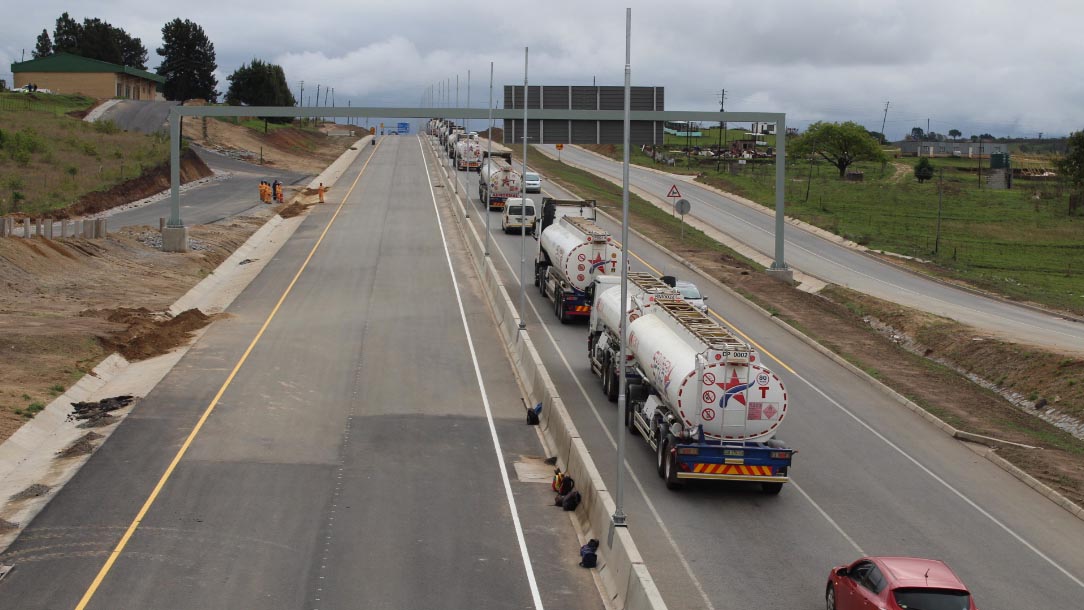
MBABANE – The completion of the Manzini–Mbadlane Highway upgrade has delivered improvements in trade efficiency, road safety and commuter mobility.
This positions the MR3 corridor as a critical engine for Eswatini’s economic growth, according to a newly-released Project Completion Report by the African Development Bank (AfDB).
The report, compiled following an achievement mission conducted in October 2025 and finalised in March 2026, assesses the multi-million-Dollar infrastructure investment as ‘highly satisfactory’ overall, citing strong alignment with national development priorities and tangible socio-economic benefits.
Funded through a combination of development finance and government contributions amounting to over US$102.9 million (approximately E1.9 billion), the project focused on upgrading and dualising a key stretch of the MR3 Highway between Manzini and Mbadlane – one of the country’s busiest and most strategically important transport corridors.
The MR3 corridor plays a pivotal role in linking the country’s industrial hub of Matsapha and commercial centre of Manzini to regional markets, particularly South Africa and Mozambique.
The report highlights that around 69 per cent of Eswatini’s exports and 72 per cent of imports are conducted with South Africa, making efficient road connectivity indispensable for trade.
Prior to the upgrade, the corridor was plagued by congestion, long travel times, high vehicle operating costs and frequent accidents.
The dualisation project sought to address these challenges by expanding road capacity, improving alignment and introducing modern safety features.
“The project has effectively achieved its development objective of improving the efficiency, safety and reliability of transport along the MR3,” the report states, highlighting that the corridor now functions as a more efficient east–west economic backbone.
One of the most immediate benefits of the project has been the reduction in travel time. Average journey times for minibuses along the route have dropped from 45 minutes to 30 minutes, exceeding the initial target of 32 minutes. This translates into faster and more predictable commutes for thousands of daily users.
*…
… safety improvements amid national challenges
MBABANE – Road safety has been a central focus of the project, given the historically high accident rates along the MR3.
The dualisation has introduced separated carriageways, improved junctions, pedestrian bridges, bus bays and enhanced signage all aimed at reducing collision risks.
The report indicates that fatalities and serious injuries along the corridor have declined significantly compared to pre-project conditions.
Fatalities dropped from 58 to 38, while serious injuries fell from 22 to 15, reflecting improved road design and traffic flow.
However, it cautions that broader national trends remain concerning. Eswatini continues to record high levels of road accidents, driven largely by behavioural factors such as speeding and unsafe overtaking.
“While engineering improvements have mitigated the most severe crash types, behaviour-related, non-fatal collisions persist,” the report states, calling for sustained road safety awareness and enforcement efforts.
Beyond transport efficiency, the project has delivered notable social and economic benefits. At peak construction, approximately 595 jobs were created, exceeding the target of 500, with around 30 per cent of these positions filled by women.
In addition, the project supported training programmes for engineers and technicians, as well as internship opportunities for young graduates, contributing to skills development in the road sector.
Communities along the corridor have also benefitted from improved access to essential services.
The construction of service and access roads has enhanced connectivity to schools, health centres and local businesses, while pedestrian infrastructure has improved safety for residents.
A total of 75 project-affected persons were compensated as part of the resettlement process, ensuring compliance with social safeguards.
*Full article available on Pressreader*
MBABANE – The completion of the Manzini–Mbadlane Highway upgrade has delivered improvements in trade efficiency, road safety and commuter mobility.
This positions the MR3 corridor as a critical engine for Eswatini’s economic growth, according to a newly-released Project Completion Report by the African Development Bank (AfDB).
The report, compiled following an achievement mission conducted in October 2025 and finalised in March 2026, assesses the multi-million-Dollar infrastructure investment as ‘highly satisfactory’ overall, citing strong alignment with national development priorities and tangible socio-economic benefits.
Funded through a combination of development finance and government contributions amounting to over US$102.9 million (approximately E1.9 billion), the project focused on upgrading and dualising a key stretch of the MR3 Highway between Manzini and Mbadlane – one of the country’s busiest and most strategically important transport corridors.
The MR3 corridor plays a pivotal role in linking the country’s industrial hub of Matsapha and commercial centre of Manzini to regional markets, particularly South Africa and Mozambique.
The report highlights that around 69 per cent of Eswatini’s exports and 72 per cent of imports are conducted with South Africa, making efficient road connectivity indispensable for trade.
Prior to the upgrade, the corridor was plagued by congestion, long travel times, high vehicle operating costs and frequent accidents.
The dualisation project sought to address these challenges by expanding road capacity, improving alignment and introducing modern safety features.
“The project has effectively achieved its development objective of improving the efficiency, safety and reliability of transport along the MR3,” the report states, highlighting that the corridor now functions as a more efficient east–west economic backbone.
One of the most immediate benefits of the project has been the reduction in travel time. Average journey times for minibuses along the route have dropped from 45 minutes to 30 minutes, exceeding the initial target of 32 minutes. This translates into faster and more predictable commutes for thousands of daily users.
*…
… safety improvements amid national challenges
MBABANE – Road safety has been a central focus of the project, given the historically high accident rates along the MR3.
The dualisation has introduced separated carriageways, improved junctions, pedestrian bridges, bus bays and enhanced signage all aimed at reducing collision risks.
The report indicates that fatalities and serious injuries along the corridor have declined significantly compared to pre-project conditions.
Fatalities dropped from 58 to 38, while serious injuries fell from 22 to 15, reflecting improved road design and traffic flow.
However, it cautions that broader national trends remain concerning. Eswatini continues to record high levels of road accidents, driven largely by behavioural factors such as speeding and unsafe overtaking.
“While engineering improvements have mitigated the most severe crash types, behaviour-related, non-fatal collisions persist,” the report states, calling for sustained road safety awareness and enforcement efforts.
Beyond transport efficiency, the project has delivered notable social and economic benefits. At peak construction, approximately 595 jobs were created, exceeding the target of 500, with around 30 per cent of these positions filled by women.
In addition, the project supported training programmes for engineers and technicians, as well as internship opportunities for young graduates, contributing to skills development in the road sector.
Communities along the corridor have also benefitted from improved access to essential services.
The construction of service and access roads has enhanced connectivity to schools, health centres and local businesses, while pedestrian infrastructure has improved safety for residents.
A total of 75 project-affected persons were compensated as part of the resettlement process, ensuring compliance with social safeguards.
*Full article available on Pressreader*


















Leave a comment