

MBABANE- Eswatini’s tourism sector recorded an 11.5 per cent growth during the Easter period, driven by strong visitor arrivals, although accommodation occupancy declined compared to last year.
The April 2026 Easter period delivered a mixed performance for the sector, with high inbound travel volumes contrasted by moderate room occupancy levels, largely influenced by rising fuel costs and changing travel patterns.
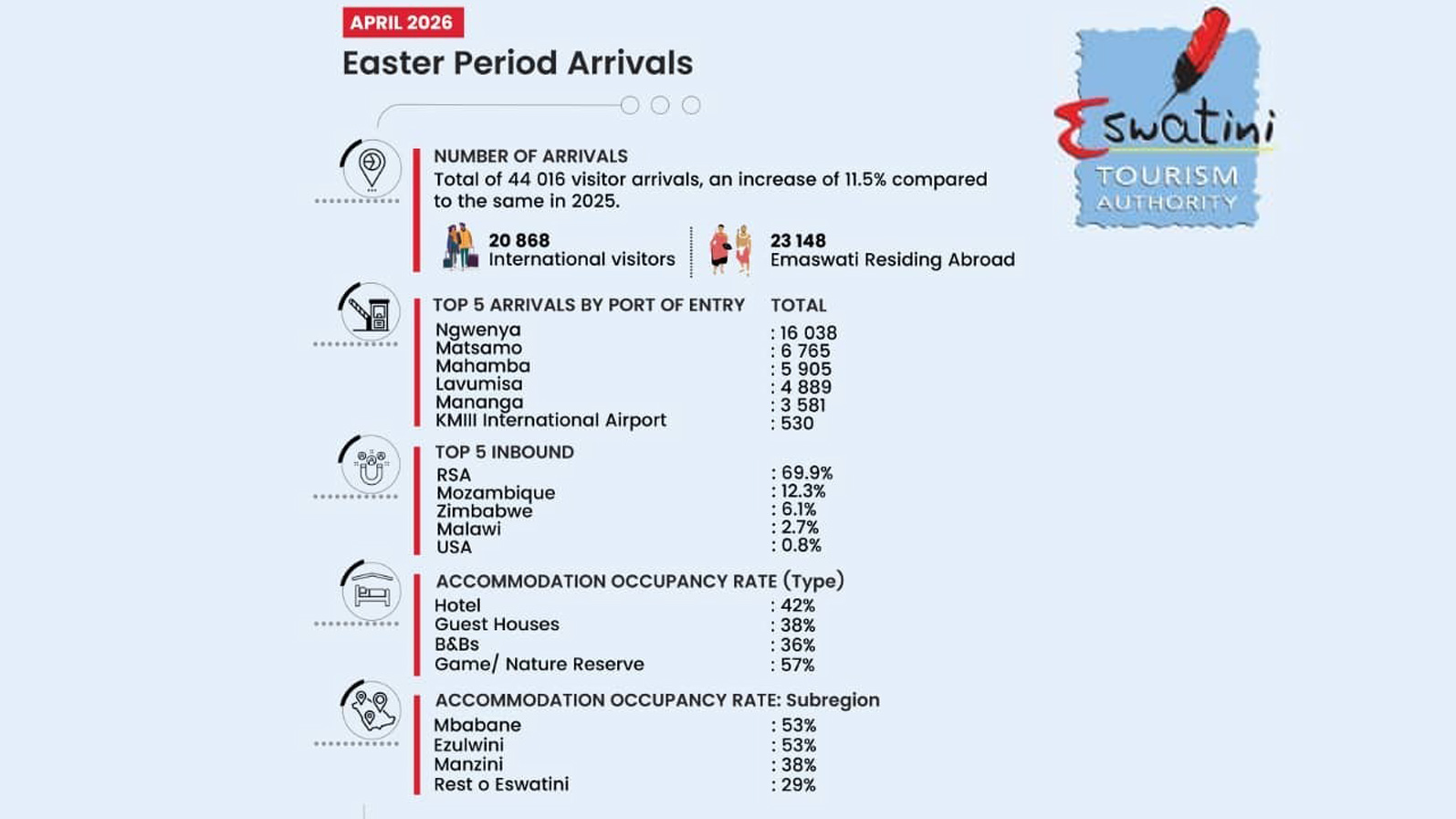
A total of 44 016 visitors travelled to the kingdom during the review period, reflecting sustained interest in the country as a regional and international destination. Of these, 20 868 were international visitors, while 23 148, representing 52.59 per cent, were emaSwati living abroad who returned home for the holiday.
Tourism authorities noted that peak arrivals were recorded on Good Friday and the preceding day, highlighting the continued importance of religious travel in shaping Easter tourism trends.
The Southern African region remained the dominant source market, accounting for over 93.8 per cent of total arrivals. South Africa led the inflows with 14 597 visitors, followed by Mozambique with 2 574.
The kingdom also attracted travellers from key overseas markets, including the United States of America, Germany, the United Kingdom, France, Portugal, Canada and the Netherlands, reflecting Eswatini’s continued appeal beyond the region.
In terms of entry points, the Ngwenya Border Post recorded the highest traffic, with 16 038 arrivals, including both international visitors and returning emaSwati. This was followed by Matsamo with 6 765 travellers, Mahamba with 5 905 and Lavumisa with 4 889, which remained a key route for visitors from KwaZulu-Natal.
Despite the strong inflow of visitors, accommodation performance did not mirror the same upward trend. Overall room occupancy stood at 41.1 per cent in 2026, a notable decline from 63.3 per cent recorded during the same period in 2025. Industry players attributed this drop to a combination of factors, including a sharp increase in fuel prices just days before the Easter weekend.
The rise in fuel costs is believed to have triggered last-minute booking cancellations, altered travel behaviour and reduced overall visitor spending.
Accommodation performance varied across different categories. Game and nature reserves recorded the highest occupancy at 57 per cent, reflecting a growing preference among tourists for experiential travel, including wildlife encounters, eco-tourism and outdoor activities.
Bed and breakfast establishments and guesthouses recorded occupancy levels of 36 per cent and 38 per cent, respectively. These options remained popular among travellers seeking affordable and flexible accommodation, particularly families and group travellers.
Hotels achieved a moderate occupancy rate of 42 per cent, suggesting stable but subdued demand within the segment.
Regional performance also showed notable differences. Mbabane and the Ezulwini Valley recorded the highest occupancy levels at 53 per cent, benefiting from their strategic location within the country’s tourism corridor, which offers a concentration of hotels, cultural attractions and entertainment facilities.
In contrast, the Manzini corridor recorded an occupancy rate of 38 per cent, while the rest of the country lagged behind at 29 per cent, indicating uneven distribution of tourism activity.
Stakeholders say the mixed performance reflects both resilience and vulnerability within the sector, with strong visitor numbers demonstrating continued demand, while external economic pressures continue to influence spending and accommodation trends.
Despite the dip in occupancy, the overall increase in arrivals signals positive momentum for the industry, with prospects for further growth if cost-related challenges are addressed and product offerings continue to evolve.


















Leave a comment