

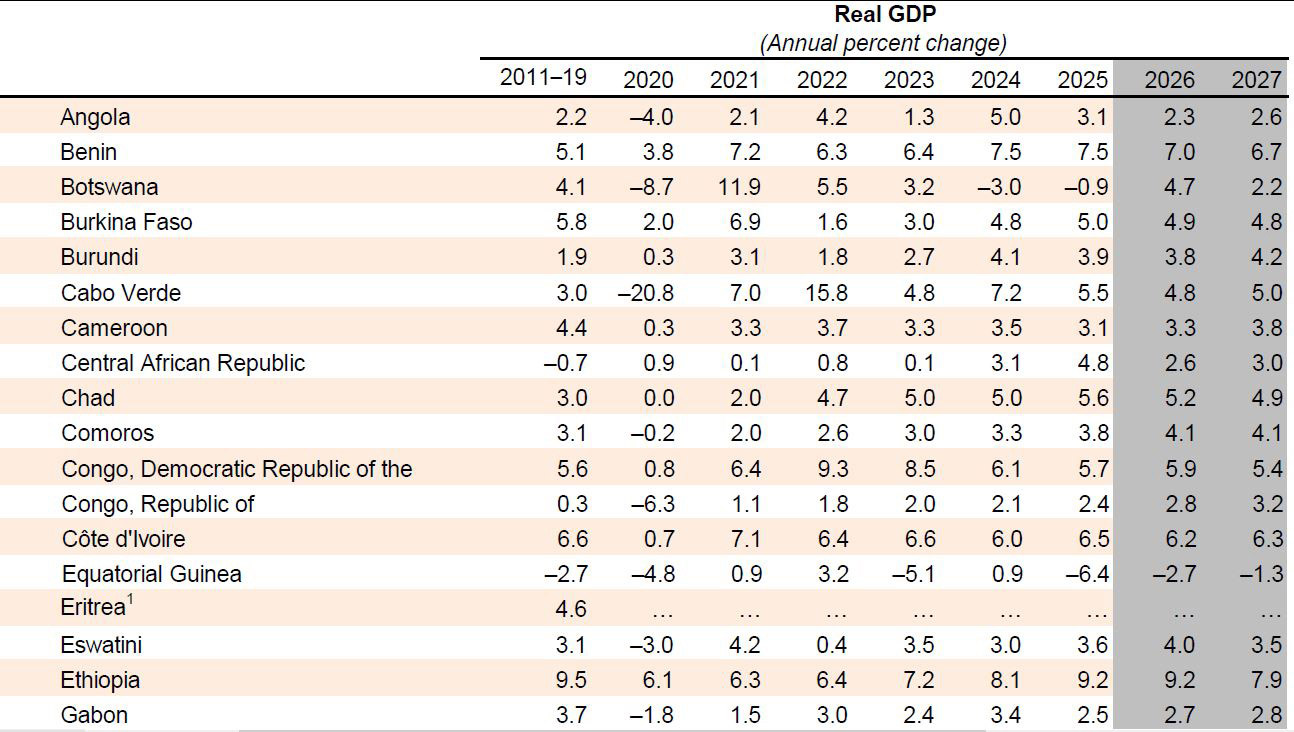
MBABANE – The International Monetary Fund (IMF) has downgraded Eswatini’s economic growth outlook, with projections for both 2026 and 2027 revised downward in its latest April 2026 Regional Economic Outlook.
In the latest assessment, Eswatini’s GDP is now projected to grow by 4.0 per cent in 2026, down from 4.3 per cent from previous forecast in the October 2025 regional outlook.
More notably, the outlook for 2027 has been cut sharply to 3.5 per cent, from an earlier projection of 4.6 per cent, signalling a more pronounced slowdown over the medium term.
The revised projections reflect mounting global and regional pressures that are beginning to weigh on economic momentum, despite the country’s relatively strong post-pandemic recovery.
The IMF report, titled ‘Hard-Won Gains Under Pressure’, highlights that while Sub-Saharan Africa entered 2026 on the back of a strong recovery, the outlook has become increasingly uncertain.
Economic growth across the region reached about 4.5 per cent in 2025, the fastest pace in over a decade, supported by improved macroeconomic management and favourable external conditions. However, this momentum is now under threat.
*…
Inflation rise: Cost of living pressures back
MBABANE – After easing in 2025, inflation is expected to rise again across the region, posing renewed challenges for households and policymakers.
The IMF notes that median inflation in Sub-Saharan Africa is projected to increase to 5.0 per cent in 2026, up from 3.4 per cent at the end of 2025.
This resurgence in inflation is being driven by:
- Higher global food prices
- Rising energy costs
- Exchange rate pressures
- Supply chain disruptions.
For Eswatini, inflation is projected to remain relatively contained compared to regional peers, but still subject to upward pressure.
The IMF projects consumer price inflation to average around 4–5 per cent in 2026, broadly in line with regional trends, but slightly elevated compared to the easing seen in 2025.
This reflects:
- Higher imported food prices
- Rising fuel costs
- Exchange rate pass-through effects
While inflation in Eswatini has historically been anchored by its monetary link to South Africa through the Common Monetary Area, the country remains exposed to imported inflation shocks, particularly from global commodity markets.
*Full article available on Pressreader*





















Leave a comment