

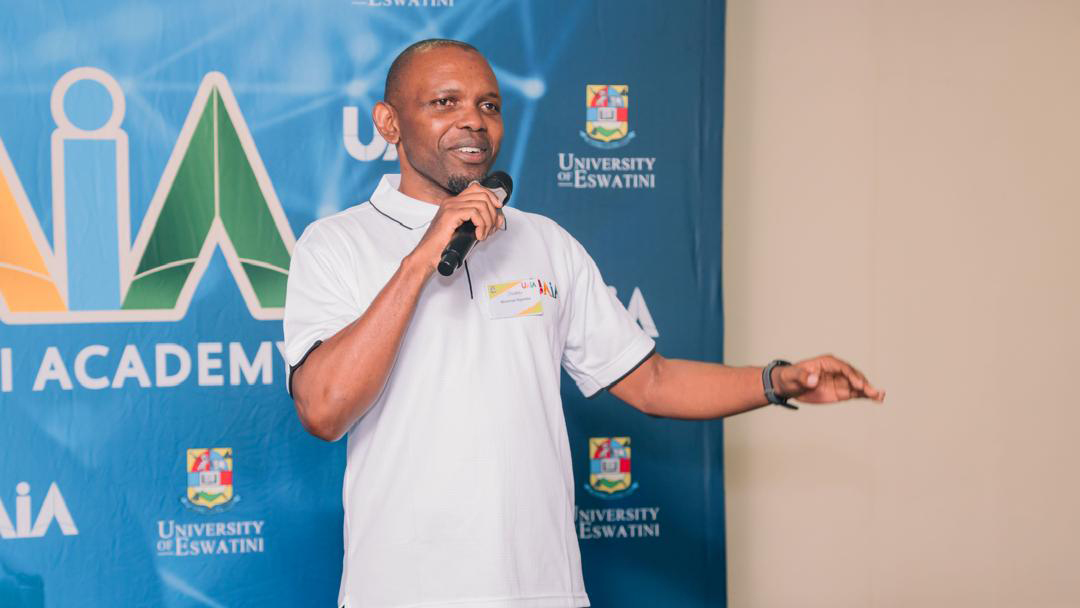
MBABANE – UNESWA lecturer Wiseman Nyembe has cautioned that artificial intelligence (AI) still has significant limitations.
UNESWA is an acronym for University of Eswatini. Nyembe has sternly advised that Eswatini should adopt AI cautiously and continue valuing human judgement, following global cases where companies including Ford rehired experienced workers after automation failures.
Nyembe said AI remains useful for routine and repetitive tasks but continues to struggle in situations that require deep contextual judgement, adaptability and problem-solving in unfamiliar environments.
He noted that while the technology is advancing rapidly, it is still far from replacing human intelligence in complex decision-making roles.
Collaborator
He stressed that the real value of AI today lies in its role as a “collaborator” rather than a replacement for human workers, especially in industries where precision, ethics and experience matter.
The warning comes against the backdrop of Ford Motor Company’s recent admission that it had rehired more than 300 veteran engineers after its artificial intelligence systems failed to meet expected quality standards in vehicle inspection and manufacturing processes.
According to online media reports, Ford had invested heavily in AI-powered quality control systems, including automated cameras and machine-learning tools designed to detect defects on production lines.
The company introduced these systems as part of a broader strategy to reduce costs, improve efficiency and modernise its manufacturing operations.
However, the systems failed to consistently identify complex faults that experienced engineers would normally detect.
According to Ford executives, the problem was not the absence of technology but the lack of human expertise embedded in training and supervising the systems.
Charles Poon, Ford’s vice president for vehicle hardware engineering, reportedly acknowledged that the company had underestimated the value of experienced engineers.
According to him, many of these engineers had already left the company before their knowledge could be captured and used to train the AI systems effectively.
As a result, Ford reversed part of its automation strategy by rehiring more than 300 experienced engineers. These professionals were brought back not only to restore quality control but also to help retrain and guide the company’s AI systems.
This development has sparked global debate about the limits of artificial intelligence, especially in industries where precision and safety are critical.
Further, it has also raised questions about whether companies are moving too quickly to replace human labour with automated systems.
Global trend
However, according to Nyembe, he said Ford’s experience reflects a broader global trend where organisations are beginning to reassess the balance between automation and human expertise.
“Ford is not the first one. There are currently other companies that have had to do the same,” said Nyembe.
He added that part of the current AI hype is being driven by technology innovators and developers who want to attract investment, sometimes overstating the readiness of the technology for full-scale replacement of human labour.
“The hype currently seen is being driven by the innovators of AI so that investors can invest in it,” he stated.
In his detailed response to questions from this publication, Nyembe said Eswatini must interpret the Ford situation as a learning opportunity rather than a distant international incident.
He explained that within the UNESWA AI Academy, it has become clear that artificial intelligence performs best in structured environments where tasks are repetitive and predictable.
However, he said when systems are exposed to new problems that require human judgement, creativity and adaptation, performance drops significantly.
“At the Academy, we see that AI excels at routine tasks, but it struggles when faced with new problems that require real judgment,” he said.
Human intelligence
Moreover, Nyembe pointed to Ford’s decision to bring back human inspectors as a practical example of the continued value of human intelligence in modern industrial systems.
“I think Ford’s decision to bring back human inspectors is a good example of the value of human intelligence; it is fluid and organic,” he said.
He emphasised that human intelligence remains superior in its ability to adapt to changing environments, interpret ambiguous situations and apply experience-based reasoning.
For Eswatini, Nyembe said the key lesson is not to reject AI but to understand where it adds value and where human oversight remains essential.
“For Eswatini, I think we should learn from global trends to identify where AI truly thrives versus where human intervention is necessary,” he said.
Warned
He warned that premature reliance on AI systems without adequate safeguards could weaken institutional capacity, particularly in developing countries where expertise is already limited.
“At this stage, I think we must view AI as a collaborator or ‘coworker,’. We know it will change the work landscape, but we are not yet sure to what extent,” he explained.
The UNESWA lecturer further advised young people to focus on developing skills that cannot easily be replicated by machines, particularly those that involve critical thinking, judgement and problem-solving in complex, unpredictable environments.
“My advice to the youth is for them to learn the technology, but don’t neglect to build skill sets that are human intelligence dependent,” he said.
“Focus on judgement and solving problems in complex, unmapped spaces; those are the things AI cannot replace,” he stressed.
AI education
In response to the growing importance of artificial intelligence, the University of Eswatini (UNESWA) has gradually introduced AI-related training and digital innovation content within its academic programmes.
The initiative began around 2022, when the university started integrating artificial intelligence concepts into selected computing, education and business-related modules.
Since then, UNESWA has expanded its focus through its AI Academy coordination efforts, aimed at equipping students with foundational knowledge in machine learning, data science, digital systems and ethical AI use.
While the programme is still developing, estimates suggest that several hundred students annually are now exposed to AI-related content across different faculties, with numbers expected to grow as demand for digital skills increases in both the public and private sectors.
The university’s approach focuses not only on technical training but also on critical thinking and ethical considerations surrounding AI deployment.
This includes understanding algorithmic bias, data privacy, automation risks and the social implications of machine-driven decision-making.
Nyembe said this approach is crucial for Eswatini, as the country cannot afford to produce graduates who only know how to use AI tools without understanding their limitations.
Pattern
Ford is part of a broader global pattern where companies have scaled back automation or rehired human workers after AI systems failed to meet expectations.
Similar adjustments have been reported across several major organisations:
- Ford Motor Company – rehired over 300 experienced engineers after AI inspection systems failed to match human quality control accuracy.
- IBM (International Business Machines) – adjusted automation in some operational functions and redeployed human staff after AI systems struggled with complex employee support queries.
- Amazon – increased human oversight in warehouse logistics after automated prediction systems produced inconsistencies in inventory management.
- Tesla – continued to rely on human quality-control teams alongside AI-driven manufacturing systems due to persistent edge-case production challenges.
- Google (Alphabet) – reinforced human review teams in search quality and content moderation systems after algorithmic errors in context-sensitive outputs.
- Meta (Facebook) -expanded human content moderation teams after AI systems failed to consistently interpret context in complex online content.
These cases highlight a growing global reality, which says, while AI is transforming industries, however, it is not yet capable of fully replacing human expertise, particularly in roles requiring judgement, accountability and contextual understanding.
Partnership
As such, Nyembe concluded by saying that Eswatini must approach artificial intelligence with caution, balance and strategic foresight.
He said while AI offers significant opportunities for efficiency and innovation, it must be deployed in partnership with human expertise rather than in replacement of it.
He stressed that the future of work will not be defined by humans versus machines, but by how effectively both can be integrated.



















Leave a comment