

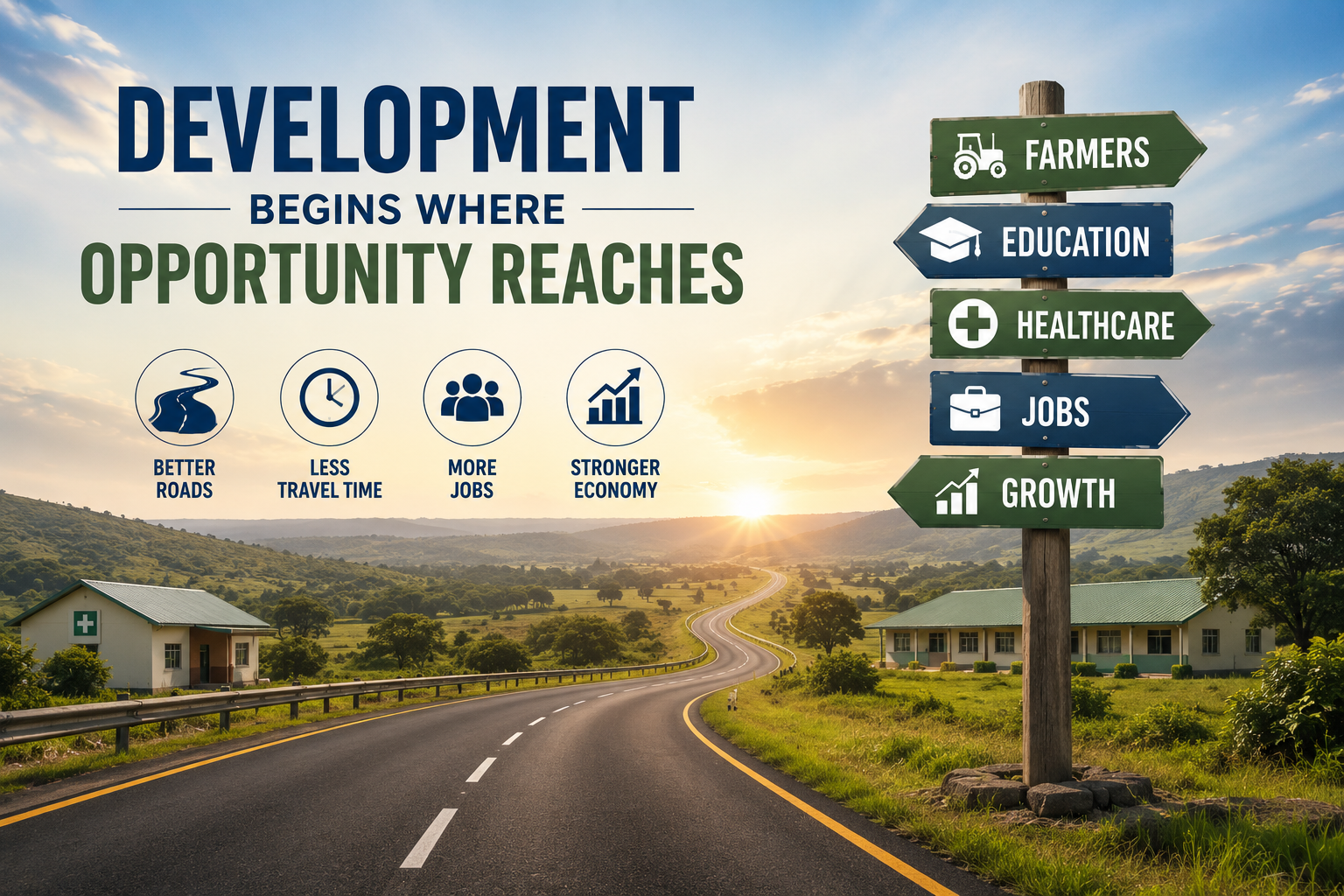
Development is often measured in statistics, economic growth rates and investment figures. Yet for the ordinary emaSwati, development is much simpler. It is the difference between a farmer reaching the market before fresh produce spoils, a pregnant mother arriving at a clinic safely, a child getting to school on time or a young graduate finding work because businesses are finally willing to invest where roads exist.
That is why the African Development Bank’s Road Infrastructure Improvement Programme deserves recognition, not merely as another infrastructure project, but as an investment in the future of our people. The programme, which will upgrade more than 105 kilometres of roads linking Siphofaneni, Sithobela, Maloma, Nsoko and Siphambanweni, is expected to cut travel time and vehicle operating costs by almost half while creating jobs and unlocking economic activity in the Lubombo and Shiselweni regions. For too long, conversations about development in Eswatini have centred on what we lack. We lament unemployment, poverty and the slow pace of economic transformation. Those concerns are valid. However, meaningful development also requires us to appreciate interventions that directly tackle the structural barriers holding our country back. Roads are among those barriers.
It is difficult to attract investors to communities that are difficult to reach. It is equally difficult for rural farmers to compete in national markets when transporting produce is expensive and unreliable.
Tourism cannot flourish where access is poor and public services become less effective when teachers, nurses and emergency responders struggle to reach communities.
Good roads are not simply about convenience. They are economic infrastructure. The AfDB rightly notes that inadequate transport infrastructure has limited the economic potential of Lubombo and Shiselweni despite their rich agricultural resources. The programme seeks to change that reality by improving connectivity, enhancing road safety, supporting regional trade and creating employment opportunities, particularly for young people through vocational training and apprenticeships.This is precisely the kind of partnership Eswatini should continue to embrace. Development partners should never be viewed as substitutes for our own national ambitions. Rather, they should be seen as catalysts that accelerate them. Institutions such as the African Development Bank bring financing, technical expertise and international experience that many developing countries would otherwise struggle to mobilise independently. The responsibility on our side is to ensure these resources are utilised transparently, efficiently and in ways that produce lasting value. Every Lilangeni invested must translate into visible improvements in people’s lives.
What is particularly encouraging about this programme is that its benefits extend beyond asphalt and bridges. Improved roads mean easier access to schools, clinics and markets. They reduce transport costs for businesses, improve the movement of agricultural produce and strengthen regional trade with neighbouring South Africa and Mozambique. These are the building blocks of inclusive economic growth, not just headline-grabbing construction projects.
As citizens, we also have a role to play. We must move beyond celebrating projects only at groundbreaking ceremonies. We should demand quality workmanship, proper maintenance and accountability throughout implementation. A road that deteriorates after a few rainy seasons is not development; it is a wasted opportunity. Eswatini has repeatedly expressed its desire to become a competitive, middle-income economy that offers opportunities to all its citizens. That aspiration cannot be realised without modern infrastructure connecting people, industries and markets.


















Leave a comment