

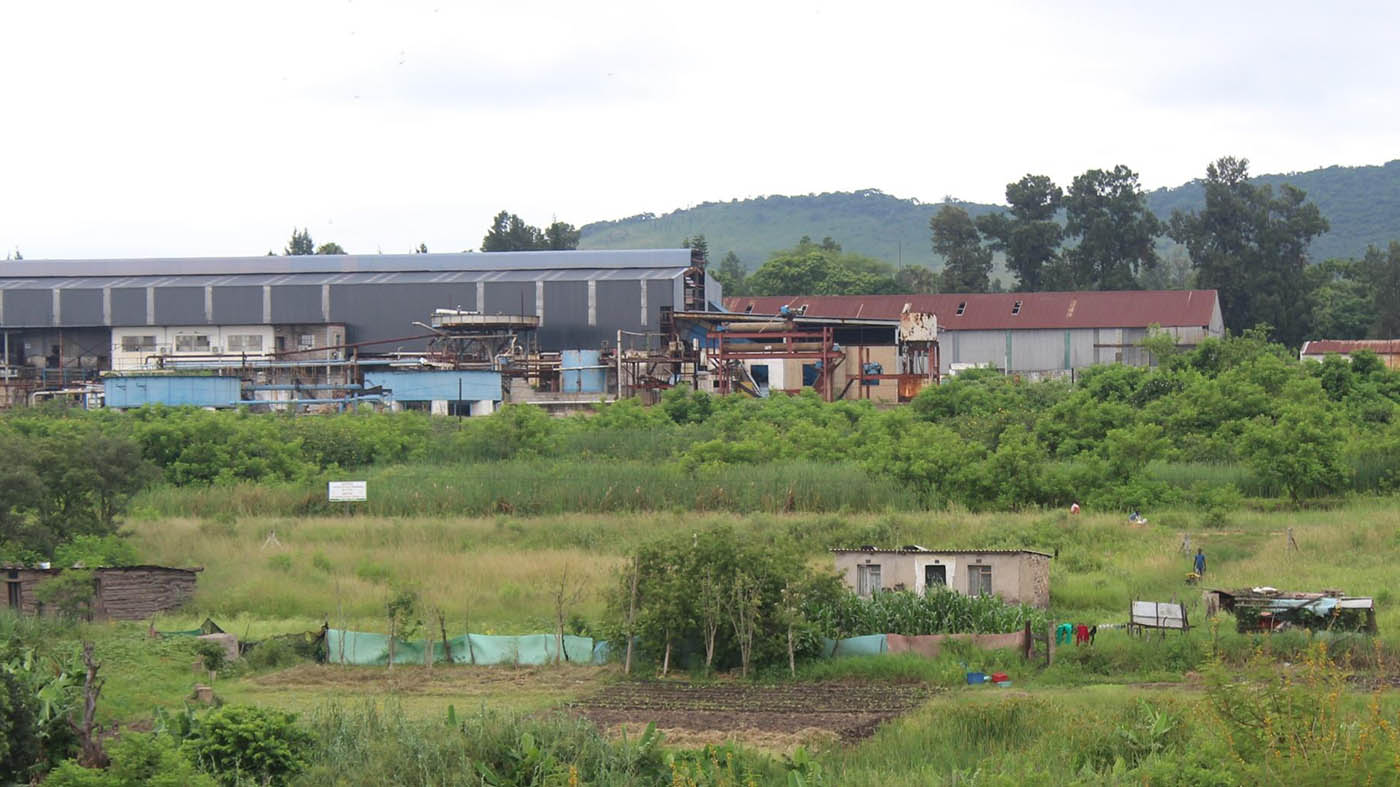
The Eswatini Government, through the Ministry of Housing and Urban Development has outlined a comprehensive strategy to upgrade informal settlements across the country as part of efforts to ensure that emaSwati living in urban areas have access to safer, better planned and serviced communities.
The ministry has already begun implementing upgrading initiatives in some areas, with the broader goal of gradually integrating informal settlements into the formal urban system while improving the living conditions of residents. Senior Housing Officer at the ministry, Samkeliso Makhubu, explained that informal settlements have become a significant feature of urbanisation in the country.
WHAT IS AN INFORMAL SETTLEMENT?
Makhubu said an informal settlement refers to a residential area where development has taken place outside formal planning and regulatory systems. “An informal settlement refers to a residential area where housing has been developed, and/ or land occupied outside the formal planning and regulatory systems. These settlements typically emerge when people build homes on land without formal approval, secure tenure or adherence to approved planning standards,” said Makhubu.
He explained that these settlements usually arise due to the urgent need for shelter among low-income households who cannot easily access formally serviced land or affordable housing. “As a result, homes are often constructed incrementally and may lack basic services such as proper sanitation, stormwater drainage, road access, electricity and waste management,” he said.
Makhubu added that such settlements are characterised by self-built structures ranging from stick and mud to brick buildings constructed on land without formal legal titles. “In Eswatini, a significant proportion of the urban population lives in informal settlements,” he said.
HOW THE MINISTRY IDENTIFIES INFORMAL SETTLEMENTS
According to Makhubu, areas are classified as informal settlements when they display characteristics associated with unplanned development. He said the identification process is carried out in collaboration with urban local authorities through surveys, mapping exercises and spatial analysis.
“To determine informality in settlements, the ministry together with relevant partners typically considers the following indicators,” he explained:
- Lack of formal land tenure or unclear land ownership arrangements
- Absence of approved township layouts or planning permission
- Settlement patterns that do not follow planning standards
- Limited or no access to basic infrastructure services, including water supply, sanitation, drainage, roads and electricity
- Substandard or temporary housing structures
- Settlement in environmentally sensitive or high-risk areas, such as flood-prone land, steep slopes or riverbanks
WHY INFORMAL SETTLEMENTS CONTINUE TO GROW
Makhubu said several socio-economic and spatial planning factors contribute to the growth of informal settlements in Eswatini.
“The growth of informal settlements in Eswatini is driven by several socio-economic and spatial planning factors,” he said.
Firstly, he noted that rapid urbanisation has significantly increased demand for housing in urban centres.
“Rapid urbanisation has increased demand for housing in urban centres, while the supply of affordable, serviced land has not kept pace with population growth,” he said.
Informal settlements are therefore commonly found on the outskirts of growing towns and cities where the demand for land is high.
Secondly, he said limited access to affordable housing finance prevents many households from accessing formal housing through conventional markets. “Low-income households often cannot easily access formally serviced land or affordable housing. As a result, homes are often constructed incrementally using available materials,” said Makhubu.
Migration from rural areas to towns in search of employment also places pressure on urban land. “Often, these people will tend to settle on the margins of cities where land and housing is cheaper,” he said.
Makhubu further noted that historical land administration processes and limited serviced land development have contributed to informal development. “Generally, the mushrooming of informal settlements would occur by households illegally settling on un-serviced government and private land within urban jurisdictions,” he said.
The senior officer added that some informal development is also observed on Eswatini Nation Land (ENL) around urban edges as people move closer to economic opportunities. “A combination of these factors has resulted in the expansion of informal settlements in and around urban centres in Eswatini,” he said.
AREAS ALREADY BENEFITING FROM UPGRADING PROGRAMMES
Government has already initiated upgrading projects in several areas through pilot initiatives.
Makhubu said some of these projects were implemented through the World Bank funded Urban Development Project.
“Some areas within urban jurisdictions have already benefitted from pilot upgrading initiatives, particularly within the municipal areas of Mbabane and Manzini through the Urban Development Project that was funded by the World Bank,” he said.
Other initiatives have also been implemented outside the World Bank programme. “The ministry together with the urban local authorities have initiated the formalisation of settlements in Matsapha (Likhwane Township), Moyeni Township (Siteki) and Nkhungu (Sivusimiti Township) in Ngwenya among others,” he explained.
Within Mbabane alone, the municipal council has identified several informal settlements. “The Municipal Council of Mbabane has a total of nine informal settlements including Fonteyn, Malagwane, Mvakwelitje, Manzana, etc,” he said.
Makhubu, however, noted that these initiatives are still at different stages of the upgrading process. He explained that once a settlement is fully formalised, it is zoned under a planning scheme known as High Density Residential Upgrading (R3U).
“The zoning of the settlements allows for a diversity of uses and building standards are permitted to encourage home occupations and a variety of housing types, including incremental housing,” he said.
Residents in upgraded areas can expect improvements such as:
- Provision or upgrading of internal road networks
- Installation of water supply and sanitation infrastructure
- Stormwater drainage systems to reduce flooding
- Electricity connections
- Land regularisation and improved tenure security (legal ownership or user rights to property)
PREPARATION OF FORMAL TOWNSHIP LAYOUTS
Makhubu said these upgrades significantly improve safety, health conditions and overall quality of life for residents.
LONG-TERM STRATEGY TO REDUCE INFORMAL SETTLEMENTS
The government has also launched a national programme aimed at addressing informal settlements in a structured and sustainable manner.
“The government, through the Ministry of Housing and Urban Development, has initiated a national informal settlements upgrading programme aimed at upgrading informal settlements, rather than simply removing them, in all the declared urban areas in Eswatini,” said Makhubu.
The programme focuses on gradually improving living conditions while integrating these communities into the formal urban system.
According to Makhubu, the approach prioritises in situ upgrading, which involves regularising land through proper spatial layout plans and plot demarcation. This is followed by improving tenure security through plot allocation and the issuing of title deeds or 99-year leaseholds to beneficiaries.
“Lastly the incremental installation of basic infrastructure services such as roads, water, electricity, sanitation and waste management is undertaken,” he said.
To prevent the continued emergence of informal settlements, the ministry is also working to increase the supply of serviced land. “On prevention of the mushrooming of informal settlements in urban areas, the ministry is increasing the supply of serviced land through planned township developments and disposal of government land through the crown land management framework i.e. the Crown Land Act, 1911 and the Crown Land Disposal Regulations, 2003,” said Makhubu. He added that the ministry is strengthening urban planning and land management systems in collaboration with local authorities to guide orderly and sustainable urban growth.
COLLABORATION WITH COMMUNITIES & REGIONAL PARTNERS
Makhubu stressed that upgrading informal settlements requires strong collaboration between multiple stakeholders. “The ministry recognises that successful informal settlement upgrading requires strong collaboration and community participation,” he said.
The ministry works closely with:
- Local authorities and municipalities responsible for service delivery
- Community leadership structures and traditional authorities where applicable
- Development partners and technical institutions
Community engagement is a key component of the process. “Residents are involved in consultations during the planning, layout design and implementation stages to ensure that interventions respond to local needs and are socially acceptable,” he said.
Makhubu mentioned that this participatory approach helps communities take ownership of projects and ensures upgraded settlements become sustainable and integrated parts of urban areas.
Eswatini is also collaborating regionally through the Southern African Development Community. “The Government of Eswatini is participating in the Southern African Development Community (SADC) Working Group on Transformation of Informal Settlements in the development of a regional Strategy for Transformation of Informal Settlements,” he explained.
The strategy aims to support effective decision-making and guide national strategies for the prevention and transformation of informal settlements across member States.
“This strategy will further inform Eswatini’s informal settlements upgrading programme as it constitutes a framework for knowledge and best practices and encourages regional cooperation among member States in the SADC region,” concluded Makhubu.

















Leave a comment