


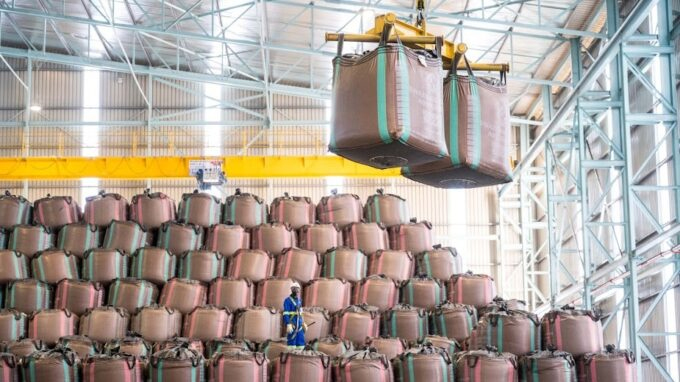
CAPE TOWN, SOUTH AFRICA – African countries must urgently shift from exporting raw materials to producing higher-value goods.
That is if the continent is to unlock sustainable economic growth, create quality jobs and strengthen its position in global markets.
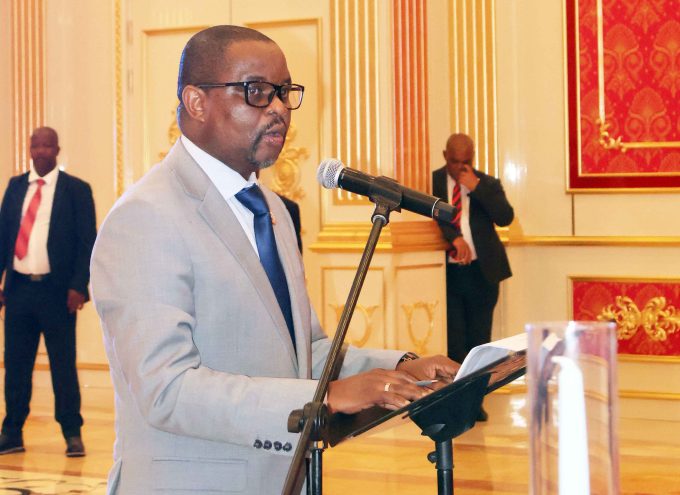
This was the central message delivered by Standard Bank Group Chief Economist Goolam Ballim during the second and final day of the Standard Bank Africa Unlocked 2026 Conference, where economists, policymakers, investors and business leaders gathered to discuss Africa’s economic future under the theme ‘Built in Africa: Amplifying Continental Growth.’
The conference was held at the Norval Foundation in Cape Town, South Africa from Thursday and ended on Friday.
Presenting an overview of Africa’s economic outlook before participating in a high-level panel discussion, Ballim argued that despite decades of discussions around industrialisation, Africa continues to export largely unprocessed commodities while importing finished products at considerably higher prices.
He said unless the continent fundamentally changes this economic model, it would remain vulnerable to external shocks, capture only a fraction of the value generated from its abundant natural resources and continue surrendering wealth creation opportunities to economies that undertake processing and manufacturing.
“We know well that Africa lacks processing capacity. We know that Africa is largely vested in light manufacturing rather than heavy manufacturing, generally speaking. Inserting itself into global value chains, as easy as one can suggest it, is essential,” Ballim remarked.
He said the transformation from exporting raw commodities to producing finished products would fundamentally change Africa’s position in the global economy.
“It is really going to be where Africa shifts from being a price taker to a price maker and from just capturing more margin in final goods.”
Ballim emphasised that achieving this transition would not happen automatically.
Instead, he outlined several key building blocks that governments and the private sector must collectively pursue.
The first, he said, was a deliberate industrial policy that recognises manufacturing and value addition as national development priorities.
He said governments needed to create policy environments that encourage investment in factories, processing facilities and industrial infrastructure capable of transforming locally produced raw materials into finished products.
Without coordinated industrial strategies, Ballim warned, Africa would continue exporting jobs together with its minerals, agricultural products and other natural resources.
The second requirement, according to Ballim, is scale.
He argued that industrialisation cannot flourish in fragmented domestic markets where producers struggle to achieve the production volumes needed to compete globally.
This is where continental integration becomes increasingly important.
“The free trade capacities of the continent come to the fore,” he said.
He noted that the African Continental Free Trade Area (AfCFTA) presents an unprecedented opportunity for businesses to access a much larger consumer market instead of relying solely on domestic demand.
Larger markets, he explained, would encourage manufacturers to invest in bigger production facilities while allowing African countries to specialise in industries where they possess competitive advantages.
While Southern Africa has developed relatively strong agricultural supply chains, participants said considerable opportunities remain to expand exports into East, West and North Africa.
The discussion also highlighted the importance of processing agricultural products rather than exporting raw produce.
Greater investment in food processing industries would improve food security, increase farmer incomes and create additional manufacturing jobs across rural economies.
Ballim’s call for greater value addition also resonates strongly with Eswatini, where much of the country’s export earnings continue to come from agricultural and forestry products that undergo limited processing before reaching international markets.
Although Eswatini has built a relatively diversified economy anchored by manufacturing, agro-processing and food production, the country still exports significant volumes of raw or semi-processed commodities. These include raw cane sugar, sawn timber, wood pulp, citrus fruits and pineapples, with most destined for regional markets such as South Africa and Mozambique, as well as the European Union.
The continued export of largely unprocessed products means that a significant share of the value created from Eswatini’s natural resources is realised elsewhere, where further processing, packaging, branding and manufacturing take place before the goods reach final consumers.
*Full article available on Pressreader*


















Leave a comment