I was born in Shiselweni over 60 years ago. Our region has for many years been found to be poor, followed by the Lubombo Region. I write this article with a sense of gratitude for the deliberate efforts that government has made in investing in our region.
For decades, the Shiselweni Region has faced the persistent challenge of being the Kingdom of Eswatini’s most underdeveloped area. It is often described as a region with abundant agricultural potential but hindered by isolation. However, the southern heartland is finally witnessing a significant shift in its fortunes. Thanks to government for turning our region into a construction site.
A wave of targeted infrastructure projects, ranging from critical road networks to large-scale water augmentation schemes, is beginning to bridge the gap between rural isolation and economic opportunity.
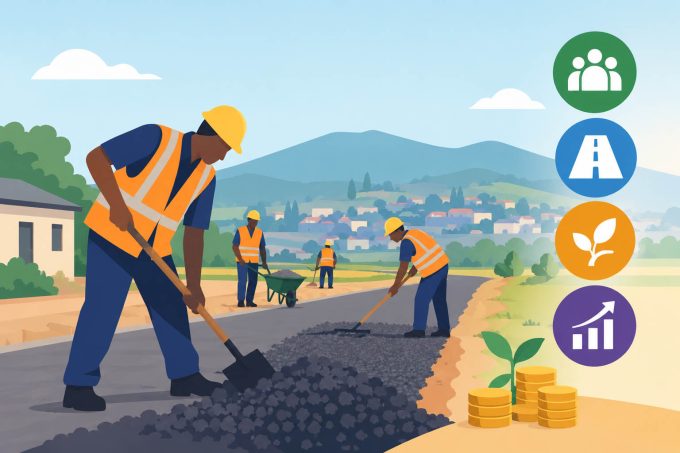
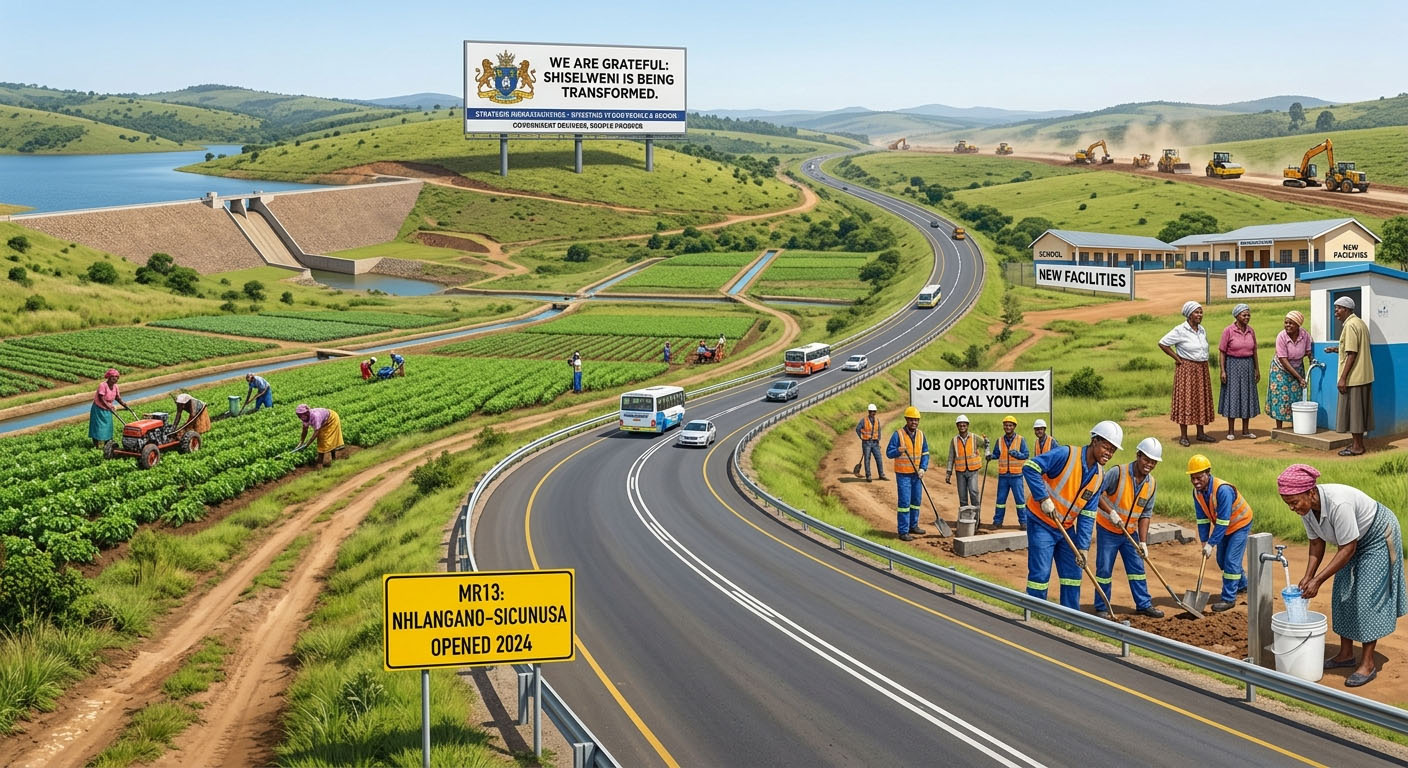
The most visible sign of this transformation is the recent overhaul of the region’s road network. The official opening of the Nhlangano–Sicunusa (MR13) Road in 2024 stands as a landmark achievement, following uncertainty. For the communities that rely on this corridor, the road is more than just tarmac; it is a lifeline that reduces travel times to markets and essential services, effectively bringing the periphery closer to the centre.
With funding secured from the African Development Bank (AfDB) for the Road Infrastructure Improvement Programme, attention is now turning to the rehabilitation of over 100 kilometres of paved roads. This includes the strategic MR14 (Siphofaneni–Sithobela–Maloma–Nsoko) and MR21 (Maloma–Siphambanweni) sections. These aren’t merely repairs; they are climate-resilient upgrades designed to handle all-weather transportation, ensuring that farmers in the south can move produce to market regardless of the season. What is even more fascinating is that while roads provide access, water provides life. The Mkhondvo-Ngwavuma Water Augmentation Programme (MNWAP) is perhaps the most ambitious component of this regional uplift. By harnessing the Mkhondvo and Ngwavuma river systems and constructing the Mpakeni Dam, government and its partners are tackling one of the primary hurdles to agricultural productivity in the region.
We note that, while development is welcome, some families at Mpakeni, for example, are complaining that the dam is creating uncertainty regarding their fields and grazing land. We implore the regional administrator, chiefs and their councils, and EWADE leadership to engage the affected communities, as they must embrace development, instead of feeling marginalised.
For smallholder farmers who have long been at the mercy of erratic rainfall, the development of downstream irrigation networks promises to turn subsistence farming into a sustainable, commercial enterprise. The project signals a move towards long-term food sovereignty and resilience against drought. It will also address the high levels of poverty in the region.
Also exciting is the Nhlangano–Siphambanweni (and Lavumisa corridor) Water and Sanitation Project—officially the Eswatini Water Supply and Sanitation Access Project (EWSSAP), a World Bank-funded initiative designed to provide reliable water and sanitation to thousands of residents of the Shiwelweni Region.
The sanitation projects that have targeted schools will also have a lasting impact for Shiselweni residents.
Also to be noted is that transformation is taking place in the smaller, everyday spaces. The consistent pipeline of micro-projects across Shiselweni is indeed another remarkable development investment in Shiselweni that we appreciate as ‘takhamuti taseShiselweni’. From the construction of new classrooms to the building of low-level crossings and community facilities, these investments are incrementally improving the quality of life for families in rural areas.
Also worth noting is that these projects have also unleashed job opportunities. Seeing our young people, who had lost hope in employment, getting employed in these projects has been a turning point in the lives of those young people as well as their families.
We are cognisant that infrastructure is a catalyst, not a silver bullet. The challenge now lies in ensuring that these physical assets are matched by social and economic support—skills training for the youth, market access for the newly-empowered farmers and consistent maintenance of these new assets.
As the heavy machinery continues to move across the Shiselweni landscape, the region is no longer just a map of historical disadvantage. It is quickly becoming a blueprint for how strategic, long-term investment can begin to rewrite the economic narrative of an entire region. I would like, as I conclude, to state that when governments deliver development, people prosper as well as the country at large. We truly appreciate what government is doing to address the youth unemployment crisis. Before I conclude, let me state that we truly appreciate the passion that the deputy prime minister has shown in addressing housing challenges for the poor.
Prime Minister of India Narendra Modi said: “My government is working for the common man. Our priority is the poor of the country.”