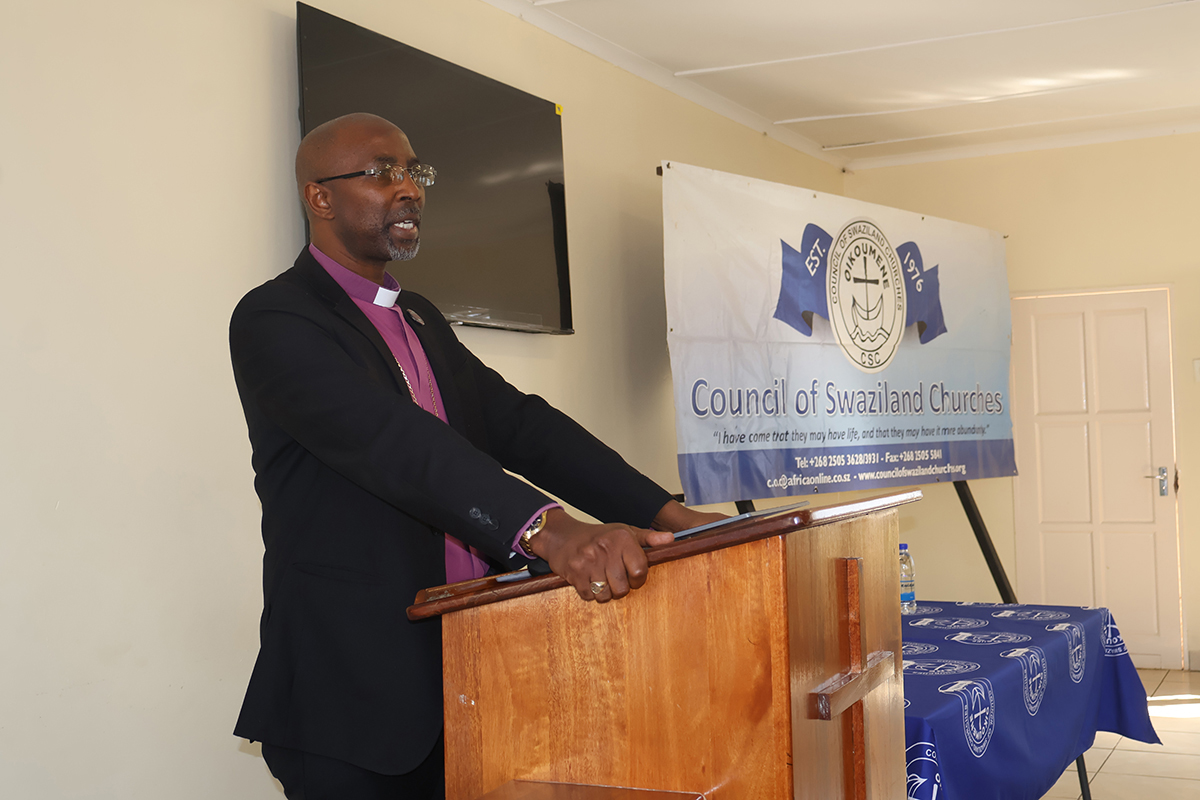
MANZINI – At least 85 per cent of corruption is committed by Christians, said the Chairperson of the Eswatini Council of Eswatini Churches Bishop Zwanini Tshabalala.
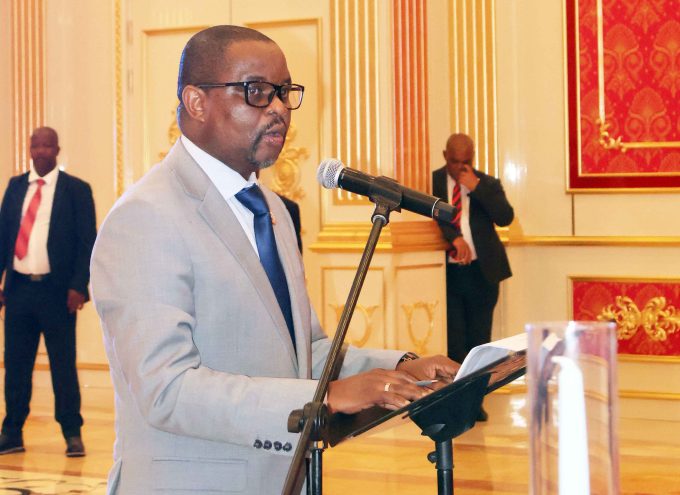
He was speaking during the Africa Anti-Corruption Day hosted by the Council at the St Georges and St Johns Anglican Church in Manzini.
He said the statistic is based on that the populations distribution of the country states that 90 per cent are Christians.
“The influence of the church in society is no longer felt. People are asking themselves why they need to go to church. People have lost confidence in the church. Not because there is something that has changed concerning scriptures, but because we are failing to live what we teach,” he said.
He said the church must reclaim its prophetic voice and become an active partner in the fight against corruption and the promotion of human rights.
Bishop Tshabalala said corruption and human rights violations could not be addressed by institutions working in isolation.
He welcomed the presence of the Eswatini Commission on Human Rights and Public Administration/Integrity (CHRPA) and the Anti-Corruption Commission, saying it demonstrated a shared commitment to promoting accountability, justice and good governance.
Tshabalala said the church had an unmatched reach through its presence in communities, schools and families, enabling it to engage people who might never visit the offices of public institutions.
He encouraged the commissions to deepen collaboration with churches, saying such partnerships could strengthen public education, community dialogues, leadership training, human rights awareness and anti-corruption campaigns.
“The Council of Swaziland Churches is ready to explore practical mechanisms for such partnerships,” he said.
Tshabalala, however, acknowledged that the church also had to confront its own challenges, noting that some church leaders had been implicated in corruption and the misappropriation of resources.
“I know that the integrity of church leaders today is questionable,” he said, adding that the church must recover the courage to speak out against injustice and restore the dignity of the pulpit.
He said the church should not confine itself to preaching about personal morality while remaining silent on public immorality, economic injustice and the abuse of power.
Instead, he urged church leaders to speak boldly about honesty in business, ethical leadership, the protection of the poor and the responsible management of public resources.
Bishop Tshabalala said Christians could not pray for God’s blessings while deliberately participating in the exploitation of others, stressing that public resources should be treated as a sacred trust for the benefit of all citizens.
He concluded by calling on all stakeholders to build a nation where institutions serve people with fairness, dignity and integrity, and where those entrusted with public resources exercise faithful stewardship.
Anti-Corruption Commission (ACC) Prevention and Education Officer Menzi Tsela said corruption thrives where opportunities exist, stressing that strong moral values are the first line of defence against unethical conduct.
He said corruption does not happen by chance but occurs when individuals encounter opportunities and choose to take advantage of them.
“Corruption will never take place if there is no opportunity,” he said.
He explained that whenever people are presented with opportunities for personal gain, they face an internal struggle between doing what is right and engaging in corrupt practices.
“You can never engage in any corrupt practice if you have a sound conscience,” he said.
He described the church as the custodian of society’s moral framework and ethical guidance.
He said churches help shape people’s consciences and values, equipping them to resist the temptation to abuse positions of trust or public resources.
The commissioner added that while institutions promote accountability, transparency and responsibility through policies and systems, these measures alone are not enough to eliminate corruption.
Tsela said lasting success in the fight against corruption required individuals with strong moral convictions who choose integrity even when opportunities for corruption arise.
He called for continued collaboration between the ACC, the church and other stakeholders to strengthen ethical leadership and build a culture of integrity across both the public and private sectors.
Meanwhile, Necodimas Ace Mashwama , who represented the CHRPA said Corruption undermines human rights and public trust. He said it is not only a governance issue but also a direct threat to human rights, public service delivery and citizens’ trust in government.
He said corruption has eroded the relationship between government and citizens by denying people fair, efficient and dignified public services.
“When public services are delayed or distorted through abuse of office, citizens are denied administrative justice and dignity,” he said.
Mashwama said corruption directly affected the enjoyment of fundamental rights and freedoms while weakening the social contract between government and the people.
He stressed that the fight against corruption should, therefore, be viewed not only as a governance challenge but also as a human rights issue.
Referring to the African Union’s 2026 continental theme, ‘Scaling Up the Promotion of Integrity and Anti-Corruption Action Across Africa’, Mashwama said the theme came at a critical time as countries across the continent sought to strengthen governance systems, build accountable institutions and promote ethical leadership as the foundation for sustainable development.
Mashwama said the Human Rights and Public Administration Commission welcomed the continental call to action because it aligns with the commission’s constitutional mandate and Eswatini’s aspirations for good governance.
Mashwama noted that corruption weakens institutions, erodes public confidence, undermines service delivery and diverts scarce public resources away from the people who needs them most.
He explained that, under Section 160 of the Constitution, the commission was uniquely positioned to contribute to the anti-corruption agenda because its mandate combined four interrelated pillars: Human rights, public administration, corruption and integrity.
“This integrated mandate enables us to address corruption not only as misconduct, but also as a governance issue that impacts service delivery, accountability, transparency and the realisation of constitutional rights,” he said.
Mashwama reaffirmed the commission’s commitment to working with other stakeholders to strengthen integrity, protect human rights and promote accountable public institutions throughout the country.