MBABANE – A sequence of ill-considered choices by government is quietly turning a fragile economy into a crisis with no easy escape.
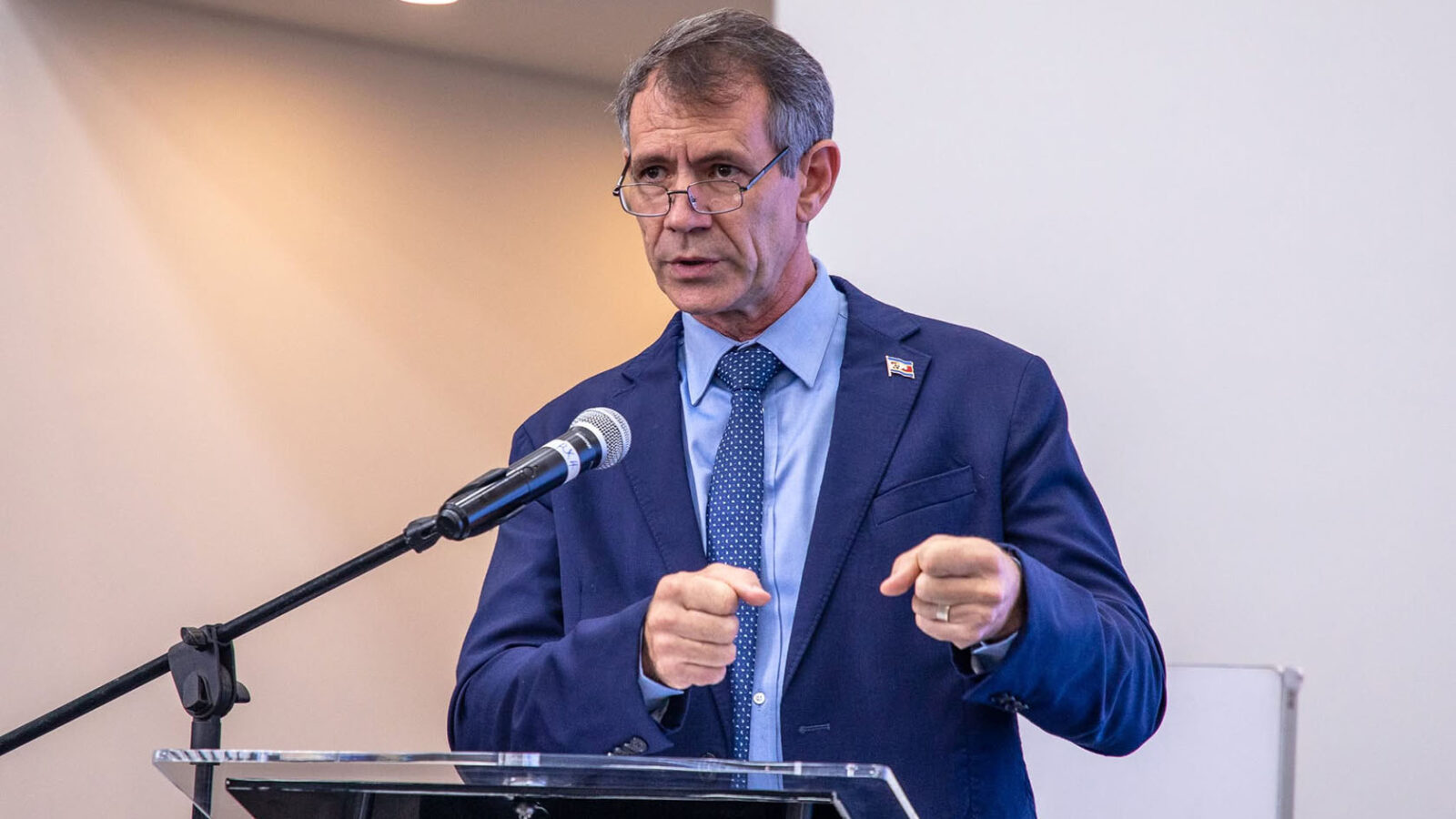
At the centre of the problem is the Minister for Finance, Neal Rijkenberg, whose strategy has leaned heavily on borrowing to fill budget gaps.
A Times of Eswatini Group of Newspapers research reveals that this reliance on debt may offer a momentary fix, which is a way to cover shortfalls and keep public services afloat, but chartered accountants say it does not address the harder and deeper issues that drive sustainable growth, including productive investment, robust revenue generation and a dynamic private sector. Those in the know argue that the debt-driven approach creates a dangerous incentive structure. This is because, they say, when governments borrow to pay for current expenses or to bridge deficits, they accumulate liabilities that future taxpayers must service. It is said that if those funds do not translate into durable streams of growth that create new jobs, stimulate higher productivity or expand tax bases, the borrowed money becomes a drag rather than a boost. Economists and accountants concurred in our research that the economy ends up in a cycle where debt service consumes a larger share of the budget, crowding out essential investment in infrastructure, education and health. Compounding this is the parallel trend of channelling substantial capital investment to foreign firms while local industries languish. It is said that outsourcing a large slice of capital expenditures can deliver short-term project completion or technical expertise, but the resulting leakage of capital weakens domestic monetary reserves and dampens the multiplier effect of government spending. When money leaves the economy rather than circulating within it, job creation falters, local suppliers lose market share and tax revenues stagnate. It has been learnt that the lack of a vibrant local economy then leaves the State even more dependent on debt to meet its obligations, deepening the cycle. As capital exits and debt deepens, it is said that consumer confidence and spending power erode.
As a result, research has shown that unemployment rises as local businesses struggle to compete against foreign suppliers and the costs of servicing debt rise.
They said a stagnant economy also makes it harder to widen the tax base, since growth slows and incomes stagnate. In such an environment, households retrench, foreclosing the possibility of a self-sustaining recovery. The social and political costs follow as public discontent grows, trust in institutions wavers and policy coherence weakens as competing interests pull in different directions. It is said that the current path is unsustainable. “If the minister for Finance continues to rely on debt while diverting capital away from domestic investment, the economy will drift towards a debt trap, with rising unemployment, stagnating demand and
Eswatini’s debt-to-GDP ratio has ballooned from a modest 13 per cent in 2010 to over 40 per cent today.
This is composed almost evenly of domestic debt (E21.48 billion or 20.78 per cent of GDP) and external debt (E20.36 billion or 19.69 per cent of GDP).
External debt has been used by certain ministries and public enterprises to award contracts for big projects to foreign entities. They claim locals are failing to meet international tender requirements.
Government has signed several loan agreements with the OPEC-Fund for International Development (OFID), African Development Bank (AfDB), World Bank, Exim Bank of Taiwan and others.
There were public complaints that these recent tenders have benefitted foreign companies.
This is contrary to the Speech from the Throne delivered by His Majesty King Mswati III on February 20, 2026. The King said: “Going forward, the country needs to structure our capital projects programmes in ways that incentivise private sector participation by both local and international investors.”
Locals have complained of capital flight, which is destabilising the economy. Despite the expatriation of profits, it is said that the loans will be serviced by the current and future generations. Capital flight is a large, rapid exit of financial assets and money from a country. “It’s a pity when the loans are sourced by government on behalf of taxpayers to facilitate capital flight,” a highly esteemed retired chartered accountant said. He expressed concern over government’s loan book.
The current public debt stands at E41.84 billion, equating to 40.47 per cent of the Gross Domestic Product (GDP), with the country’s total budget for the 2026/2027 financial year sitting at E36.92 billion.
*More of this story in the hard copy of the Times of Eswatini*