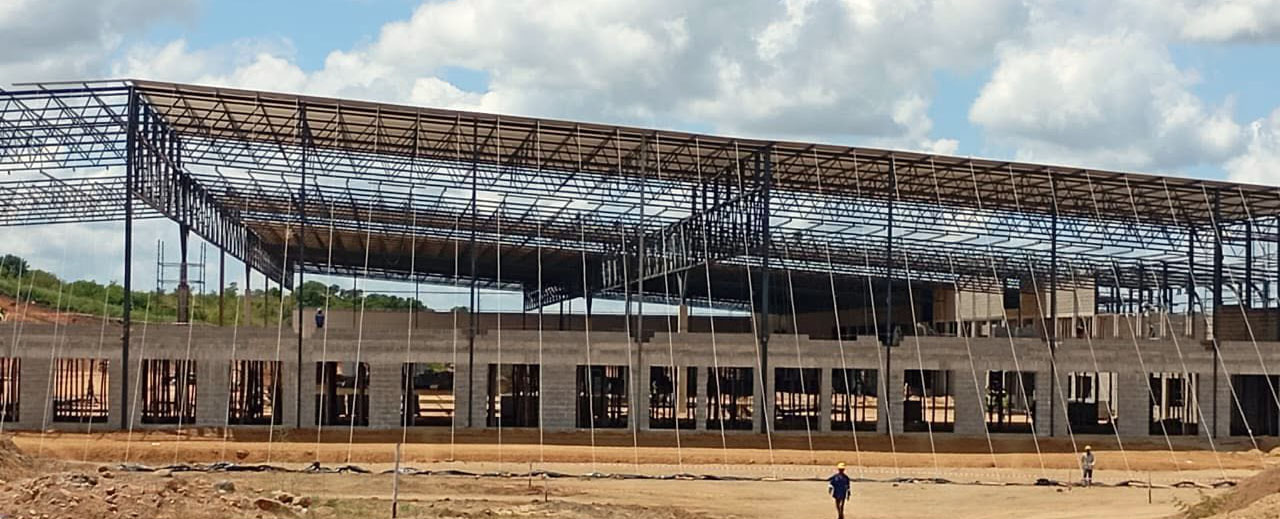
MBABANE – Minister for Commerce, Industry and Trade Manqoba Khumalo has provided an important update on the construction of the much-anticipated Jonsson Workwear factory in the Shiselweni Region.
Khumalo has told Parliament that the investor in the factory is set to begin installing manufacturing machinery next month.
During the debate on the Ministry’s 1st Quarter Budget Performance Report for the 2026/2027 Financial Year, Khumalo said this progress in the factory would mark a critical milestone towards scaling up local production and boosting job creation.
The major state-of-the-art manufacturing facility located in Nhlangano, represents an investment of E265 million and is expected to create up to 2 000 jobs for emaSwati at full capacity.
Addressing calls from lawmakers, including Shiselweni II MP Bhekithemba Bhembe and Lomahasha MP Zanele Mashaba, to construct at least one factory shell per inkhundla, the minister clarified that budgetary constraints remain a major hurdle.
Although the ministry holds the vision to construct 10 factory shells annually, no budget allocation was made for new factory shells in the current financial year.
The immediate focus remains on completing ongoing projects and handing them over to prospective investors.
Responding to worries raised by Kwaluseni MP Sifiso Shongwe regarding textile investors who shut down after brief periods or re-register under new names to exploit State incentives, the ministry reaffirmed that the Eswatini Investment Promotion Authority (EIPA) is tightening its due diligence and post-care monitoring mechanisms.
Protecting local enterprises and Swazi Nation Land
MBABANE – The committee debate also highlighted rising friction regarding foreign national participation in retail sectors and operations on Swazi Nation Land (SNL).
MP Wilton Nkambule (Motshane) and MP Sicelo Jele (LaMgabhi) raised concerns regarding business continuity and ownership transfers on SNL. Minister Khumalo clarified that King’s Consent does not automatically transfer upon the sale of a business and must be re-applied for by new owners. Furthermore, a Cabinet Select Committee—of which Minister Khumalo is a member—is currently establishing a formal legal framework to govern Eswatini Commercial Amadoda and streamline King’s Consent processes.
In response to Mafutseni MP Sabelo Mtetwa’s concerns over foreign operators taking over businesses reserved for emaSwati and shutting stores during peak business hours, the ministry noted that the Trading Licences Order of 1975 is currently undergoing a comprehensive review to address operating hours and enforce compliance in reserved business categories.
Factory shell strategy gains momentum with E50m project
MBABANE – Government’s drive to accelerate industrialisation through the construction of factory shells received a major boost.
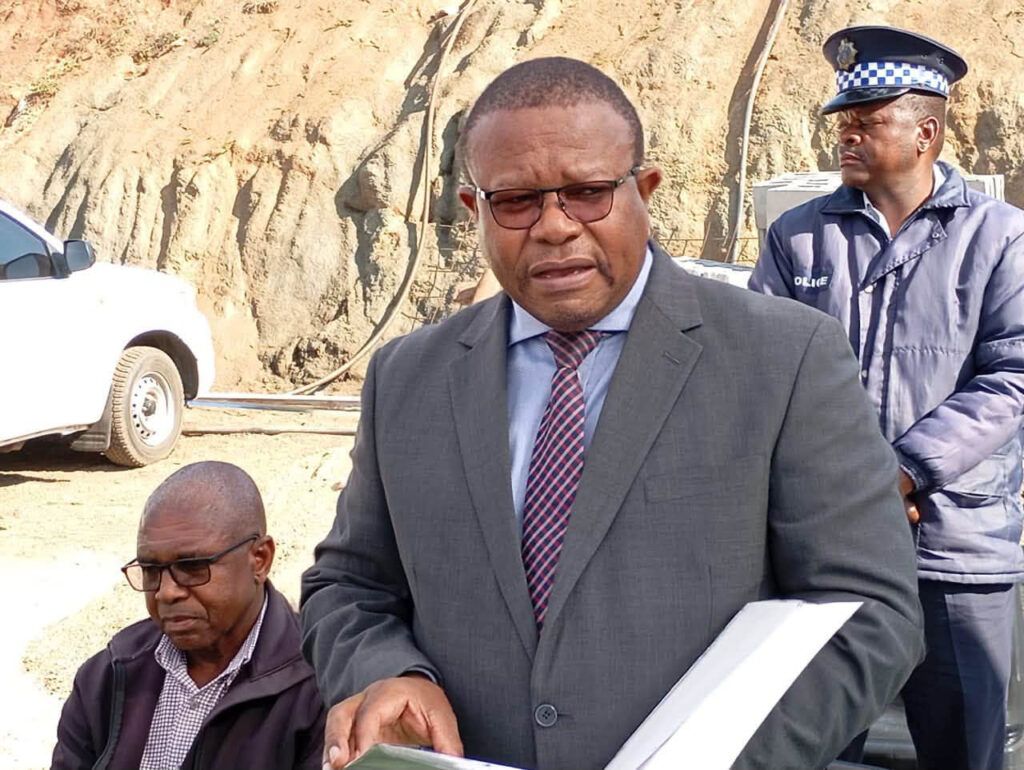
Yesterday, the Minister for Commerce, Industry and Trade Manqoba Khumalo showcased a E50 million private sector investment which is expected to create about 550 jobs for emaSwati.
Khumalo toured the Lituba Investments (Pty) Ltd development, describing the project as a significant milestone in government’s broader agenda to expand the country’s industrial base, attract investment and generate sustainable employment.
The E50 million development, currently under construction by KDE Engineering, is expected to be completed by October. Once construction is finalised, machinery will be installed ahead of the commencement of operations.
The investment comprises three major components, namely a plastic manufacturing facility, a mixed-use residential and office development and a retail factory.
The plastic manufacturing facility alone is expected to employ approximately 150 emaSwati, while the retail factory is projected to create around 400 jobs, bringing the total anticipated employment opportunities to about 550.
The project comes at a time when government is intensifying efforts to position manufacturing as a key driver of economic growth, industrial diversification and job creation.
Khumalo called on tinkhundla across the country to become active participants in the country’s industrialisation agenda by identifying strategically located land suitable for industrial development.
He urged constituency leadership to work closely with local communities and engage government on the construction of factory shells that can be marketed to prospective investors.
According to the minister, the availability of ready-built industrial infrastructure would significantly improve Eswatini’s competitiveness in attracting both domestic and foreign investment.
He said such an approach would shorten the time required for investors to establish operations, while simultaneously unlocking economic opportunities in communities throughout the country.
Khumalo emphasised that decentralising industrial development would ensure that employment opportunities were spread beyond major urban centres, enabling more emaSwati to benefit directly from investment projects established within their respective tinkhundla.
He noted that factory shells have become an increasingly important investment promotion tool globally because they reduce initial capital requirements for investors and accelerate project implementation.
The minister said collaboration between communities, local leadership and government would play a crucial role in creating an enabling environment for industrial expansion.
He further encouraged communities to view industrial development as a catalyst for broader socio-economic transformation, including the creation of business opportunities for local suppliers, transport operators and service providers.
Beyond direct employment, the Lituba Investments development is expected to stimulate economic activity through construction-related services and future supply chains linked to the manufacturing and retail operations.
Once operational, the investment is expected to contribute towards expanding local manufacturing capacity while providing new employment opportunities for hundreds of emaSwati, supporting government’s long-term vision of inclusive and sustainable economic growth.