

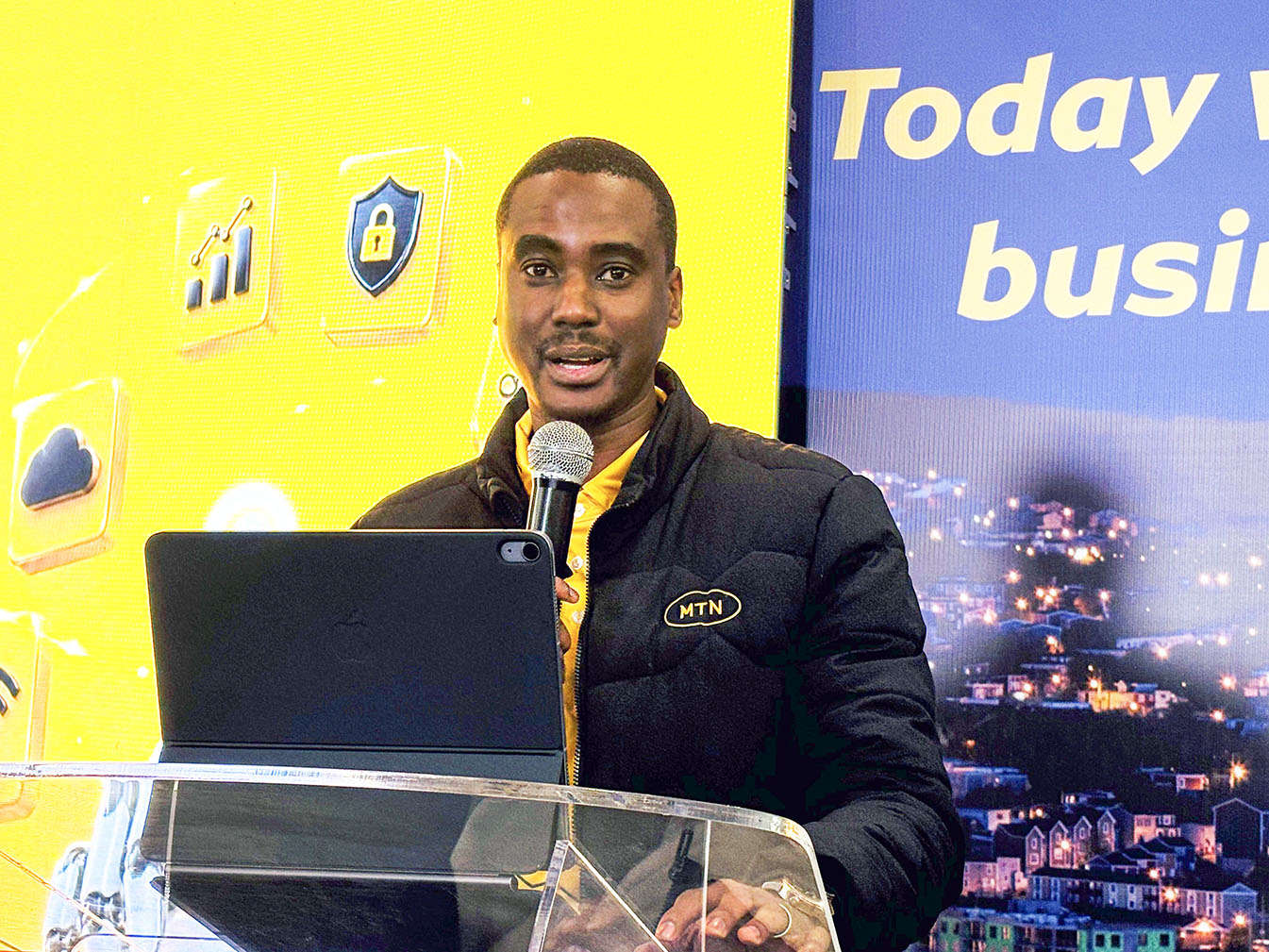
EZULWINI – Businesses should focus on how artificial intelligence can create practical value rather than adopting technology for its own sake, MTN Eswatini has urged.
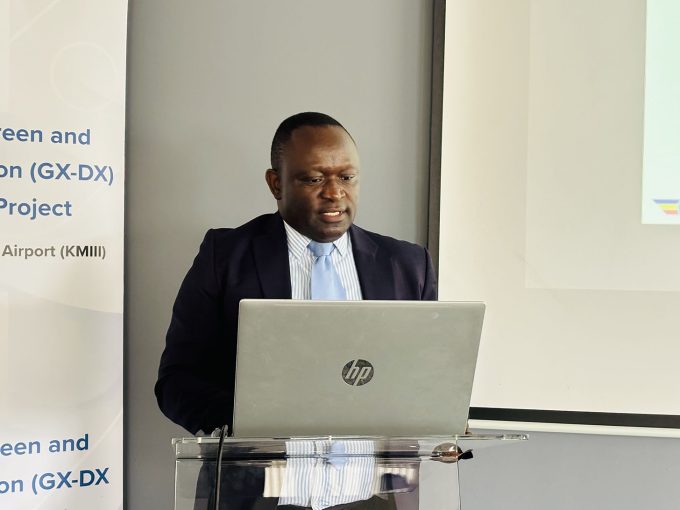
MTN Eswatini Executive Head for Enterprise Business Unit Wandile Dlamini said this during the company’s ICT Seminar held at the Royal Villas, which focused on “Digital Transformation: The Transformative Potential of AI.”
Dlamini said AI was no longer a futuristic concept but was already influencing how businesses and individuals searched for information, communicated, managed operations, detected fraud, analysed data and made decisions.
“So the question is no longer whether AI will affect our businesses. It already does. The question is how we choose to respond,” he said.
He said businesses needed to determine where AI could create real value for their organisations, employees, customers and communities instead of adopting technology simply because it was available.
Dlamini said there was no shortage of information about AI, with new tools and claims emerging almost every week.
The challenge, he said, was identifying developments that were relevant to individual businesses.
“We want to look at what is happening around the world in digital transformation and AI, and then bring it home. What does it mean for businesses here in Eswatini? And what does it mean for the business you run?” he said.
The seminar brought together academics, experts from the MTN Group, practitioners using AI solutions and business leaders operating in the local market.
Dlamini challenged business leaders to consider one practical change they could make in their businesses over the next 12 months.
He said organisations generally had more ideas and opportunities than they had resources, budgets and people to implement them.
This made prioritisation important when considering technology investments.
“Which opportunities will genuinely create value? Where do we invest first? And how do we make sure that technology serves the business strategy, and does not quietly become the strategy?” Dlamini asked.
He said MTN wanted to position itself as a preferred ICT partner by helping businesses understand technological changes and how these could support their operations.
“Our customers do not buy connectivity for its own sake. They buy what it allows them to do. The same is true of AI,” he said.
Dlamini, who is currently studying towards an MBA, said his studies had reinforced the importance of considering both business problems and organisational readiness when adopting AI.
He encouraged business leaders to ask two questions whenever considering an AI solution: What problem does this solve for my business? and Are my people and data ready for it?
He compared AI tools to a capable intern, saying they could work quickly and generate ideas but could also produce incorrect information confidently.
“They are quick. They work hard. They are full of ideas. But they can also be confidently wrong,” he said.
For this reason, he stressed that AI-generated work still needed human review and accountability.
“Someone still has to be accountable for the final decision. That someone is us,” Dlamini said.
He said successful AI adoption was therefore not simply about selecting the right technology, but about having the right people and decisions around it.
“AI may be global. But its impact is felt locally, in our businesses, with our people,” Dlamini said.
















Leave a comment