

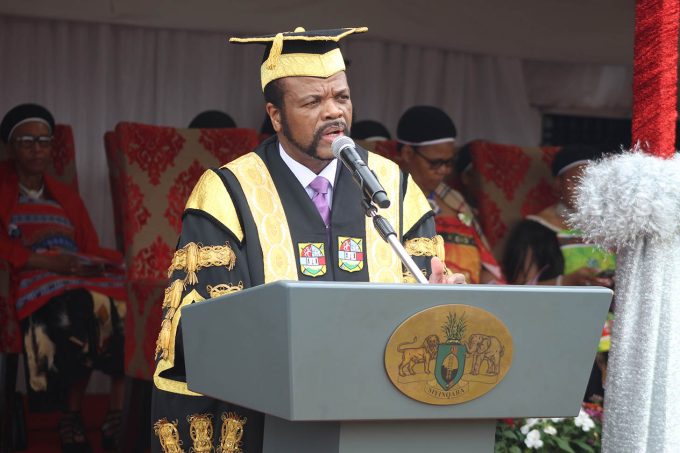
MBABANE – His Majesty King Mswati III has declared that democracy cannot be exported, nor can peace and stability.
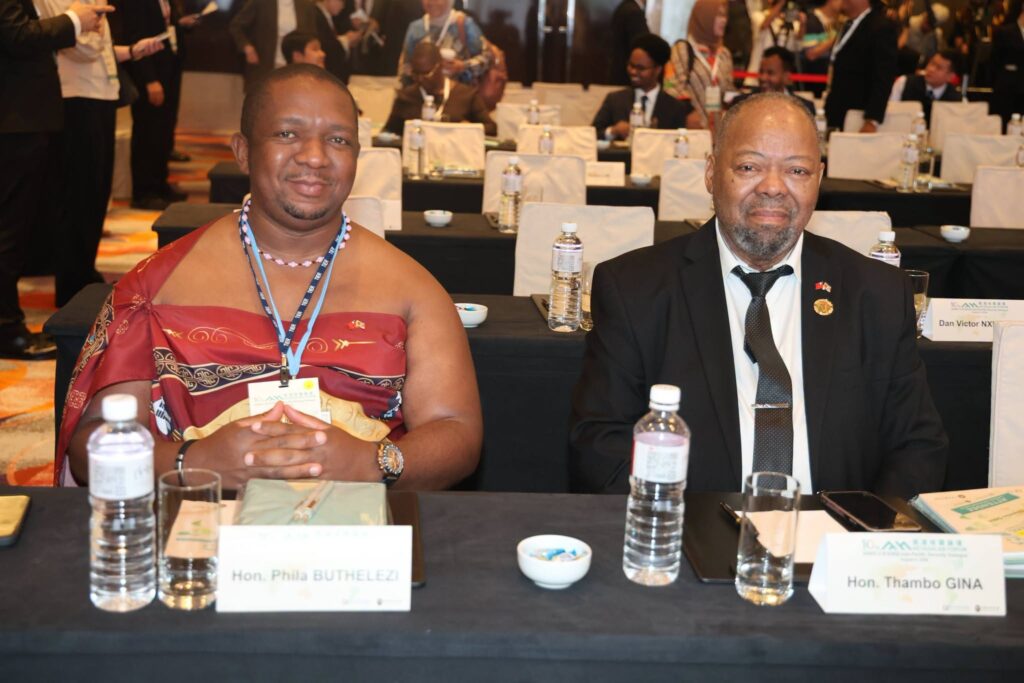
The King made the remarks in a keynote address delivered on his behalf by Prime Minister Russell Mmiso Dlamini during the 10th Ketagalan Forum: Indo-Pacific Security Dialogue held in Taipei, Republic of China (Taiwan), yesterday.
Addressing political leaders, diplomats, academics and security experts from around the world, King Mswati III said genuine democracy and lasting peace could only emerge from a nation’s own history, culture, traditions and the freely expressed aspirations of its people.
“The Kingdom of Eswatini believes that democracy cannot be exported. Neither can peace. Neither can stability. Every nation must determine its own constitutional evolution in accordance with its history, culture, traditions and the freely expressed aspirations of its people,” he said.
The King stressed that the responsibility of the international community was not to prescribe identical political systems, but rather to create conditions that encourage dialogue, strengthen institutions, promote inclusive development and sustain peace.
He said history had consistently demonstrated that imposed peace rarely lasted, while peace achieved through dialogue, mutual respect and trust endured for generations.
“Peace imposed seldom endures. Peace embraced endures for generations. It is born through dialogue. It is sustained through respect. It flourishes through partnership. It endures because of trust,” he said.
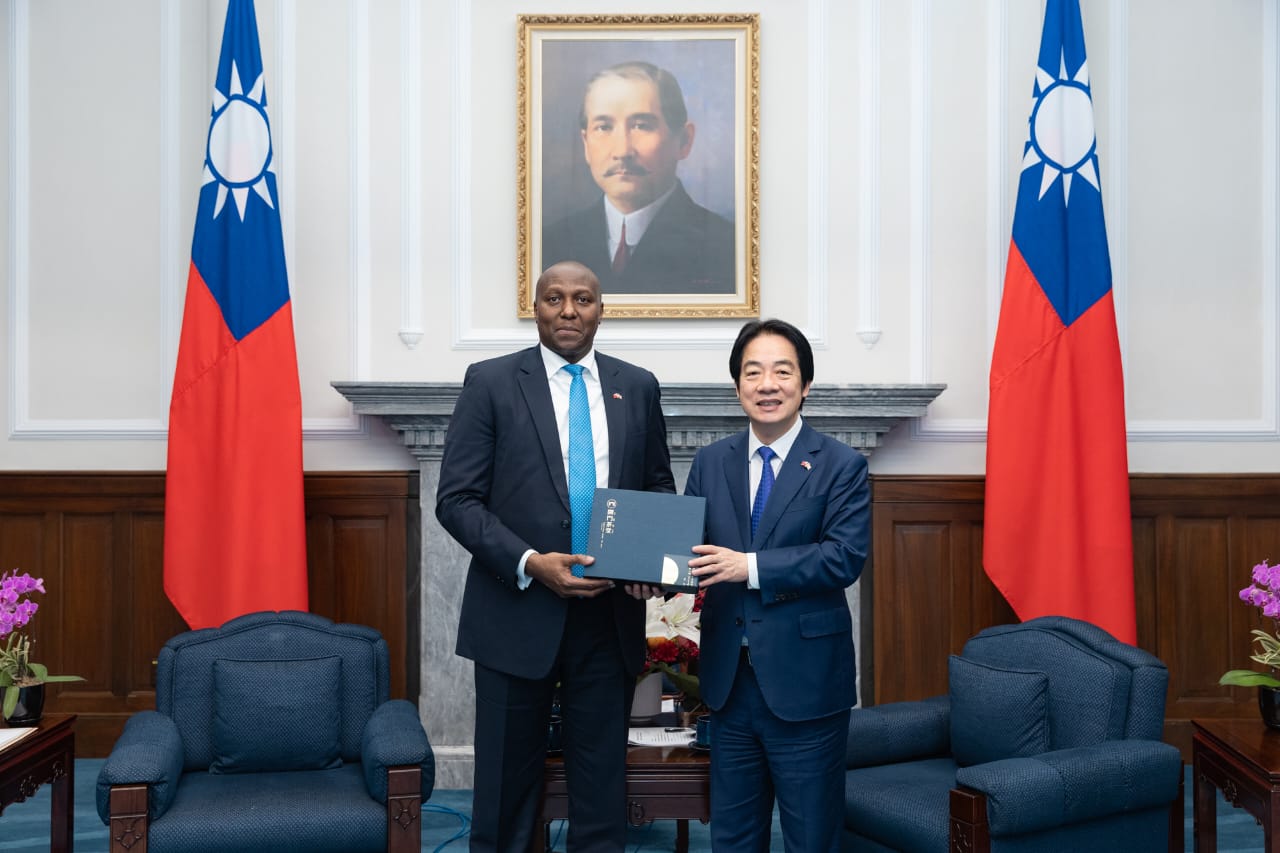
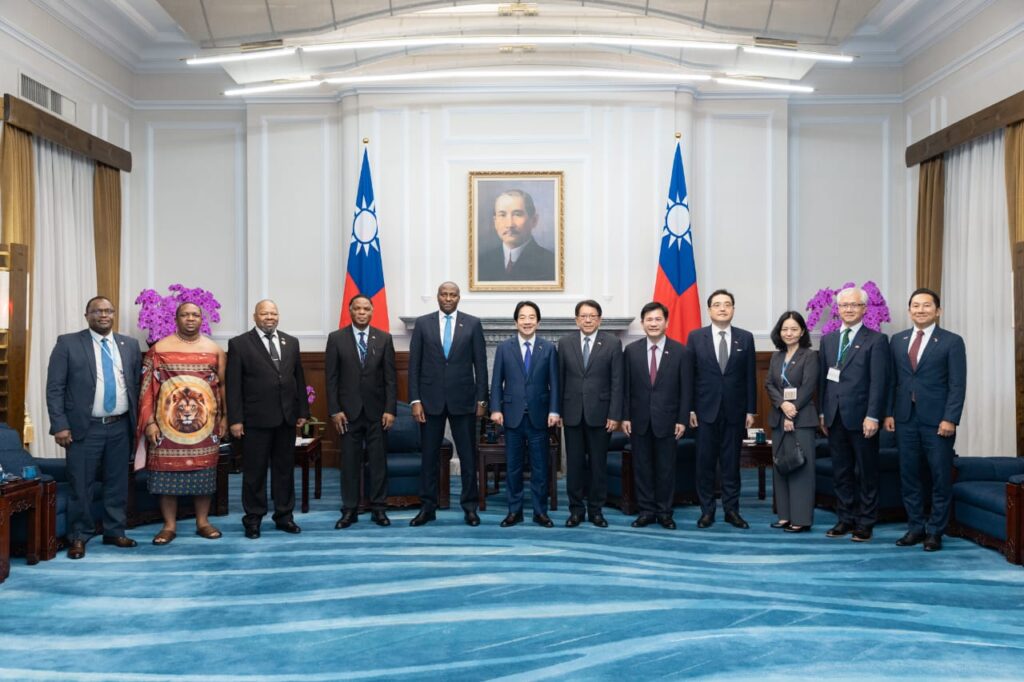
King Mswati III began his address by conveying warm greetings from the people and Government of Eswatini while expressing gratitude to President Lai Ching-te, the Government and people of Taiwan for hosting the delegation. He said the friendship between Eswatini and Taiwan had endured for more than five decades because it was founded on mutual respect, shared values and common purpose rather than political convenience.
He noted that the international order was experiencing one of its most significant transformations since the end of the Cold War, with geopolitical competition, rapid technological advancement, climate change, armed conflicts and economic uncertainty reshaping global affairs.
According to the King, these developments demonstrated that no country, regardless of its size or power, could succeed in isolation.
He said for many African countries, economic vulnerability was not a new challenge, but one that had strengthened the continent’s resilience and determination to pursue sustainable and inclusive development.
The King further argued that national security should no longer be viewed solely through a military lens, saying food security, energy security, water security, health security, cybersecurity and economic resilience were all equally important components of modern national security.
He added that the interconnected nature of today’s global challenges required equally comprehensive and forward-looking international partnerships.
Turning to Africa’s prospects, King Mswati III described the continent as one of the world’s greatest frontiers of opportunity, citing its youthful population, abundant agricultural resources, critical minerals and rapidly expanding digital economy.
However, he emphasised that Africa’s greatest strength lay in the creativity and aspirations of its people.
He said investments in education, science, innovation, entrepreneurship, skills development and digital transformation would determine whether Africa remained primarily an exporter of raw materials or emerged as a significant contributor to the global knowledge economy.
The King praised Taiwan for consistently supporting Eswatini’s development through cooperation in healthcare, agriculture, education, vocational training, digital innovation, industrial development and private enterprise.
He described Taiwan as a dependable partner whose support had contributed meaningfully to the kingdom’s development agenda.
On international relations, King Mswati III rejected the notion that smaller countries were merely spectators in global affairs, saying the United Nations Charter affirmed the sovereign equality of all member States.
“No State is too small to contribute. No nation is too insignificant to matter. No people are too distant to deserve peace, prosperity and justice,” he said.
He reaffirmed Eswatini’s commitment to the principles of sovereignty, territorial integrity, political independence and non-interference in the internal affairs of states, saying these remained essential foundations for international peace and stability.
The King also underscored the importance of resolving disputes through dialogue, diplomacy and adherence to international law, arguing that these principles strengthened rather than hindered global progress.
He further called for reform of the United Nations Security Council, saying institutions established after the Second World War must continue evolving to remain credible and legitimate in the 21st Century.
King Mswati III reiterated Eswatini’s support for the African Common Position, as outlined in the Ezulwini Consensus and the Sirte Declaration, which advocates equitable African representation on the Security Council.
He argued that inclusive global governance was essential for a legitimate and effective multilateral system.
Concluding his address, the King urged world leaders to choose cooperation over confrontation and dialogue over division.
“History will not judge our generation by the challenges we inherited. It will judge us by the courage with which we confronted them,” he said.
He added that governments, businesses, academia and civil society all share the responsibility of building a world governed by cooperation, respect for international law and peaceful coexistence.
The Ketagalan Forum: Indo-Pacific Security Dialogue is an annual international conference hosted by Taiwan that focuses on Indo-Pacific security, regional stability, economic resilience and cooperation among democracies and partner nations.
Organised by Taiwan’s Ministry of Foreign Affairs in collaboration with local think tanks, including the Prospect Foundation, the forum was launched in 2017 and has since become one of Taiwan’s leading international platforms for dialogue on regional security and strategic affairs.
Named after the Indigenous Ketagalan people historically associated with the Taipei area, the forum brings together government leaders, parliamentarians, diplomats, scholars and policy experts to discuss emerging geopolitical challenges and opportunities for international cooperation.
This year’s event, the 10th edition, has attracted participants from nine countries across the Asia-Pacific, Europe, North America and Latin America.
Discussions are centred on strengthening democratic resilience, enhancing collective security in the Indo-Pacific and developing resilient non-red supply chains.
The forum also serves as an important diplomatic platform for Taiwan to deepen engagement with countries that maintain official relations with the Republic of China (Taiwan), including Eswatini, as well as with other international partners committed to regional peace, security and economic cooperation.














Leave a comment