

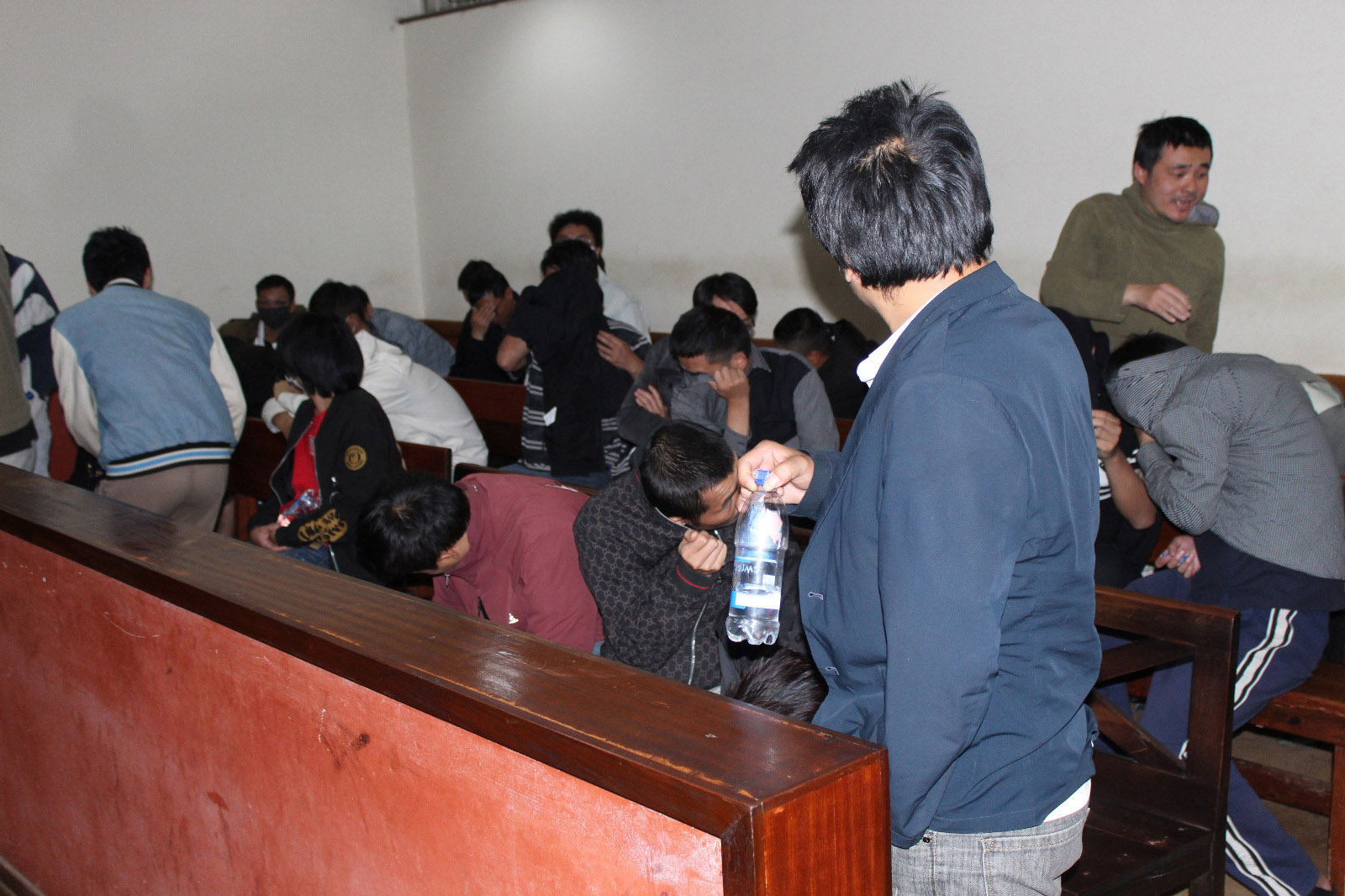
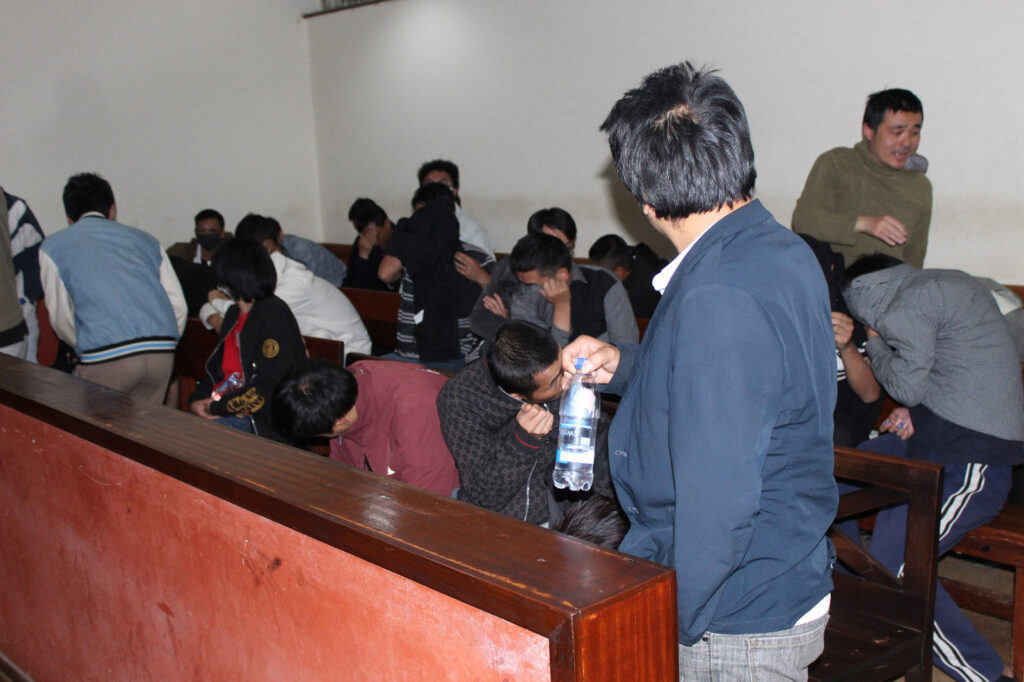
MBABANE – The High Court has ordered the immediate release of the 25 re-arrested Chinese nationals.
Judge Zonke Magagula ruled that their re-arrest after they had already been convicted and fined for immigration offences violated the constitutional protection against double jeopardy and amounted to an abuse of power. The Chinese nationals formed part of the over 150 foreign nationals who were arrested in March during raids at illegal online gambling centres.
In a judgment delivered by Judge Magagula, the court held that the applicants, who are predominantly nationals of the People’s Republic of China, could not lawfully be arrested and detained again for an offence for which they had already been tried, convicted and sentenced.
The court further ruled that authorities acted unlawfully by arresting the applicants before the expiry of a court-ordered 48-hour period granted to them to arrange their departure from Eswatini. The matter arose after the applicants were arrested on July 25 and charged with contravening Section 14(2)(c) of the Immigration Act, which criminalises unlawful entry into or unlawful presence in Eswatini.
By the time they approached the High Court, they had already appeared before the magistrates court and were being held in custody pending trial on the fresh charge. In their application, they sought declarations that their arrest and detention were unlawful and unconstitutional, arguing that they had already been finally convicted and sentenced for offences under Sections 14(2)(c) and 14(2)(f) of the Immigration Act. They contended that the fresh arrest violated Section 21(7) of the Constitution, which protects individuals from being tried twice for the same offence, as well as the common law plea of autrefois acquit (a defendant cannot be tried again for the same offense)
The applicants also sought their immediate release from custody, an extension of the period previously granted by the court within which to arrange their departure from Eswatini, permission to leave the country through border posts of their choice, and costs against the respondents on the attorney-and-own-client scale.
Judge Magagula outlined the background to the matter, noting that the applicants formed part of a larger group of foreign nationals from Asia and South America who had previously been arrested by members of the Royal Eswatini Police Service on various allegations, including immigration offences, contraventions of the Gaming Control Act and offences under the Money Laundering and Financing of Terrorism (Prevention) Act.
According to the judgment, some accused persons in that larger group were convicted of immigration offences, paid fines and were allowed to leave the country, while other criminal matters remained pending.
The present applicants were charged on June 12 with contravening the Immigration Act. They pleaded guilty, were convicted and sentenced to a fine of E500 each or six months imprisonment in default of payment. Principal Magistrate Fikile Nhlabatsi further ordered that they remain in custody pending deportation in terms of Section 8(8) of the Act.
The judgment records that the applicants paid the fines imposed by the court and later indicated that they wished to leave Eswatini voluntarily at their own expense instead of awaiting deportation.
To facilitate their departure, they required access to their passports and travel documents. When the authorities declined to release the documents, the applicants approached the High Court. Although the application was initially opposed, the parties eventually agreed to a consent order directing the release of the passports.
When the respondents allegedly failed to comply with that order, the applicants again approached the High Court on an urgent basis on July 14. They sought an order declaring the chief immigration officer to be in contempt of court and asked the court to prevent their deportation to the People’s Republic of China or any other country without a formal extradition application. They further sought permission to leave Eswatini through King Mswati III International Airport, Lomahasha Border Post or Mhlumeni Border Post.
The attorney general opposed that application, arguing that authorities had received correspondence from Interpol indicating that the applicants’ passports had been revoked, cancelled or fraudulently obtained. It was also submitted that the Government of the People’s Republic of China had arranged repatriation flights from South Africa’s OR Tambo International Airport.
However, Judge Magagula noted that when the authenticity of the INTERPOL information was questioned, no proof was produced confirming that the correspondence was genuine.
“The central issue became whether an unsigned email purporting to originate from INTERPOL or another foreign law enforcement agency could override an order of the High Court,” states the judgment.
After the matter was stood down, the parties reached another agreement. A consent order was granted providing for the applicants’ release from custody, access to their travel documents and permission to leave the country in any lawful manner they chose. Importantly, the order granted them 48 hours from the time of their release to arrange their departure.
The applicants were released from custody on Saturday, July 25 and travelled towards the Mhlumeni and Ngwenya border posts.
The judgment records conflicting accounts of what occurred at the borders. The applicants said police officers who had followed them instructed immigration officials not to allow them to cross and prevented them from even presenting their passports.
The police, on the other hand, maintained that the applicants presented their passports, but immigration officials discovered that the documents had been blocked, preventing lawful departure.
What was not disputed, however, was that the applicants were arrested at the border, detained at Mafutseni Police Station and subsequently charged again with contravening Section 14(2)(c) of the Immigration Act.
Judge Magagula held that Section 21(7) of the Constitution clearly provides that a person who has been tried by a competent court and convicted or acquitted cannot be tried again for the same offence or one for which that person could have been convicted at the original trial. The court found that the applicants had already been convicted and fined for contravening Sections 14(2)(c) and 14(2)(f) of the Immigration Act on June 12, 2026. Although the Constitution does not expressly prohibit the arrest of someone previously convicted, the judge held that arresting a person for an offence where a subsequent conviction was constitutionally impossible amounted to a blatant abuse of power.
The court also found that the respondents failed to comply with the earlier High Court order granting the applicants 48 hours to arrange their departure. Judge Magagula rejected the respondents’ argument that the foreign nationals forfeited that period once they failed to cross the border immediately.
The judgment states that, at the very least, the respondents ought to have waited until the expiry of the 48-hour period before effecting any arrest. The court further rejected the respondents’ contention that the foreign nationals should have waited until their criminal trial before raising the defence of autrefois acquit. Judge Magagula held that the High Court application had been instituted before the applicants were formally charged again and that the High Court, therefore, retained jurisdiction to determine the legality of the arrest and detention. The Chinese nationals were represented by Linda Dlamini of Linda Dlamini and Associates.





















Leave a comment