


MBABANE – The European Union (EU) and International Trade Centre (ITC) are supporting Eswatini in developing a three-year export roadmap.
This roadmap is aimed at boosting competitiveness, diversifying markets and helping more local businesses establish a sustainable presence in international markets.
The initiative, being undertaken with government through the International Trade Department (ITD) in the Ministry of Commerce, Industry and Trade, seeks to address long-standing structural weaknesses that have limited the country’s ability to translate export opportunities into sustained international sales.
The roadmap is being developed under the Eswatini: Promoting Growth through Competitive Alliances II programme, funded by the EU and implemented by ITC in partnership with the Eswatini Government.
The process comes as the country seeks to modernise its approach to export development, with the previous National Export Strategy having been developed approximately two decades ago.
Rather than creating another broad strategy, the current exercise is focused on developing a practical and implementable three-year roadmap that builds on existing national strategies while identifying interventions that can realistically be delivered within the country’s implementation capacity.
EU Programme Officer Bhekani Magongo said the initiative reflects EU’s continued commitment to strengthening Eswatini’s private sector and helping businesses take advantage of international trade opportunities.
“For exports to contribute meaningfully to inclusive economic growth, businesses need more than access to markets; they need the capacity, information, standards, support systems and partnerships required to compete sustainably,” Magongo said.
He said the partnership with ITC and government was intended to translate existing export opportunities into practical actions, particularly for micro, small and medium enterprises (MSMEs), while encouraging greater market diversification.
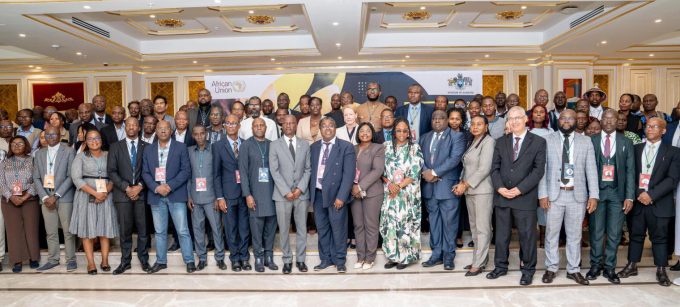
Representing the principal secretary in the Ministry of Commerce, Industry and Trade at a recent consultative meeting, Dr Celucolo Dludlu welcomed the technical assistance from ITC and the longstanding support from the EU.
“Government remains committed to expanding domestic and international trade through improved trade facilitation, stronger market access and enhanced export competitiveness,” Dludlu said.
He said the ambition was to see more products from Eswatini successfully competing in international markets.
Preliminary analysis by ITC, however, shows that while Eswatini has demonstrated strong export performance, the country’s export base remains vulnerable because of its heavy concentration in a limited number of markets, products and companies.
ITC Consultant Claudia Manguila said Eswatini is a highly open economy, with trade equivalent to 107 per cent of gross domestic product (GDP), while exports reached US$2.4 billion (about E45.2 billion) in 2024.
However, 62 per cent of the country’s exports were destined for South Africa, while 80 per cent went to markets across Africa.
The concentration also extends to individual exporters and products.
According to the ITC analysis, 25 per cent of Eswatini’s exports originate from a single beverage manufacturer, while the top one per cent of exporting small and medium-sized enterprises (SMEs) account for 76 per cent of exports.
Manguila said these figures strengthened the case for diversifying the country’s export base while simultaneously upgrading sectors that were already generating significant export earnings.
The roadmap is, therefore, expected to identify sectors in which Eswatini has a competitive advantage and determine where resources and support should be concentrated to generate sustainable export growth.
The ITC assessment has also identified weaknesses throughout the export journey, suggesting that the challenge is not simply finding potential markets.
Among the constraints identified are limited and overly general market and buyer intelligence, difficulties in understanding standards and regulatory requirements, challenges in navigating trade agreements and inadequate targeting of export-ready companies towards specific buyer opportunities.
The assessment also points to fragmented financial, payment, logistics and institutional support, as well as weak commercial follow-up after businesses enter new markets.
These weaknesses have implications for the survival of Eswatini’s exports.
Analysis covering the period from 2015 to 2024 found that only about 39 per cent of new product-market relationships survived.
This means that a significant proportion of businesses that successfully establish a new product in a particular market do not maintain that relationship over time.
Manguila said the findings demonstrated the need for stronger continuity between identifying an export opportunity, entering a market and maintaining sales.
“The problem is therefore not necessarily missing services because there are institutions and services. It is the absence of continuity from the opportunity to the sales,” she said.
The roadmap is expected to address this gap by strengthening coordination among institutions supporting exporters and creating a more connected pathway for businesses.



















Leave a comment